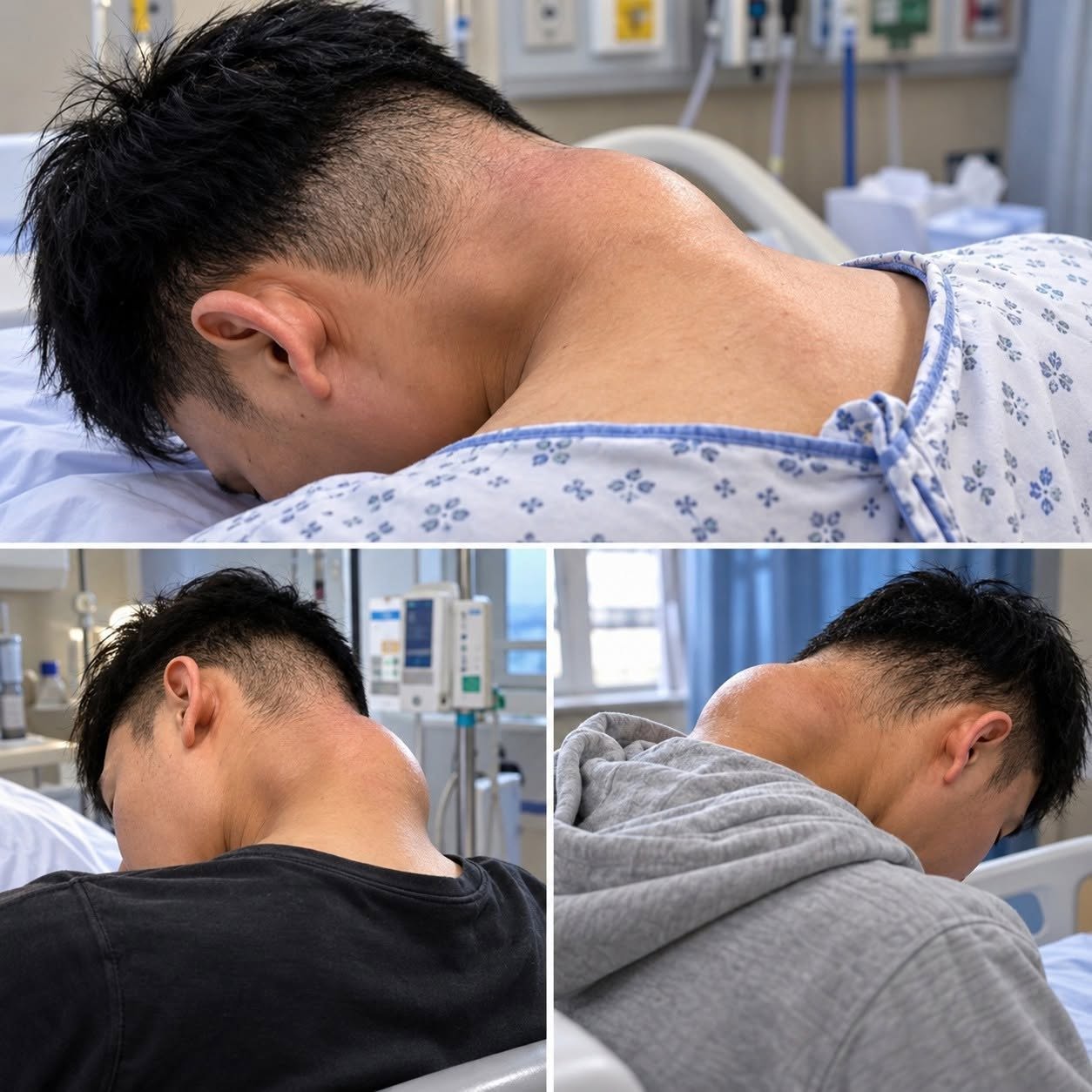
At 23, He Suddenly Struggled to Hold His Head Up — What Could Be Behind It?
At just 23 years old, he expected to be enjoying the energy and independence of young adulthood. Instead, he began experiencing something frightening: he struggled to keep his head upright. What initially seemed like an unusual episode of weakness raised an important question about his health.
Difficulty holding the head up can be alarming at any age, but when it occurs in a young adult, it deserves careful attention. Several conditions can affect the muscles and nerves responsible for supporting the head, and identifying the underlying cause is essential.
Although some explanations are relatively manageable, others require urgent medical assessment.
This article discusses possible medical explanations. No verified patient history or diagnosis has been provided for the individual described in the headline.
1. What Does It Mean When Someone Cannot Hold Their Head Up?
The neck contains muscles that work continuously to support the head, maintain posture, and allow movement.
When these muscles become weak or fatigued, a person may find it difficult to keep their head upright. Doctors sometimes describe significant weakness of the neck-extensor muscles as neck extensor weakness or, in certain circumstances, dropped head syndrome.
A person experiencing this problem might notice that:
Their head gradually falls forward when sitting or standing.
Holding the head upright requires considerable effort.
Neck muscles feel unusually tired or weak.
Maintaining posture becomes increasingly difficult throughout the day.
Other muscles, including those in the shoulders or arms, also feel weak.
These symptoms can have different causes. A description alone cannot establish which condition is responsible.
2. Myasthenia Gravis: When Muscles Become Weaker With Use
One possible explanation is myasthenia gravis, an uncommon autoimmune condition that interferes with communication between nerves and muscles.
People with this condition may experience muscle weakness that becomes more noticeable during activity and improves after rest.
Symptoms can include:
Drooping eyelids.
Double or blurred vision.
Difficulty chewing or swallowing.
Changes in speech.
Weakness in the neck, arms, or legs.
In some cases, weakness of the neck muscles can make it difficult to keep the head upright.
Myasthenia gravis can begin in young adulthood, so age alone does not rule it out. However, many other conditions can cause similar symptoms.
A doctor may recommend a neurological examination, blood tests, specialized nerve testing, or other investigations depending on the findings.
Difficulty swallowing, speaking, or breathing alongside muscle weakness requires emergency medical assessment, as myasthenia gravis can sometimes cause a life-threatening complication called myasthenic crisis.
3. Muscle Disorders That Affect the Neck
Another possibility is a condition that directly affects the muscles responsible for supporting the head.
Some muscular disorders can cause progressive weakness in the neck, shoulders, and other parts of the body. Depending on the specific condition, symptoms may develop gradually or become noticeable during particular activities.
Possible clues include:
Difficulty lifting the head after bending forward.
Trouble raising the arms overhead.
Difficulty climbing stairs or getting up from a low chair.
Muscle pain or fatigue.
Weakness that gradually worsens.
Inflammatory muscle diseases and certain inherited muscular disorders are among the possible explanations.
However, a young person struggling to hold their head up does not automatically have a muscular disease. A clinical examination and appropriate testing are needed to distinguish among the possibilities.
4. Nerve Problems and Other Neurological Conditions
The nerves that control the neck muscles can also be affected by certain medical conditions.
Depending on the cause, nerve-related weakness may occur alongside numbness, tingling, changes in reflexes, or weakness in other parts of the body.
Problems involving the cervical spine can sometimes affect nerve function, although neck pain or spinal abnormalities do not necessarily explain every case of head-drooping.
Doctors may assess muscle strength, sensation, reflexes, coordination, and neck movement. Imaging or nerve-conduction studies may be appropriate when indicated.
Sudden weakness accompanied by difficulty walking, new numbness, severe neck pain, or other neurological changes requires urgent evaluation.
5. Could It Be Extreme Fatigue or Poor Posture?
Sometimes, neck discomfort and difficulty maintaining posture are associated with prolonged screen use, muscle strain, inadequate sleep, or other everyday factors.
Holding the head forward for long periods can place additional demands on the neck muscles. Muscle fatigue may make maintaining an upright position uncomfortable.
However, ordinary poor posture should not be assumed to explain a genuine or sudden inability to support the head.
If the head repeatedly drops involuntarily, the weakness is pronounced, or the problem persists despite rest, medical assessment is important.
The distinction between discomfort and actual muscle weakness is particularly important.
6. Other Possible Causes
Depending on the person’s symptoms and medical history, clinicians may also consider:
Medication effects: Certain medicines can contribute to weakness or movement abnormalities.
Electrolyte disturbances: Abnormal levels of minerals such as potassium or phosphate can interfere with muscle function.
Thyroid disorders: Some thyroid conditions can cause muscle weakness.
Infections or inflammatory conditions: These can sometimes affect muscles, nerves, or the nervous system.
Neurological emergencies: Certain sudden-onset conditions can cause rapidly developing weakness and require immediate treatment.
These possibilities are not equally likely in every patient. The timing of symptoms, associated signs, medication history, and physical examination help guide the investigation.
7. What Should Someone Do If This Happens Suddenly?
The word suddenly is particularly important.
If a person abruptly becomes unable to hold their head upright, they should seek urgent medical evaluation rather than waiting several days to see whether the problem resolves.
Call emergency services if the weakness is sudden or severe, particularly when accompanied by:
Difficulty breathing or swallowing.
Slurred speech or facial drooping.
Weakness in the arms or legs.
Confusion, fainting, or difficulty walking.
Severe headache or sudden neck pain.
These symptoms may indicate a serious neurological or muscular emergency.
Even without additional symptoms, new and unexplained difficulty supporting the head warrants prompt medical assessment.
Until the cause is known, avoid strenuous neck exercises, forceful manipulation, or attempting to push through significant weakness.
8. How Do Doctors Find the Cause?
There is no single test that identifies every cause of neck weakness.
Depending on the examination, a healthcare professional may consider:
A neurological and muscular examination to assess strength, reflexes, coordination, and sensation.
Blood tests to investigate metabolic abnormalities, thyroid problems, muscle injury, or specific autoimmune conditions.
Electromyography or nerve-conduction studies to assess how nerves and muscles function.
Imaging, such as MRI, if a problem involving the neck or nervous system is suspected.
Additional specialized tests when a particular neuromuscular condition is suspected.
Treatment depends entirely on the underlying diagnosis. Some conditions respond to medication or physical rehabilitation, while others require more specialized treatment.
Early assessment can help identify treatable causes and reduce the risk of complications.
The Bottom Line
A 23-year-old who suddenly struggles to hold his head up may be experiencing anything from significant muscle fatigue to a neurological or neuromuscular condition.
Myasthenia gravis, muscle disorders, nerve problems, medication effects, and metabolic abnormalities are among the possibilities—but the symptom alone cannot identify the cause.
The most important step is to take new or pronounced weakness seriously, particularly when it develops suddenly. Difficulty breathing or swallowing, facial drooping, or weakness elsewhere in the body requires emergency attention.
Being young does not eliminate the possibility of a serious medical problem, and getting assessed promptly is the safest way to find answers.
Medical disclaimer: This article is for educational purposes only and does not provide a diagnosis. Sudden or severe weakness requires urgent medical evaluation.