After years of saving, a family purchased a home on Magnolia Bend, looking forward to creating lasting memories in their new neighborhood.
Their backyard swimming pool quickly became a favorite gathering place, especially for their children, Lily and Noah, who enjoyed spending warm summer afternoons playing together.
However, an unexpected disagreement with a neighbor and homeowners association board member led the family to reconsider the importance of privacy, personal boundaries, and respectful neighborhood relationships.
An Unexpected Visitor in the Backyard
One afternoon, the children’s mother walked around the corner of her house and discovered an unusual situation near the swimming pool.
Beverly, a sixty-two-year-old neighbor who served as the homeowners association secretary, had entered the family’s fenced backyard without permission.
She was instructing nine-year-old Lily and her younger brother, Noah, to leave the swimming pool. Both children appeared confused and upset by the encounter.
Their mother immediately approached Beverly and asked why she was interfering with the children on their own property.
Beverly insisted that the children were not authorized to use the pool, despite the mother’s explanation that the property belonged to her family.
Rather than resolving the misunderstanding through conversation, Beverly contacted emergency services.
A Neighborhood Relationship That Had Gradually Changed
The family had moved into their Magnolia Bend home less than a year earlier.
Initially, Beverly appeared welcoming. She introduced herself, brought over homemade lemon bread, and expressed interest in getting to know her new neighbors.
Over time, however, the relationship became increasingly uncomfortable.
Beverly frequently commented on the family’s landscaping, the noise of the children playing outdoors, and what she considered appropriate neighborhood standards.
As a longtime resident and HOA board member, she took her responsibilities seriously. However, her involvement sometimes extended beyond what the family considered reasonable.
Until the afternoon at the pool, the parents had attempted to manage these disagreements without creating unnecessary tension.
A Security Camera Provides Important Information
Several months earlier, the children’s father, Daniel, had installed a security camera above the patio door following reports of missing packages in the neighborhood.
The camera monitored the backyard and surrounding entrance areas.
Although Beverly had previously questioned the family’s decision to install security equipment, the recording would become particularly important during the disagreement.
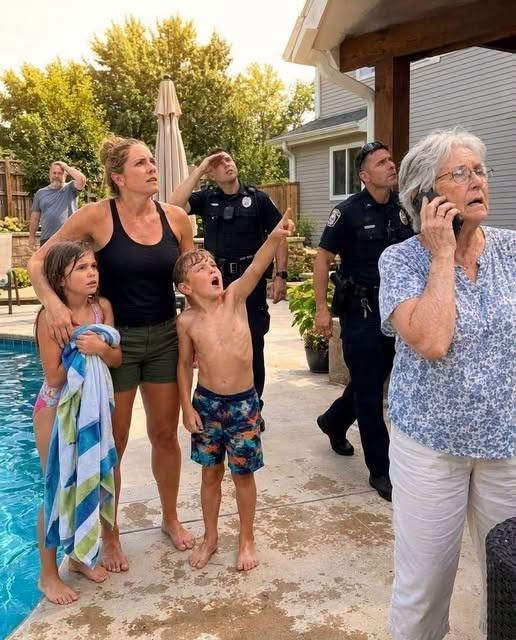
When Officers Ramsey and Walker arrived, Beverly explained her version of the events.
The children’s mother provided a different account, explaining that Beverly had entered their private backyard without authorization and approached the children in an inappropriate manner.
While the adults discussed what had happened, Noah pointed toward the camera.
“Daddy’s camera saw it all,” he explained.
His observation encouraged the officers to review the available footage.
Reviewing the Events Through Recorded Evidence
The security recording showed Beverly opening the side gate, entering the fenced backyard, and approaching the swimming pool.
It also documented her interaction with Lily and Noah, including physical contact with Lily as Beverly attempted to direct her out of the water.
The recording provided additional context for the statements Beverly had made during her emergency call.
Rather than relying solely on conflicting accounts, the officers were able to examine a record of the incident.
The children’s mother submitted a formal report, and the officers documented the circumstances for further review.
The family also preserved copies of the security footage, relevant photographs, and official documentation.
Changes Within the Homeowners Association
During the following week, the homeowners association president contacted the family to discuss the incident.
The children’s mother explained that she wanted the matter addressed appropriately rather than dismissed as a simple neighborhood misunderstanding.
Shortly afterward, Beverly resigned from her position on the HOA board.
Other residents began sharing their own experiences concerning neighborhood communication and personal boundaries.
One neighbor even offered to help Daniel install a more secure lock on the family’s side gate.
These gestures of support reminded the family that positive neighborhood relationships could still exist despite the disagreement they had experienced.
Helping the Children Feel Comfortable Again
Although the practical matters were being addressed, the parents recognized that their children needed additional time to feel comfortable in the backyard.
Lily became hesitant about returning to the swimming pool, while Noah had questions about the police visit.
Their parents listened to their concerns, answered their questions calmly, and reassured them that they had done nothing wrong.
Rather than encouraging the children to immediately return to their usual activities, they allowed them to decide when they felt ready.
Nearly two weeks later, Lily put on her favorite red swimsuit and stood beside the sliding glass door.
Her mother reminded her that there was no pressure to go swimming.
Lily understood, but she decided that she wanted to enjoy the backyard again.
Before long, she and Noah were back in the pool, laughing, practicing their swimming skills, and enjoying the afternoon together.
Understanding the Importance of Neighborhood Boundaries
Living within a community governed by a homeowners association often involves shared responsibilities and established guidelines.
However, maintaining neighborhood standards also requires respectful communication and recognition of individual property rights.
Disagreements are generally better addressed through appropriate communication channels rather than unexpected visits to private areas.
Homeowners who experience concerns involving their property can benefit from maintaining accurate records, reviewing community guidelines, and seeking appropriate professional assistance when necessary.
Because homeowners association rules and property laws vary, understanding local regulations can help residents navigate disagreements more effectively.
The Practical Benefits of Home Security
For Daniel and his family, the backyard camera became a useful source of information during an unexpected situation.
Home security equipment can serve several practical purposes, including monitoring entrances, documenting deliveries, and providing additional context when incidents occur.
Other reasonable measures, such as maintaining secure gates and communicating clearly with neighbors, may also contribute to a more comfortable residential environment.
Security cameras should be installed and operated in accordance with applicable privacy regulations.
Ultimately, security equipment is only one part of creating a home environment where family members feel comfortable and respected.
Moving Forward as a Family
As the summer continued, Lily and Noah gradually returned to their favorite outdoor activities.
The backyard once again became a place for swimming, laughter, and family gatherings.
Their parents continued maintaining appropriate security measures while focusing on helping their children enjoy their home.
The experience also reinforced the family’s belief that respectful communication, clear boundaries, and accurate documentation can be valuable when resolving difficult situations.
Rather than allowing one disagreement to define their experience in the neighborhood, they chose to focus on rebuilding their sense of comfort and enjoying the home they had worked so hard to purchase.
Final Thoughts
What began as an unexpected neighborhood disagreement became an important lesson about privacy, responsibility, and family support.
By remaining composed, preserving relevant information, and addressing the situation through appropriate channels, the family was able to protect its interests and move forward.
The experience also demonstrated that resolving a disagreement involves more than completing official paperwork. It requires patience, understanding, and consideration for everyone affected.
For Lily and Noah, the most meaningful outcome was being able to return to their swimming pool and enjoy their summer again.
A welcoming neighborhood is built on mutual respect, thoughtful communication, and an understanding of the personal boundaries that allow every family to feel comfortable in its own home.