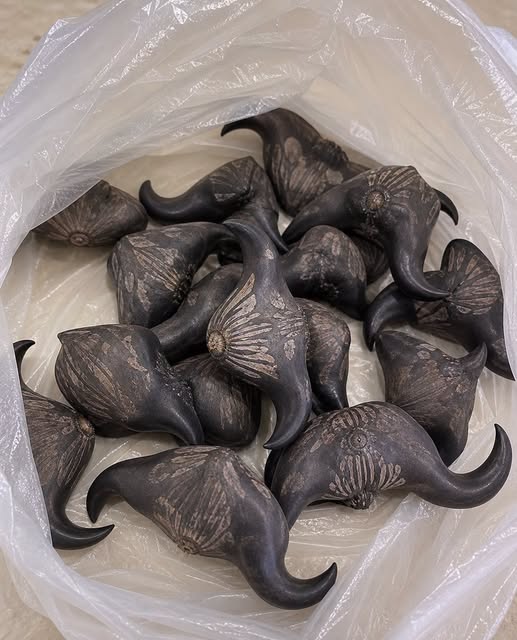
They look like fossilized bat skulls. Or tiny, black buffalo heads dredged from some haunted lake. Their sharp, twisted horns make them look less like food and more like something pulled from a nightmare. Then a neighbor drops a bag of them at your door and casually says, “They’re good to eat.” Suddenly, curiosity turns into a question of safety. One wrong move here can send parasites straight into your intestines. One casual bite, one raw seed, and something that looks like an innocent traditional snack can become a serious health gamble.
Those sinister, horned “devil’s nuts” are water caltrops: strange aquatic fruits that grow in ponds, marshy waters, and slow-moving waterways. Their bizarre appearance serves a purpose. Beneath those hard, barbed shells is a surprisingly mild, starchy kernel with a flavor and texture often compared to chestnuts. For generations, people in parts of South Asia have known exactly what lies beneath the frightening exterior and have turned the kernels into a useful food ingredient.
Across South Asia, especially in India, the kernel is commonly dried and ground into singhara flour. That flour can then be incorporated into porridges, sweets, batters and other traditional foods, providing a simple source of starch that has nourished communities for generations. What looks bizarre and almost threatening from the outside has a long and respected culinary history. The strange shell is only the first impression; inside is a versatile ingredient that has been prepared in many different ways.
But there is another side to these freshwater fruits that makes their preparation especially important. Because water caltrops grow in freshwater environments, they can potentially become associated with parasites such as *Fasciolopsis buski*. Eating contaminated water plants or fruits raw or insufficiently cooked can create a pathway for parasites to enter the human digestive system. That means the fact that someone has eaten them before—or that a neighbor confidently says they are delicious—is not enough to establish that a particular batch is safe.
A gift from a well-meaning neighbor is not proof of safety. You may not know exactly where the fruits came from, what species they are, how they were harvested, or what kind of water they grew in. And with something this unusual, guessing can be dangerous. Without knowing the exact source and species, the safest and most responsible choice may simply be not to eat them.
When they are correctly identified and come from a verified, appropriate source, preparation becomes critical. The fruits should be thoroughly scrubbed to remove dirt and material from the outside, then completely boiled or steamed before anyone attempts to open them. Their shells are not only extremely hard but also sharply barbed, meaning careless handling can cause cuts while cracking them open. The strange shape that makes them fascinating is also a reminder that this is not a food to prepare casually.
Once properly cleaned, thoroughly cooked, and carefully opened, however, the frightening exterior gives way to something completely different. Inside is a subtle, starchy kernel that has been part of traditional diets for generations. The contrast is what makes water caltrops so fascinating: something that resembles a tiny monster can contain an ordinary, useful food hidden beneath its armor.
Still, the key distinction is preparation and identification. Their unusual appearance should never be treated as a reason to experiment, and traditional use does not automatically make every specimen safe. With expert identification, a verified origin, and rigorous cooking, the risks associated with consuming freshwater-grown caltrops can be reduced while preserving the traditional ways they have been enjoyed.
What first looks like something pulled from a haunted lake turns out to have a surprisingly deep culinary history. But the lesson is simple: when a food comes from freshwater and is covered in razor-edged defenses, curiosity should come second to caution. Know exactly what you have, know where it came from, and cook it thoroughly before even considering that first bite.