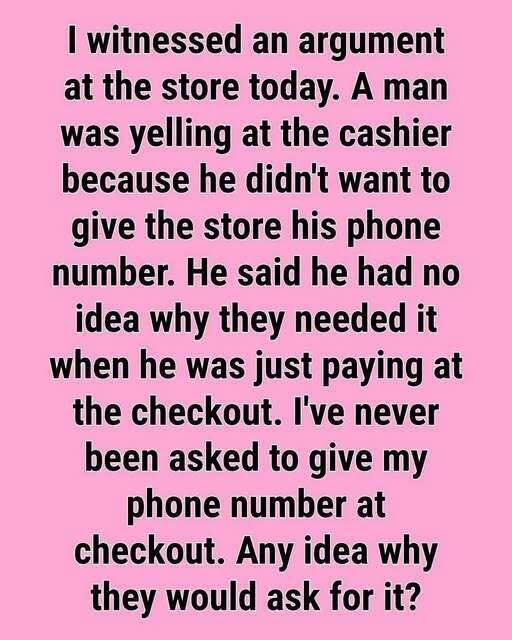
You’re not imagining it. That simple question at the checkout counter may carry a hidden cost that most shoppers never stop to consider. You have probably heard it countless times: “Can I get your phone number?” It sounds harmless, almost automatic. The cashier enters a few digits, your discount appears, and you walk away feeling as though you saved a little money.
But that quick exchange may involve much more than a few dollars off your purchase.
Each time you provide your phone number to a retailer, you may be connecting another piece of your personal life to a growing database. Your shopping habits, purchase history, preferences, and sometimes even patterns about where and when you shop can become part of a larger digital profile.
Most customers never stop to ask what happens after those numbers are entered. Who has access to the information? How long is it stored? Is it shared with marketing partners? What happens if the company’s systems are compromised?
The truth is that loyalty programs can offer genuine benefits, but those benefits often come with a trade-off that deserves more attention.
## Why Stores Want Your Phone Number
Retailers are not simply collecting phone numbers to make checkout faster. In many cases, the number serves as a convenient identifier that connects a customer’s purchases across different visits and shopping channels.
Before digital loyalty programs became widespread, stores had limited ways to understand individual shopping habits. They could count how many products were sold, identify popular items, and estimate which promotions attracted customers. But they often had little information about the behavior of a particular shopper over time.
Loyalty accounts changed that.
When a customer registers with a phone number, the retailer can associate purchases with a single account. Depending on the company’s systems and privacy practices, this may connect transactions made in physical stores with online orders, digital coupons, receipts, and promotional activity.
Instead of seeing a customer as one anonymous transaction, the business may begin to recognize a pattern.
For example, a grocery retailer might learn that someone regularly purchases certain products, shops on particular days, and responds to specific discounts. A clothing store may identify preferred brands, sizes, and shopping frequency. A pharmacy may have access to purchasing information that can be particularly personal, depending on the products involved.
Over time, these details can help companies understand what customers buy and what might encourage them to return.
## Your Shopping History Can Reveal More Than You Think
A single purchase may not reveal much about a person. But hundreds of purchases collected over months or years can create a surprisingly detailed picture.
Consider an ordinary shopping account. It might contain records of grocery purchases, household supplies, clothing, electronics, and seasonal shopping. When combined, these transactions can reveal recurring habits and preferences.
Retailers may use this information to divide customers into groups and tailor advertising accordingly. Someone who frequently buys baby products might receive promotions related to childcare. A customer who regularly purchases fitness equipment may see advertisements for sportswear or nutritional products.
This type of marketing is often presented as personalization. Instead of receiving random advertisements, customers see offers that appear more relevant to their interests.
There can be real advantages to that approach. Personalized coupons may help people save money on products they already purchase. Digital receipts can make it easier to find proof of a transaction. Loyalty accounts may simplify returns and provide access to special offers.
However, the same information that makes marketing more relevant can also make a customer easier to profile.
The more information a company collects, the more it may be able to predict what someone is likely to buy next.
## The Hidden Trade-Off Behind Loyalty Discounts
Loyalty programs are designed to encourage repeat business. A store offers discounts, points, rewards, or exclusive promotions in exchange for customers joining its program.
From the shopper’s perspective, the arrangement can seem straightforward: provide a phone number and receive a lower price.
But the business may receive something valuable in return: information that helps it understand its customers.
That information can influence decisions about pricing strategies, product placement, advertising campaigns, and promotional offers. Retailers can study which discounts encourage people to spend more, which products are frequently purchased together, and which customers are most likely to return.
This does not mean every store uses customer information in the same way. Privacy policies, local laws, and company practices vary considerably. Some retailers limit how information is used, while others may share certain data with service providers or marketing partners.
The important point is that a discount is not necessarily free. The customer may be exchanging personal information for a financial benefit.
Before joining a program, it is worth asking whether the savings are meaningful enough to justify that exchange.
## What Happens When Your Information Is Exposed?
One of the biggest concerns surrounding digital accounts is data security.
Every account containing personal information creates another place where that information must be protected. Retailers maintain databases containing customer details, and those systems can become targets for cybercriminals.
Depending on what a company stores, a security incident could expose phone numbers, email addresses, names, purchase histories, or other account information.
A phone number alone may not seem particularly sensitive. Most people share it with friends, relatives, businesses, and service providers. But when connected to other personal details, it can become more useful to someone attempting to identify or target an individual.
Exposed information may contribute to unwanted marketing, fraudulent messages, phishing attempts, or attempts to impersonate a customer.
For example, a scammer who knows which retailer someone uses may send a convincing message pretending to be that company’s customer service department. A message claiming that a loyalty account has expired or that reward points are about to disappear may persuade someone to click a dangerous link.
This is one reason it is important to be cautious with messages that request passwords, payment details, or verification codes.
A legitimate discount should never require you to share sensitive account credentials through an unexpected text message.
## Does Giving Your Number Mean You Are Being Tracked?
This is where things become more complicated.
Providing a phone number does not automatically mean a retailer can track your precise physical location everywhere you go. A phone number alone does not give a store unrestricted access to your device’s GPS location.
However, retailers may collect other information through their apps, websites, loyalty systems, and digital services. Depending on permissions and privacy settings, some applications may access location information or use technologies that help associate online and in-store activity.
For instance, a retailer’s app may request location permission to help customers find nearby stores or provide location-based offers. Website cookies and advertising technologies may also help companies understand activity across digital platforms, subject to applicable laws and user choices.
This distinction matters because not every form of data collection is the same.
A purchase record is different from GPS tracking. An online advertising cookie is different from a phone number entered at checkout. But when several types of information are connected, they can provide a more detailed understanding of a customer’s behavior.
That is why reading privacy notices and reviewing application permissions can be worthwhile.
## How to Protect Your Information Without Giving Up Every Discount
The good news is that protecting your privacy does not require avoiding every loyalty program or refusing to shop at stores that request a phone number.
A few simple habits can reduce unnecessary exposure.
**1. Ask whether the phone number is required.**
Sometimes cashiers ask for a number because it is part of the store’s loyalty program, not because it is necessary to complete the purchase. You can politely ask whether you can pay without joining.
**2. Read the privacy policy.**
You do not have to study every sentence, but look for information about how customer data is collected, stored, shared, and used for advertising. Pay particular attention to whether information is shared with third parties.
**3. Limit unnecessary permissions.**
If you use a retailer’s mobile application, review its access to your location, contacts, camera, and other device features. Allow only the permissions that are genuinely needed for the services you use.
**4. Avoid sharing extra personal details.**
A loyalty discount may require only basic account information. Be cautious when a retailer requests additional details that do not appear necessary for the program.
**5. Review marketing preferences.**
Many companies provide options to unsubscribe from promotional messages or adjust advertising preferences. You may be able to keep your loyalty benefits while reducing unwanted communications.
**6. Protect your accounts.**
Use unique passwords for online shopping accounts and enable additional security features when available. Never share verification codes with someone who contacts you unexpectedly.
**7. Check whether you can delete your account.**
Some loyalty programs allow customers to close accounts or request deletion of certain personal information. The available rights depend on the retailer and the privacy laws that apply in your location.
These steps will not eliminate every privacy risk, but they can help you make more informed decisions.
## You Have the Right to Say No
One of the most important things shoppers should remember is that they do not have to provide personal information simply because someone asks for it.
A cashier may ask for your phone number with a friendly smile. The question may be part of a routine checkout process, and the employee may have no control over the company’s data practices.
But you are still allowed to decline.
You can simply say, “No thanks, I’ll pass this time.”
You do not need to explain yourself, apologize, or feel uncomfortable because you chose not to join a loyalty program. If the store offers a discount only to registered members, you can decide whether the savings are worth the exchange.
The choice should be yours.
## The Real Value of Your Personal Information
In today’s retail environment, personal information has become an important business resource. Companies use customer data to understand shopping behavior, improve services, develop marketing strategies, and encourage repeat purchases.
That does not automatically make loyalty programs harmful. Many provide useful benefits, and responsible data collection can improve the shopping experience.
The problem arises when customers do not understand what they are agreeing to or assume that a simple phone number is being used for only one purpose.
Every time you create another account, you add another place where your information may be stored. That does not mean you should live in fear of sharing anything. It means you should be thoughtful about what you provide and why.
The next time someone asks for your phone number at the register, take a moment before answering.
Ask yourself whether the discount is worth it, whether you understand the terms, and whether you really need another company collecting information about your shopping habits.
Because sometimes the smallest question at the checkout counter deserves a little more thought.
And remember: saving a few dollars is useful, but understanding what you are giving in return is just as important.