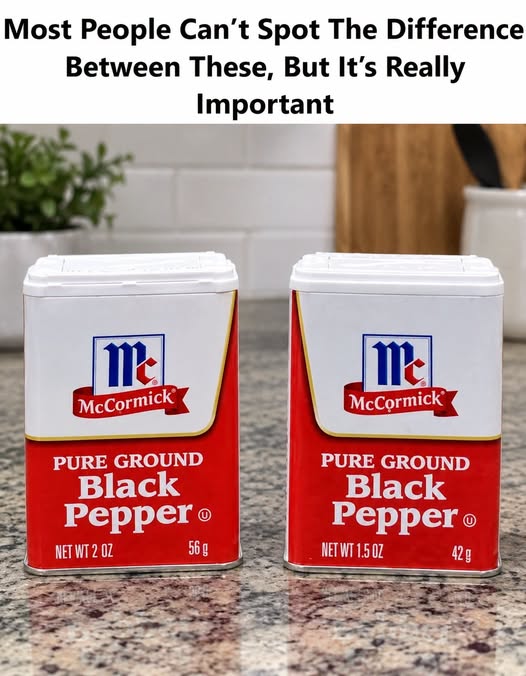
In the time it takes to grab a tin of pepper from a grocery store shelf, you could be losing money without even realizing it. The familiar box is still there, the same recognizable brand, the same bold red packaging, and the same overall appearance. Nothing seems different at first glance. But when you look a little closer, you may discover that there is less pepper inside than you expected. One small change in packaging can make a surprisingly big difference, especially when shoppers continue paying attention to the brand name rather than the amount of product they are actually receiving.
Most shoppers never stop to weigh a box in their hands or carefully examine every detail printed on the label. Grocery shopping is often a routine activity. People move through crowded aisles, pick up familiar products, and rely on years of experience to guide their choices. When a package looks the same as it did the last time they bought it, they naturally assume that its contents have remained relatively unchanged.
That assumption is exactly what makes changes in product size so easy to overlook.
McCormick’s decision to reduce the amount of pepper in its familiar packaging while keeping the same imposing, opaque container has raised questions about transparency and consumer trust. The box still occupies much of the same space on the shelf, and its familiar design continues to create the impression of a product shoppers have known for years. Yet the amount of pepper inside has been reduced.
For customers who have purchased the product repeatedly, that difference may not become obvious until they open the package and begin using it. The container looks familiar, but it may not last as long as expected. Over time, shoppers could find themselves purchasing the product more frequently without immediately understanding why.
This practice is commonly associated with shrinkflation, a strategy in which companies reduce the quantity or size of a product while maintaining the same price or making only a small price adjustment. Instead of directly increasing the price on the shelf, a manufacturer provides less for the money. The change can be difficult to notice because the packaging often remains almost identical.
The comparison with Watkins makes the issue even more interesting. Its clear jar allows shoppers to see the pepper inside, making the amount of product more visually apparent. There is less room for assumptions based on the size or appearance of the container. The difference between the two products becomes more than a matter of packaging design; it raises a broader question about how brands communicate with the people buying their products.
Of course, companies are generally permitted to change product sizes, provided they follow applicable labeling rules. If McCormick accurately displays the net weight on its packaging, the company may be complying with the relevant legal requirements. Consumers are ultimately able to find the stated quantity if they take the time to read the label.
But legality and transparency are not necessarily the same thing.
A company can meet the technical requirements of the law and still leave customers feeling misled. Most people do not expect to conduct a detailed comparison every time they buy an ordinary kitchen staple. They trust familiar brands to make important changes clear rather than relying on shoppers to discover them for themselves.
That trust is valuable. People return to familiar products because they believe they know what they are getting. They recognize the packaging, remember the quality, and develop habits around the brands they use at home. When a company changes the amount inside without making that difference immediately noticeable, it risks damaging a relationship built over many years.
The issue is not simply whether a smaller package contains enough pepper to justify its price. It is whether customers feel that the company has been straightforward with them. A clearly communicated reduction gives shoppers the opportunity to decide whether the product still offers good value. A change that depends on customers overlooking the difference can create resentment.
In a crowded grocery store, packaging is designed to attract attention and encourage quick decisions. But there is a difference between making a product appealing and creating an impression that no longer matches what is inside. The first is ordinary marketing. The second can leave customers questioning the honesty of the brand.
Ultimately, shoppers deserve to know what they are paying for. A familiar red box may still look exactly as it always has, but appearances alone cannot tell the whole story. Checking the net weight, comparing prices per ounce or gram, and looking beyond the size of the container can help consumers make more informed choices.
A company might win a little extra shelf appeal by keeping its packaging familiar, but it risks losing something much harder to replace: the confidence of customers who simply want to believe that the brands they have trusted for years are being honest with them.