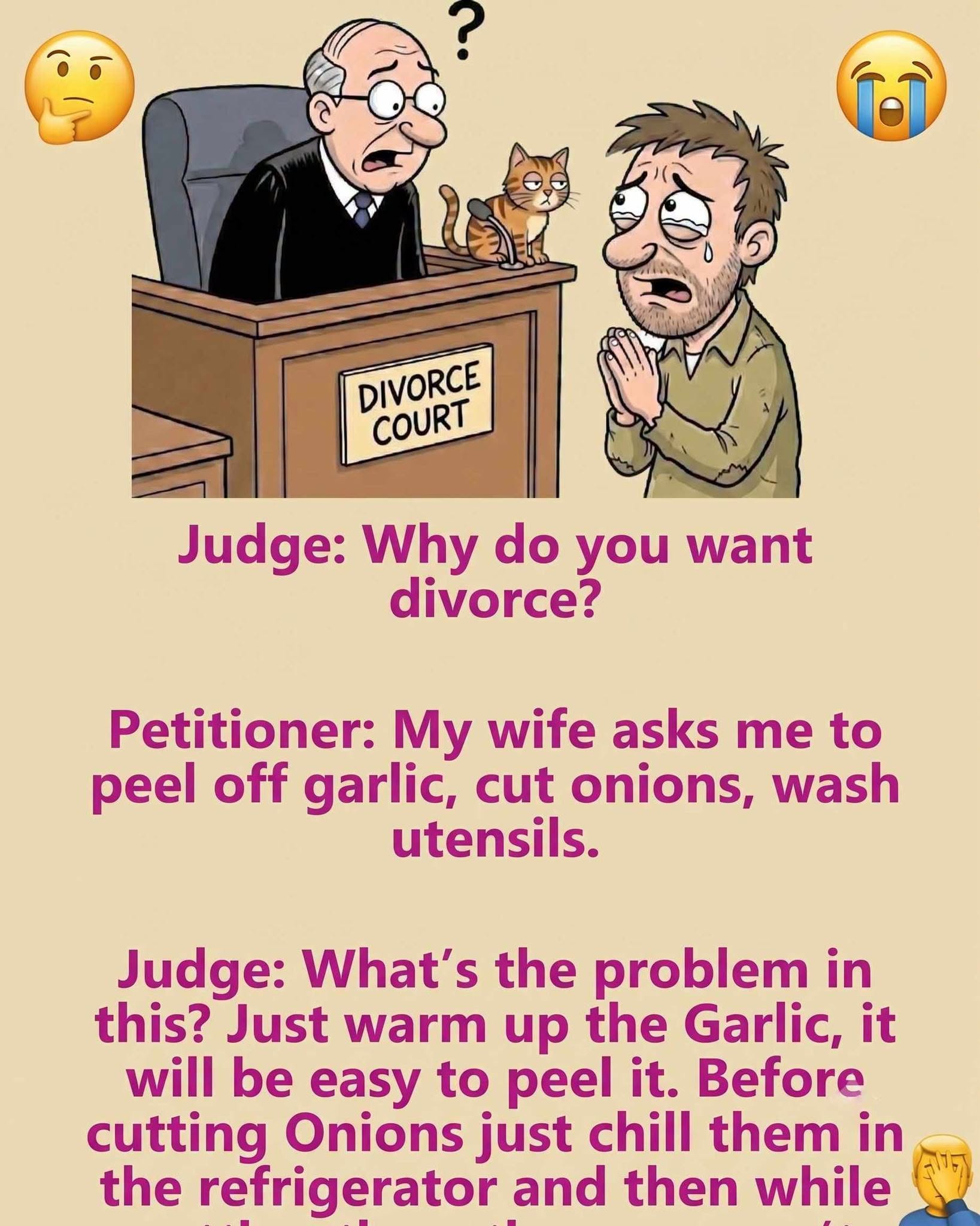
A Man Wants a Divorce — But His Wife’s Unexpected Response Changes Everything
When a man decides he wants a divorce, he often imagines how the conversation will unfold. He may prepare himself for tears, anger, accusations, or a long argument about everything that went wrong in the marriage.
But sometimes, the response he receives is nothing like what he expected.
For one husband, the decision to end his marriage seemed straightforward. He believed that the relationship had reached its final chapter and that separating would allow both of them to move forward. What he had not anticipated was how differently his wife would react when he finally told her the truth.
Her response forced him to reconsider everything he thought he understood about their relationship.
The Conversation He Had Been Avoiding
For months, the husband had felt increasingly distant from his wife. Their conversations had become shorter, their shared activities less frequent, and the comfortable routine they once enjoyed had gradually turned into something that felt unfamiliar.
They still lived under the same roof, but the emotional connection between them seemed to be disappearing.
He tried to convince himself that things might improve. Perhaps they were simply going through a difficult period. Perhaps a vacation, a change in routine, or a little more time together would help them reconnect.
But the doubts continued.
Eventually, he decided that he could no longer ignore what he was feeling.
One evening, after dinner, he sat across from his wife at the kitchen table.
“We need to talk,” he said.
She looked up from her cup of tea.
“What’s wrong?”
He took a deep breath before answering.
“I don’t think this marriage is working anymore. I think we should get a divorce.”
The words hung in the air between them.
He waited for her reaction, preparing himself for an argument.
Instead, she remained silent.
The Response He Never Expected
After several seconds, his wife placed her cup on the table and looked directly at him.
“Are you sure this is what you want?” she asked.
He nodded.
“I’ve been thinking about it for a long time.”
She did not raise her voice. She did not accuse him of betraying her or demand an immediate explanation.
Instead, she asked one simple question.
“Have you thought about what happens next?”
He told her that he had considered the practical details. They would need to discuss their finances, decide what to do about the house, and work out how to divide their belongings.
He assumed those were the concerns she meant.
But she shook her head.
“I’m not talking about the house or the money,” she explained. “I’m asking whether you’ve thought about the life you’re leaving behind.”
For the first time that evening, he struggled to find an answer.
He had spent so much time thinking about ending the marriage that he had barely considered what life would look like afterward.
A Marriage Is More Than Its Difficult Moments
His wife reminded him of the years they had spent together.
She spoke about the small apartment where they had lived when they first married, the difficult months when money was tight, and the evenings they had spent planning the future.
She remembered the ordinary moments that had once made them happy: cooking dinner together, laughing over shared jokes, and supporting each other through disappointments.
She did not pretend that their marriage had been perfect.
There had been disagreements, misunderstandings, and periods when they struggled to communicate. Both had made mistakes, and neither had always understood what the other needed.
But she wanted him to recognize that their relationship could not be defined entirely by its most difficult period.
“People change,” she told him. “Sometimes they grow apart. Sometimes they stop listening to each other. But sometimes, they simply forget how to find their way back.”
He listened without interrupting.
For months, he had focused on what was missing from their marriage. Now, he was being reminded of everything they had built together.
That did not automatically change his decision, but it made the conversation more complicated than he had expected.
The Question That Changed the Conversation
After a long pause, his wife asked him something he had not anticipated.
“Have you told me everything you’ve been feeling?”
He looked away.
The truth was that he had not.
He had kept many of his frustrations to himself, assuming that she would not understand. Rather than explaining what was bothering him, he had gradually withdrawn from conversations and spent more time on his own.
She had noticed the distance but had not fully understood its cause.
“I thought you knew,” he admitted.
“How could I know if you never told me?” she replied.
Her words were not an attempt to blame him for everything that had gone wrong. They were a reminder that a relationship cannot be repaired when one person is unaware of the problems the other is experiencing.
For the first time, he began to recognize that his wife had been living with her own questions and uncertainties.
She had felt the distance, too. She had wondered whether he was unhappy, whether she had done something wrong, and whether the life they shared still mattered to him.
Neither had known how to begin the conversation.
Now, at last, they were talking honestly.
Should They Try One More Time?
His wife did not beg him to stay.
Instead, she suggested that they take time to understand whether their marriage could be improved.
“If you truly want to leave, I won’t pretend I can force you to stay,” she said. “But if part of you still wonders whether things could be different, then perhaps we should have that conversation before making a final decision.”
She suggested that they speak openly about their concerns and consider marriage counseling if both were willing.
She also made it clear that reconciliation would require more than promises. It would require effort, honesty, and a willingness to change the patterns that had brought them to this point.
The husband realized that he had expected his wife either to fight his decision or accept it without question.
Instead, she had offered him something he had not considered: an opportunity to make a thoughtful decision rather than a rushed one.
He agreed that they should talk again.
That agreement was not a promise to remain married. It was simply a willingness to listen.
What Happens When a Marriage Reaches This Point?
Every relationship is different, and there is no single answer when one partner wants a divorce.
Sometimes, separation is the healthiest decision, particularly when a relationship has become harmful or when one partner no longer wishes to continue.
In other situations, honest communication and professional counseling may help couples understand their problems and decide whether rebuilding the relationship is possible.
The important thing is that neither person should feel pressured to stay in a marriage against their wishes.
A lasting relationship requires mutual respect, trust, and a genuine willingness to participate. One person’s determination cannot replace the commitment of two people.
Likewise, choosing to separate does not automatically erase the meaningful years a couple may have shared.
A marriage can have mattered deeply even if it eventually ends.
The Decision That Could Change Their Future
Over the following days, the husband and wife began discussing the issues they had avoided for too long.
They talked about their expectations, their frustrations, and the ways their relationship had changed.
Some conversations were uncomfortable. Others brought a sense of relief because, for the first time in months, neither person had to guess what the other was thinking.
They did not suddenly solve every problem.
Instead, they began to understand what had happened and what each of them wanted moving forward.
Eventually, they would have to decide whether to work toward reconciliation or proceed with a divorce.
Whatever they chose, the decision would need to reflect