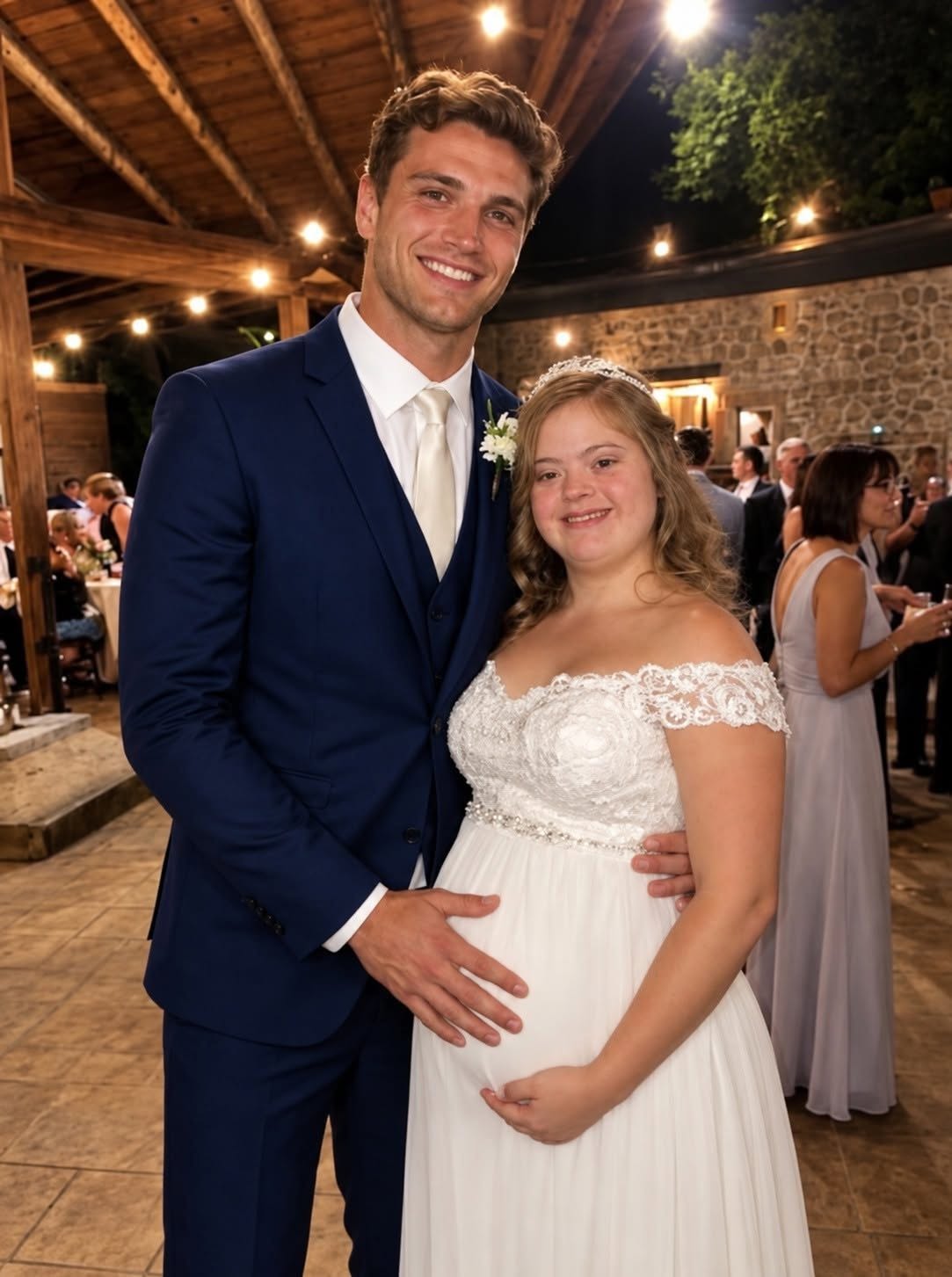
My Best Friend Married My Sister, and I Always Wondered Why — Then He Gave Me His Answer at Her Hospital Bed
For twelve years, I believed my best friend had made the biggest mistake of his life when he married my sister.
Not because she was a bad person. Not because they fought constantly. And certainly not because I wanted to see either of them unhappy.
I questioned it because Daniel had always been the kind of man who could have anyone he wanted, while my sister, Emily, had spent most of her life believing she wasn’t enough.
He was confident, ambitious, and effortlessly charming. He could walk into a room full of strangers and leave with ten new friends.
Emily was different.
She was quiet, sensitive, and the sort of person who apologized when someone else bumped into her. She carried other people’s pain as though it were her responsibility to fix it.
And after our father died, she changed.
She stopped making plans for herself. She stopped talking about her dreams. She became the person everyone called when they needed something, but rarely the person anyone checked on.
I watched it happen, and I hated how little I could do to help her.
Then Daniel came into her life.
He had been my best friend since we were seventeen. We’d survived college, terrible jobs, failed relationships, and the kind of arguments that only end when one person finally admits they’re hungry.
He knew everything about me.
Or so I thought.
When he first told me he was dating Emily, I laughed.
“You’re serious?”
He nodded.
“Very.”
I stared at him, waiting for the punchline.
There wasn’t one.
Six months later, he proposed.
And a year after that, they were married.
At the wedding, I stood beside Daniel as his best man and delivered a speech that made everyone laugh. I talked about loyalty, friendship, and how I had never imagined my two favorite people would end up together.
Everyone thought I was happy.
I was happy for them.
But there was a question I couldn’t shake.
Why her?
Why my sister, who had spent years convincing herself that she was difficult to love?
Why would a man like Daniel choose someone who barely believed she deserved to be chosen?
I never asked him directly.
I was afraid the answer might hurt Emily.
So I kept the question to myself.
For twelve years.
Until the morning I found him sitting beside her hospital bed, holding her hand with both of his, and crying so quietly that I almost didn’t recognize him.
And when he finally looked up at me, he said five words that changed everything I thought I knew about my best friend.
“I married her because I knew.”
But I’m getting ahead of myself.
To understand what he meant, you need to know what happened to my sister first.
The Sister Who Always Put Everyone Else First
Emily was four years older than me, which meant she had spent most of our childhood acting like a second mother.
When I forgot my lunch, she shared hers.
When I failed an exam, she stayed up helping me study for the next one.
When our father died unexpectedly, she was the one who sat beside our mother in the hospital corridor, making phone calls and answering questions while I stood frozen, unable to understand how our lives could change so completely in a single afternoon.
She was twenty-six.
I was twenty-two.
And from that day forward, Emily became the strong one.
At least, that’s what everyone called her.
Our mother leaned on her. Relatives asked her to organize family gatherings. Friends came to her when their relationships fell apart.
Emily listened to everyone.
But when she was hurting, she usually said the same thing.
“I’m fine.”
Sometimes she said it with a smile.
Sometimes she said it while washing dishes so nobody would notice her crying.
I knew she wasn’t fine.
I just didn’t know how to reach her.
After our father died, she abandoned her plans to move abroad for a job she’d wanted for years. She said our mother needed her. She said the timing wasn’t right.
Then she gave up another opportunity.
And another.
Eventually, she stopped talking about leaving at all.
I tried to encourage her.
“You can’t spend your whole life taking care of everyone else,” I told her once.
She smiled sadly.
“Someone has to.”
I wanted to tell her that someone didn’t always have to be her.
But I didn’t know how to make her believe it.
Then Daniel started coming around more often.
At first, I assumed it was because he wanted to spend time with me. We had been friends for years, and our families knew each other well.
But I began noticing things.
He remembered how Emily took her coffee.
He noticed when she was quiet at family dinners.
He asked about the book she was reading and listened to her answer instead of turning the conversation back toward himself.
One evening, I found him in our kitchen while Emily was preparing dinner.
He was drying dishes.
Daniel hated doing dishes.
He had once told me he’d rather scrub a public restroom than stand at a sink for twenty minutes.
Yet there he was, drying plates while Emily talked about a documentary she’d watched.
He wasn’t pretending to listen.
He was genuinely interested.
I remember standing in the doorway, watching them laugh.
For the first time, I wondered whether I had missed something important.
Still, when Daniel later told me he loved her, I struggled to understand it.
I knew he cared about her.
I just couldn’t understand why he wanted to build his entire life around someone who seemed so determined to make herself smaller for everyone else.
I would spend the next twelve years wondering.
The Question I Never Asked
Daniel and Emily’s marriage was not perfect.
They had ordinary disagreements about money, work, and whose turn it was to buy groceries.
They struggled through a renovation that lasted twice as long as expected. They argued over vacation plans. They once spent an entire Sunday refusing to admit that both of them had gotten lost while driving.
But they were good together.
Daniel never mocked Emily for being sensitive.
Emily never treated Daniel’s confidence as arrogance.
They seemed to balance one another.
He encouraged her to apply for jobs she believed she wasn’t qualified for.
She reminded him to slow down when he became obsessed with work.
He bought her a camera when she started talking about photography again.
She framed an old photograph of his parents that he had nearly forgotten existed.
Over time, Emily began to change.
Not dramatically.
She didn’t suddenly become the loudest person in the room or stop worrying about everyone else.
But she started making decisions for herself.
She took a part-time photography course.
She began traveling with Daniel.
She started saying no when she was exhausted.
And sometimes, when she laughed, she looked like the girl she had been before our father died.
I was grateful to Daniel for that.
But I still wondered why he had chosen her.
I had seen him turn down women who were beautiful, successful, and completely devoted to him.
I had watched him walk away from relationships with people who seemed to fit perfectly into the life he had planned.
Then he married my sister, who was still learning how to believe she deserved happiness.
One night, several years after their wedding, we sat on his back porch drinking beer.
Emily had gone to bed early.
I was tired, and perhaps a little too honest.
“Can I ask you something?”
Daniel looked over.
“That depends. Are you about to ask me for money?”
I laughed.
“No. Why did you marry Emily?”
His smile faded slightly.
“What do you mean?”
“I mean, you could have chosen anyone. And I know you love her. That’s not what I’m asking.”
He studied me for a moment.
Then he looked out at the garden.
“Not tonight,” he said.
I frowned.
“Why not?”
“Because if I answer that question, I need to do it properly. And I don’t want to give you half an answer.”
I thought he was joking.
He wasn’t.
He never brought it up again.
Neither did I.
Life continued.
We got older. Our jobs changed. Our mother moved closer to the coast. Daniel and Emily bought a small house with a garden, and I became the uncle who arrived for Sunday lunch with groceries nobody had asked him to bring.
The question slowly became less important.
Until it became the only question I could think about.
The Phone Call at 3:17 A.M.
The call came on a Thursday morning.
I was asleep when my phone began vibrating on the bedside table.
I reached for it, annoyed, until I saw Daniel’s name.
Something about the time made my stomach tighten.
“Daniel?”
His voice was barely recognizable.
“Come to the hospital.”
I sat up.
“What’s happened?”
“It’s Emily.”
He stopped speaking.
I heard him take a breath that sounded painful.
“Please,” he whispered. “Just come.”
I was dressed in less than three minutes.
During the drive, I called him twice, but he didn’t answer.
My mind filled with possibilities, each one worse than the last.
Had there been an accident?
Had she collapsed?
Was she hurt?
When I reached the hospital, Daniel was standing outside the intensive care unit.
He was still wearing the gray sweatshirt he’d worn to bed. His hair was disheveled, and his eyes were red.
I had never seen him look so frightened.
“What happened?” I demanded.
He opened his mouth, but nothing came out.
A doctor approached us a few minutes later.
Emily had been experiencing symptoms for several weeks, the doctor explained. She had dismissed the fatigue as stress and the pain as something temporary. When her condition suddenly worsened, Daniel brought her to the hospital.
The medical team had discovered a serious problem that required immediate treatment.
They were still assessing the full situation.
I won’t pretend I understood everything the doctor said.
I remember words like complications, urgent intervention, and the next several hours are important.
I remember asking whether she would be all right.
The doctor answered honestly.
They were doing everything they could, but they couldn’t promise an outcome.
Daniel sat down in a plastic chair and covered his face with his hands.
I had known this man for most of my life.
I had seen him furious, exhausted, heartbroken, and terrified.
But I had never seen him look as though the world had ended while everyone else was still walking around.
I sat beside him.
“She’s going to fight,” I said, though I had no idea whether the words would help.
He nodded without looking up.
“She always does.”
We waited for hours.
Then the nurse told us we could visit her briefly.
I entered the room first.
Emily looked impossibly small beneath the white hospital blanket. There were monitors beside her bed, and an IV line ran into her arm.
Her eyes were closed.
I took her hand.
“Hey, Em,” I whispered. “You have to stop scaring me like this.”
She didn’t respond.
I told her about our mother, about the ridiculous argument I’d had with my neighbor, about the fact that I had accidentally ordered enough groceries to feed an entire football team.
I told her anything I could think of.
Then I kissed her forehead and stepped back.
Daniel entered after me.
I stood near the door, intending to give him privacy.
But then he began speaking.
And I realized I was finally about to hear the answer I had waited twelve years to understand.
“I Married Her Because I Knew”
Daniel sat beside Emily’s bed.
He took her hand and pressed it against his forehead.
For several seconds, he said nothing.
Then he began to cry.
Not loudly.
Not dramatically.
He cried the way people cry when they have been trying to stay strong for too long and no longer have the strength to pretend.
“Emily,” he whispered, “I need you to hear me.”
He looked at her face.
“I don’t know if you can hear me right now. The doctors say you need rest, and I know I should let you rest. But there are things I should have told you more often.”
He swallowed.
“You spent so much of your life believing that you had to earn your place in the world. You thought you had to be useful to be loved. You thought that if you stopped taking care of everyone, we’d all discover that you weren’t enough.”
His voice broke.
“But that was never true.”
I felt my throat tighten.
Daniel continued.
“When I first met you, I didn’t fall in love with you because you took care of people. I fell in love with you because of what you did when nobody was watching.”
He smiled through his tears.
“Remember when my mother was in the hospital, and you drove across town at midnight because I told you I was scared? You sat with me until sunrise. You didn’t tell me to be strong. You didn’t try to fix anything. You just stayed.”
He paused.
“Or the time you found that wallet outside the grocery store? There was money in it, and you were struggling to pay your own bills. You tracked down the owner and returned every dollar.”
I remembered that.
Emily had never mentioned it to anyone.
Daniel had been the only person who knew.
“And remember when you thought I wasn’t paying attention at your birthday dinner?” he continued. “You noticed that the new waitress was overwhelmed, so you helped her carry plates back to the kitchen. You spent half your own birthday making sure a stranger didn’t feel embarrassed.”
He squeezed Emily’s hand.
“You never did those things because you wanted praise. You did them because you couldn’t stand the thought of someone feeling alone.”
He lowered his head.
“That’s why I married you.”
My eyes filled with tears.
But then Daniel said something that made me grip the doorframe.
“I married you because I knew you would spend your whole life taking care of everyone else. And I wanted to spend mine making sure someone took care of you.”
The room seemed to stop moving.
He looked at Emily, his face wet with tears.
“I knew you would forget to rest. I knew you’d say you were fine when you weren’t. I knew you’d give away the last piece of your happiness if you thought someone else needed it more.”
He laughed weakly.
“I didn’t marry you because I thought you needed saving. I married you because I wanted to stand beside you while you learned that you didn’t have to save everyone.”
Then he leaned forward and whispered:
“And I would choose you again. Every single time. Even if I knew how afraid I would be sitting in this room.”
I turned away.
I didn’t want him to see me crying.
For twelve years, I had wondered why my best friend had chosen my sister.
Now I understood that I had been asking the wrong question.
I had been looking at what Emily lacked in her own eyes.
Daniel had been looking at who she was when she thought nobody was paying attention.
And he had loved her for it.
The Truth He Had Been Carrying
After a while, Daniel noticed me standing near the door.
He wiped his face and nodded toward the chair beside him.
“Come here.”
I walked over and sat down.
For a moment, neither of us spoke.
Then I asked the question I should have asked years earlier.
“Is that really why you married her?”
He looked at me.
“Yes.”
I shook my head.
“Why didn’t you tell me?”
He considered the question.
“Because I knew you were protective of her. And I understood why.”
He glanced at Emily.
“You saw how much she gave up after your father died. You saw her become the person everyone relied on. You were afraid someone would take advantage of her.”
I nodded.
He was right.
“I thought you might hurt her,” I admitted.
Daniel didn’t look offended.
“I know.”
“I didn’t think you were cruel. I just didn’t understand what you saw in her.”
He smiled sadly.
“Maybe that’s because you were looking at her the way she looked at herself.”
I stared at him.
He continued.
“Emily always thought the things that made her valuable were the things she did for other people. She thought being loved meant being needed.”
He took a breath.
“I saw a woman who could make people feel safe without even realizing she was doing it. I saw someone who remembered the small things. Someone who noticed when a person was being left out. Someone who would rather be uncomfortable herself than let someone else feel ashamed.”
He shook his head.
“Those aren’t small things.”
I looked at my sister.
Even lying in that hospital bed, she somehow seemed like the center of our world.
Daniel reached for her hand again.
“I didn’t marry her because I thought I could change her. I married her because I loved her. The rest was just learning how to build a life together.”
For the first time, I felt embarrassed by the question I had carried for so long.
Not because it had been wrong to protect Emily.
But because I had mistaken her quietness for weakness.
I had assumed that because she struggled to see her own worth, it was difficult for anyone else to see it.
Daniel had never made that mistake.
The Hours That Followed
The next several hours were among the longest of my life.
Our mother arrived shortly after sunrise. She held Daniel for a long time before sitting beside Emily’s bed.
We called relatives. We spoke with doctors. We waited for updates that came too slowly.
There were moments when we were hopeful and moments when fear returned so suddenly that I could barely breathe.
I kept thinking about all the ordinary things I had taken for granted.
Emily calling me to ask whether I had eaten.
Her sending photographs of flowers from her garden.
Her habit of buying ridiculous birthday cards because she said the funny ones were more memorable.
I thought about the times I had been too busy to answer her calls.
The times I had promised to visit and postponed it.
The times I had assumed there would always be another Sunday lunch.
I wished I had told her more often that she mattered to me for reasons that had nothing to do with what she did for me.
Daniel barely left her side.
When the nurses asked him to take a break, he walked into the hallway, drank some water, and returned as soon as he could.
At one point, I found him sitting alone near a window.
“Have you slept at all?” I asked.
He shook his head.
“You need to take care of yourself, too.”
He looked at me with tired eyes.
“She would tell me the same thing.”
I sat beside him.
For a while, we watched the sun rise over the parking lot.
Then I put my hand on his shoulder.
“Thank you,” I said.
He frowned.
“For what?”
“For loving her the way you do.”
His expression changed.
He looked down and nodded.
“She’s my wife.”
It was such a simple answer.
But somehow, it said everything.
The Moment We Had Been Waiting For
Late that afternoon, a nurse came into the waiting area and asked us to follow her.
Emily was awake.
I nearly ran down the corridor.
When I entered the room, her eyes were open, and she looked exhausted but alert.
Daniel was already beside her.
He was holding her hand and laughing through tears.
“Hey,” Emily whispered when she saw me.
I bent down and kissed her cheek.
“You scared ten years off my life.”
She gave me a weak smile.
“Sorry.”
Daniel laughed.
“Don’t apologize. Just rest.”
She looked at him.
Then she noticed his red eyes.
“Were you crying?”
He tried to smile.
“No.”
Emily raised an eyebrow.
“You are a terrible liar.”
Even in that moment, she sounded like herself.
I stepped back and let them talk.
But before I left the room, Emily reached for my hand.
“Don’t go far,” she whispered.
“I won’t.”
She held my fingers for a moment.
Then she looked at Daniel.
“Did you tell him?”
Daniel went still.
I looked between them.
“Tell me what?”
Emily’s eyes moved back to her husband.
He gave a small, tired smile.
“Only what I needed to say.”
She squeezed his hand.
“Good.”
I didn’t ask what she meant.
Some conversations belong to the people who have spent years building a life together.
And I had finally learned that loving someone sometimes means trusting that their story is more complicated—and more beautiful—than you ever realized.
Emily’s recovery would take time. There would be follow-up appointments, difficult days, and uncertainty about what came next.
But she was awake.
She was talking.
And when Daniel kissed her forehead, she smiled in a way I hadn’t seen since before our father died.
For the first time in years, I saw my sister not as the fragile person I had been afraid of losing, but as a woman who was deeply loved.
What I Finally Understood
Several weeks later, Emily was home.
Her recovery was slow, and Daniel became even more attentive than before. He made meals, managed appointments, and insisted on taking over the household tasks she usually handled herself.
Emily complained that he was fussing too much.
Daniel told her she had spent twelve years fussing over everyone else and was finally entitled to a turn.
She rolled her eyes.
Then she let him make her tea.
One afternoon, I visited them and found Emily sitting in the garden, wrapped in a blanket.
Daniel was nearby, trying to assemble a small table without reading the instructions.
Emily was laughing at him.
It was an ordinary scene.
Nothing dramatic.
Nothing anyone would write a headline about.
And yet, standing there, I understood something that had taken me twelve years to learn.
I had spent so long wondering why Daniel had chosen my sister that I had failed to recognize what a remarkable choice he had made.
He hadn’t chosen her because she was perfect.
He hadn’t chosen her because she was always strong.
He hadn’t chosen her because she never needed help.
He had chosen her because he knew who she was beneath the exhaustion, the grief, and the constant need to be useful.
He saw the woman who made people feel welcome.
The woman who noticed quiet suffering.
The woman who stayed when life became difficult.
And he wanted to be the person who stayed for her.
That evening, before I left, I sat beside Daniel on the porch.
I looked at him and said, “I owe you an apology.”
He frowned.
“For what?”
“For questioning why you married her.”
He was quiet for a moment.
Then he smiled.
“You were trying to protect your sister.”
“I was.”
“And I would have worried about her, too.”
I laughed.
Then I looked at him seriously.
“I just didn’t see what you saw.”
He glanced toward the garden, where Emily was watering her plants.
“You see it now.”
I did.
And I wished I had seen it sooner.
Because the truth was that Emily had never needed someone to convince her she was worthy of love.
She needed people who would love her without requiring her to prove it.
Daniel understood that before I did.
And when I think back to that hospital room, I no longer remember only the fear, the machines, or the hours we spent waiting for news.
I remember a man holding his wife’s hand and explaining, in the simplest words imaginable, why he had chosen her.
“I married her because I knew she’d spend her life taking care of everyone else. And I wanted to make sure someone took care of her.”
Twelve years of questions ended with that answer.
And it taught me something I will never forget.
Sometimes, the person you worry is too fragile to be loved is the very person someone else has been waiting their entire life to love.
Not because they need fixing.
Not because they need saving.
But because they are worth staying for.
And sometimes, the greatest love story isn’t about finding someone who makes your life perfect.
It’s about finding someone who sees you clearly—even on the days when you cannot see yourself at all—and chooses to stay.
That is why my best friend married my sister. And after twelve years, I finally understood.
This is a fictional emotional drama written for storytelling purposes.