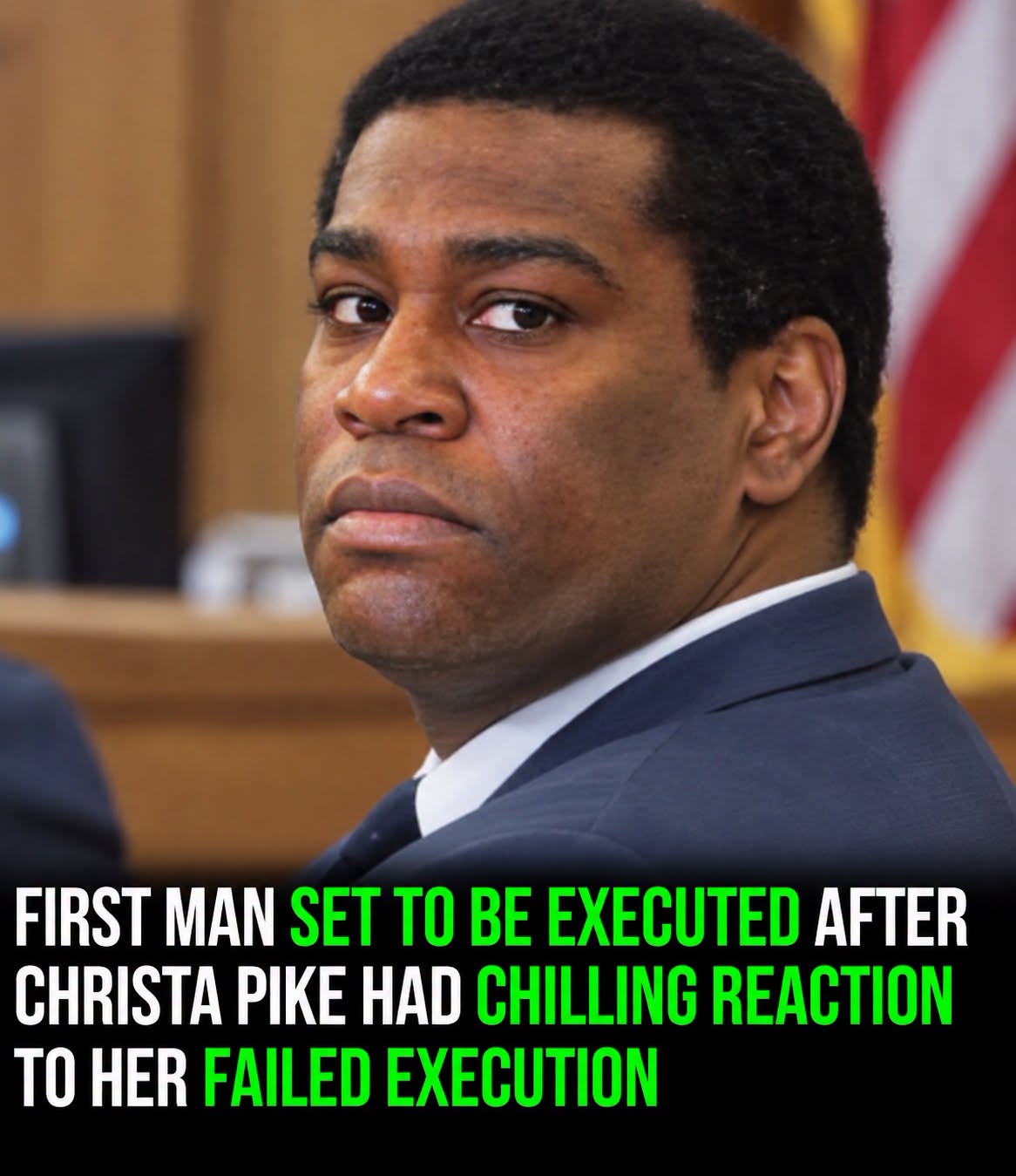
According to the report, Jamaal Howard, 46, is scheduled for execution in Texas on October 7 in connection with the 2000 killing of petrol station worker Vicky Swartout during a robbery in Silsbee. After more than two decades on death row, the case has reached a deeply consequential stage, with Howard’s lawyers challenging whether he understands the punishment the state intends to carry out.
At the center of that challenge is a question that goes beyond the details of the original crime: does Howard understand that the execution is intended to end his life?
His spiritual adviser, Dr. Jeff Hood, says he has serious concerns about Howard’s understanding of what is about to happen. Hood has described conversations in which Howard allegedly appeared to misunderstand the nature of the drugs that would be used during lethal injection. According to Hood’s account, Howard reportedly confused the execution drugs with intoxicants and appeared to believe that, if the injection did not work, the warden would simply shoot him.
Those statements form the basis of Hood’s concern, but they should not be mistaken for an independent medical or judicial determination.
The report does not establish that Howard has been legally found incompetent to face execution. Rather, his lawyers are seeking an evidentiary hearing so that the question can be examined formally. That distinction is important because claims about a person’s understanding of an execution carry serious constitutional implications and require more than an individual’s interpretation of private conversations.
For Howard’s legal team, the issue is therefore not simply whether he has an unusual or incomplete understanding of the execution process. The question is whether his mental and intellectual limitations, if established, affect his ability to comprehend the punishment imposed upon him.
That issue has become increasingly urgent as the scheduled execution date approaches.
For more than twenty years, the case has remained connected to the death of Vicky Swartout, whose killing occurred during a robbery at a petrol station in Silsbee in 2000. Her death remains a central part of the legal history surrounding Howard’s conviction and sentence.
For Swartout’s loved ones, the case is also about a life that was taken decades ago.
Behind the legal filings and courtroom arguments is the reality of a victim whose family has had to live with the consequences of the killing for years. The passage of time does not erase that loss, even as the legal process surrounding the person convicted continues through appeals, hearings, and constitutional challenges.
That creates a difficult tension at the heart of the case.
The state has a sentence it seeks to carry out.
The victim’s death remains a permanent reality for those who loved her.
And Howard’s lawyers are asking whether the state can constitutionally proceed if he does not understand the punishment he is facing.
These questions can exist simultaneously.
Acknowledging the seriousness of the constitutional issue does not erase the seriousness of the original crime. Likewise, recognizing the suffering of the victim’s family does not by itself resolve the separate legal question of whether an execution may lawfully proceed.
That distinction is essential.
The role of an evidentiary hearing, if granted, would be to examine the claims and evidence rather than simply accept one side’s description. Statements attributed to Hood may be relevant to the defense, but they are not themselves the final legal answer.
The court would have to consider the available evidence and determine what, if anything, it establishes about Howard’s understanding of his punishment.
For Hood, the issue is intensely personal.
As Howard’s spiritual adviser, he expects that he may accompany him during the final stages of the process. His concern is not only about what will happen legally, but about what it would mean to stand beside someone who, in Hood’s view, may not fully comprehend that the procedure is intended to end his life.
That creates an unsettling possibility.
The execution could proceed according to the state’s procedures while the person at the center of it remains confused about what those procedures mean.
Whether that description is accurate is precisely the question the legal challenge seeks to address.
The case therefore illustrates why competency questions in death-penalty proceedings can be so consequential. An execution is not simply another stage of a criminal sentence. It is an irreversible act, which makes the legal standards surrounding it particularly significant.
If a person’s ability to understand the nature of the punishment is genuinely in dispute, the process for examining that question becomes critical.
For the public, it can be difficult to understand how someone convicted of a serious killing could still raise constitutional claims decades later.
But criminal cases do not end with a conviction alone. Death-penalty cases can involve years of appeals and legal review because the consequences of an execution cannot be reversed once it occurs.
The passage of time can therefore produce a complicated landscape in which the original crime, the victim’s family, the convicted person’s legal rights, and the state’s authority all remain connected.
In Howard’s case, the approaching execution date has brought those issues into sharp focus.
The report presents Hood’s observations as a warning that something may be seriously wrong with Howard’s understanding of the punishment. But until a court evaluates the evidence, those observations remain allegations and professional concerns rather than established findings.
That distinction is particularly important when discussing intellectual disability, competency, or any other question concerning a person’s mental functioning.
Such questions should be determined through appropriate evidence and legal procedures, not through assumptions based on isolated statements.
For now, the central question remains unresolved in the account provided: whether Howard sufficiently understands that lethal injection is intended to cause his death and whether the evidence warrants a formal hearing on that issue.
The answer could determine whether the scheduled execution proceeds as planned or whether the legal process takes another turn.
Meanwhile, the emotional reality surrounding the case remains complicated.
For Swartout’s loved ones, there is the enduring loss of someone who never came home from work in 2000.
For Howard, there is the possibility of an execution after decades in prison.
For Hood, there is the fear of standing beside his spiritual companion at the moment when the state carries out its sentence while questioning whether Howard understands what is happening.
And for the courts, there is the responsibility to distinguish established facts from allegations and to determine whether constitutional requirements have been satisfied.
The approaching date therefore represents more than a calendar entry.
It is the point toward which years of litigation, grief, appeals, and uncertainty have been moving.
Whatever the ultimate legal decision, the case demonstrates why death-penalty proceedings can remain deeply consequential long after a conviction has been entered.
A victim’s family may still be waiting for finality.
A condemned prisoner may still be raising constitutional claims.
Attorneys may still be examining whether the sentence can legally be carried out.
And a spiritual adviser may still be preparing to accompany a person through what could be the final hours of his life.
The questions surrounding Howard’s understanding cannot be resolved simply by repeating what either side believes.
They require evidence, careful examination, and a legal determination.
Until that happens, the most responsible conclusion is a measured one: the report describes serious concerns raised by Howard’s spiritual adviser and a legal effort to have those concerns formally examined, but it does not by itself establish that Howard is legally incompetent for execution.
What remains certain is that October 7, as described in the report, represents a critical date for a case that has remained unresolved in different ways for more than two decades.
At its center are the memory of Vicky Swartout, the constitutional rights of the condemned, and the state’s responsibility to ensure that any punishment it carries out complies with the law.
Those realities do not cancel one another out.
They are the difficult circumstances that now surround the final stage of this case.