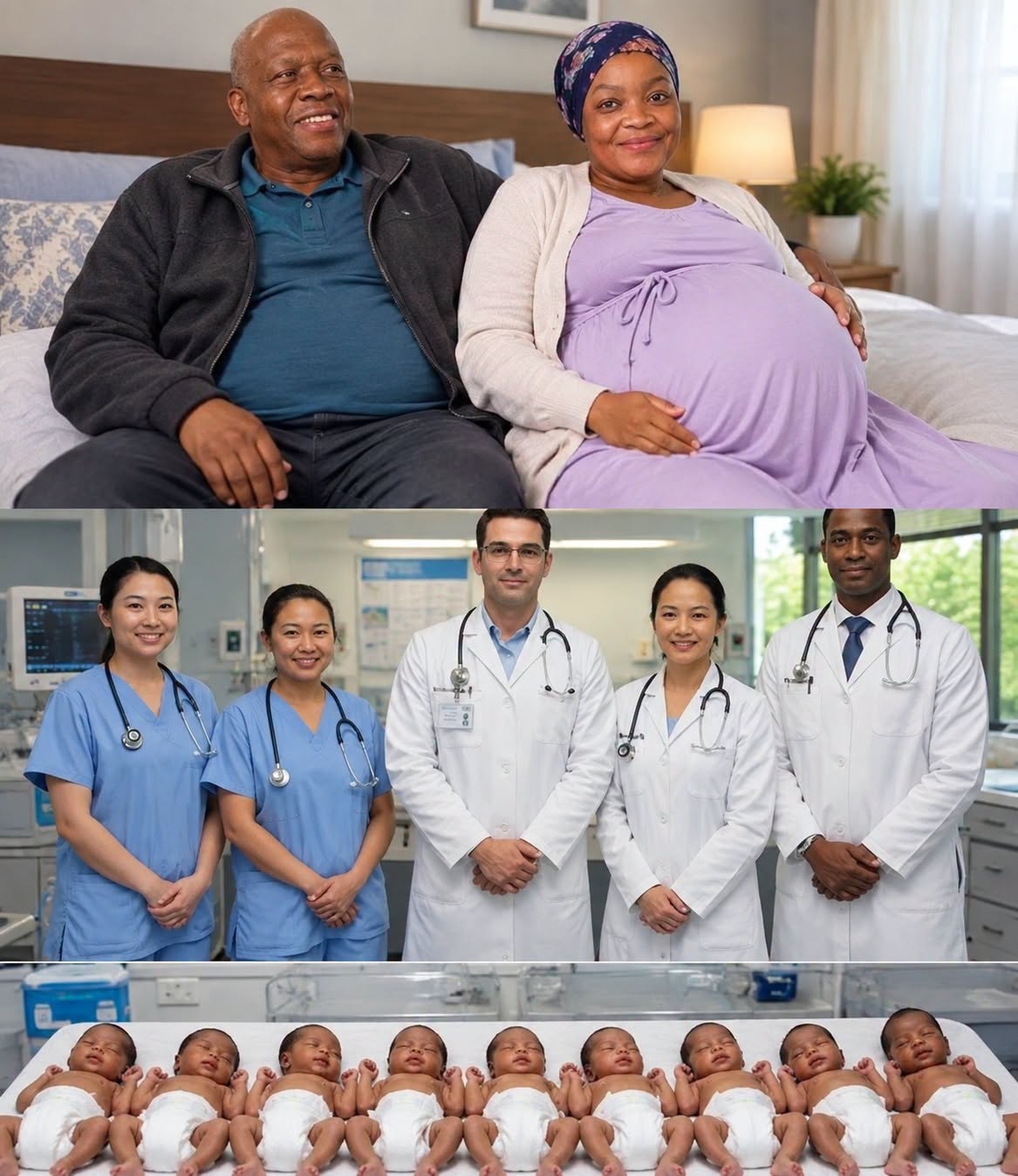
A pregnancy involving ten fetuses would present extraordinary medical challenges, but the account provided does not establish that such a birth actually occurred. No named hospital, documented delivery, attending medical team, or independently confirmed outcome is supplied. Without those details, the remarkable claim should remain exactly that—a claim awaiting verification rather than an established medical event.
What is clear is that higher-order multiple pregnancies can involve significant risks for both the mother and the babies. As the number of fetuses increases, the likelihood of complications generally becomes greater, including premature delivery, low birth weight, and medical problems associated with carrying multiple pregnancies. The mother’s health can also be placed under considerable physical strain.
A pregnancy involving that many fetuses would therefore require highly specialized medical care.
Doctors would need to monitor the development and wellbeing of each fetus while also watching closely for complications affecting the mother. Regular imaging, careful assessment of growth, and monitoring for signs of premature labor or other problems would be especially important. A multidisciplinary team might include maternal-fetal medicine specialists, obstetricians, neonatologists, nurses, and other healthcare professionals preparing for the possibility of an extremely complicated delivery.
The timing and method of delivery would depend on the circumstances of the pregnancy and the health of both mother and babies. There is no single approach that can be assumed simply from the number of fetuses involved. In an unusually high-order multiple pregnancy, decisions would need to be individualized and made by specialists based on medical findings.
The period immediately after birth could be equally demanding.
Babies born very prematurely may require specialized neonatal care, including support for breathing, feeding, maintaining body temperature, and other functions that would normally continue developing inside the womb. Depending on gestational age and individual health, some infants may need prolonged stays in a neonatal intensive care unit.
For parents, that experience can be emotionally overwhelming.
The excitement of expecting children can exist alongside fear, uncertainty, exhaustion, and difficult medical decisions. Instead of preparing for the relatively predictable experience many families imagine, parents facing an extremely high-risk multiple pregnancy may spend weeks or months balancing hope with frequent medical appointments and the possibility of an early delivery.
Practical support can become just as important as medical care.
Families may need help with transportation, meals, childcare for older children, communication with relatives, and extended periods of time near a hospital. If babies require prolonged neonatal care, parents can also face significant emotional and financial pressures while trying to remain involved in their children’s treatment and recovery.
Modern maternal and neonatal medicine has made remarkable advances, and specialist teams can provide sophisticated care for high-risk pregnancies and premature infants. But medicine cannot guarantee that every pregnancy will end safely, particularly when the circumstances are extraordinarily complex.
That is why claims about astonishing births deserve careful verification.
A photograph, social-media post, or dramatic headline may attract enormous attention, but it does not establish that a particular pregnancy or delivery occurred exactly as described. Reliable confirmation would ideally come from identifiable medical sources, official statements, reputable reporting, or documentation that can be independently checked.
At the same time, skepticism should not become cruelty.
Behind an extraordinary headline may be a real family experiencing an intensely personal medical situation. If such a pregnancy did occur, the people involved would deserve privacy, accurate information, appropriate medical support, and compassion rather than speculation.
The responsible response is therefore neither automatic belief nor automatic dismissal.
It is to separate what is medically established from what remains unverified. Higher-order multiple pregnancies are genuinely high-risk and require specialized care, but an extraordinary claim still needs evidence before it can be presented as fact.
Until that evidence is available, the most honest conclusion is simple: the medical challenges are real, the reported birth remains unconfirmed, and compassion should accompany the search for the truth.