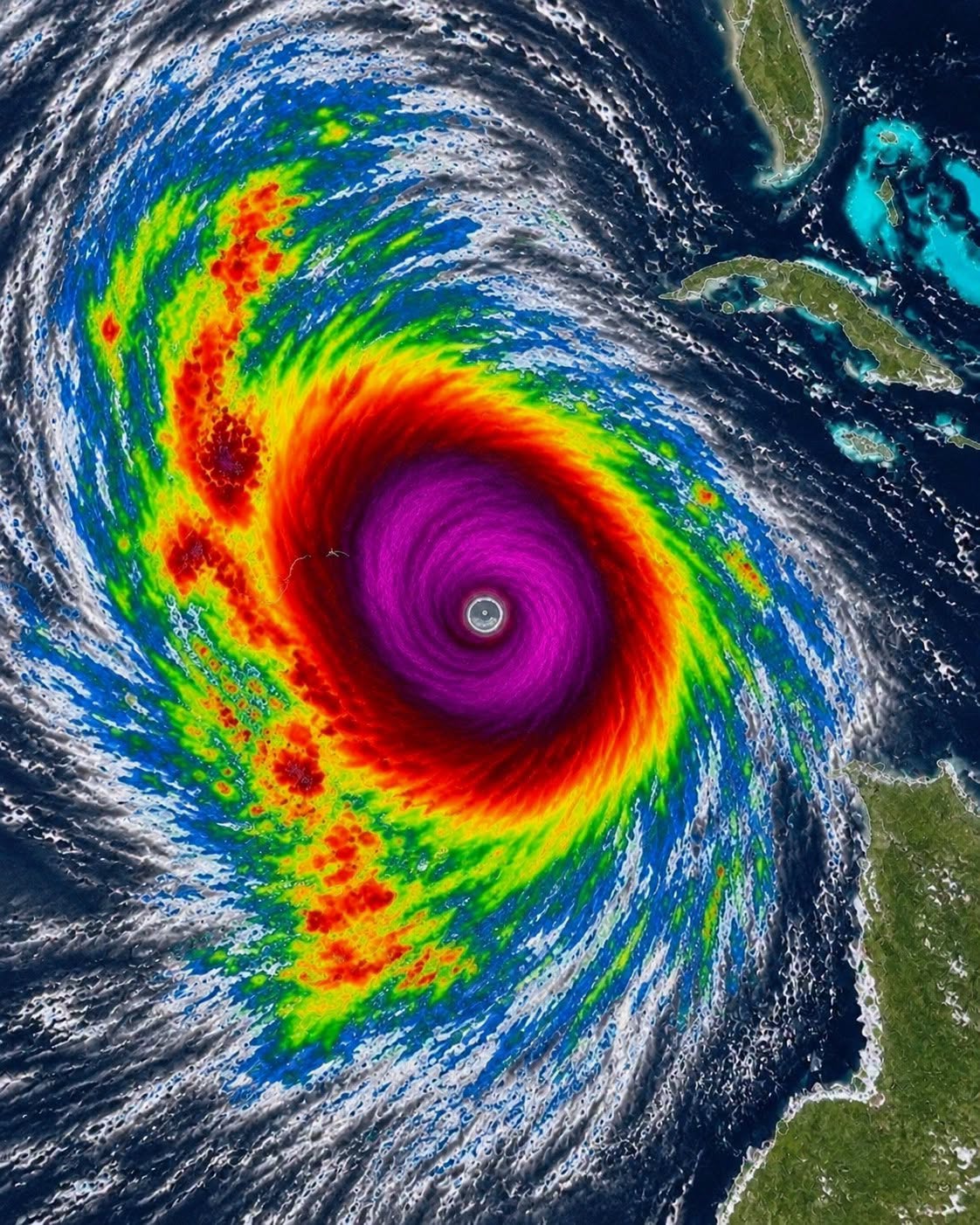
The account portrays Melissa strengthening rapidly, leaving households with less time to prepare and make difficult decisions. When a storm intensifies quickly, the window for action can become dangerously short, especially for people who need additional time to evacuate, arrange transportation, collect medications, or secure essential belongings.
A Category 5 hurricane is defined by sustained winds of at least 157 miles per hour, but the category alone cannot describe every danger a major storm can create. Wind speed is only one part of the threat. Coastal storm surge can push enormous amounts of water inland, while heavy rainfall can produce flooding far from the coastline or even well away from the storm’s center.
Tornadoes can also occur within tropical systems, creating another hazard that may not be obvious from the hurricane’s overall category. For that reason, people should not assume that being outside the projected center of the storm means they are automatically safe.
The forecast cone is frequently misunderstood as a map showing the entire area that will experience dangerous weather. In reality, it primarily communicates uncertainty about the likely path of the storm’s center. Hazardous winds, rainfall, storm surge, and tornadoes can extend far beyond that cone.
Forecasts can also change as meteorologists receive new observations and improve their understanding of the storm. A projected track from one update may shift considerably in a later advisory. That does not necessarily mean earlier forecasts were careless; it reflects the inherent uncertainty involved in predicting the movement and intensity of a complex weather system.
For families in or near the potential impact area, preparation should begin before conditions become dangerous.
That means deciding in advance where to go if evacuation becomes necessary, determining how everyone will get there, and identifying relatives or friends who may need assistance. Transportation can become especially difficult for older adults, people with disabilities, or anyone without access to a private vehicle.
Medications, important documents, chargers, water, food, and other essential supplies should be gathered before the last-minute rush. Families with pets should also have a plan, since evacuation shelters and hotels may have different rules regarding animals.
If authorities issue an evacuation order, it should be taken seriously and followed promptly. Waiting until roads are crowded, winds are increasing, or flooding has begun can make leaving much more dangerous.
For those who are not ordered to evacuate, choosing a sturdy shelter away from windows is essential. Interior rooms on lower levels are generally preferable to areas exposed to large windows or unsecured objects. People should continue monitoring official alerts throughout the storm because conditions can change quickly.
Floodwater deserves particular caution.
Never drive through flooded roads simply because the water appears shallow. Moving water can conceal damaged pavement, debris, open drains, or other hazards, while even a relatively small amount of fast-moving water can affect a vehicle’s ability to remain under control.
Generators create another serious risk. They should always be operated outdoors, well away from doors, windows, and other openings where carbon monoxide could enter the home. They should never be used inside houses, garages, or enclosed areas.
Preparation also involves looking beyond one’s own household.
Checking on vulnerable neighbors before the storm arrives can make a meaningful difference. A quick conversation may reveal that someone needs help securing their home, obtaining medication, arranging transportation, or finding a safe place to stay.
The central lesson is not to focus exclusively on the forecast track or the storm’s category.
A hurricane can be dangerous because of wind, water, flooding, surge, tornadoes, power outages, and the secondary problems that follow. The safest approach is to pay attention to the specific hazards identified by local authorities and to act before conditions make those decisions harder.
Melissa’s eventual course remains unresolved in this scenario, but the priority is clear.
Protect people before possessions. Follow official evacuation guidance. Prepare early rather than waiting for certainty. Help those who may struggle to respond quickly.
And never mistake being outside a forecast line for being outside the danger.