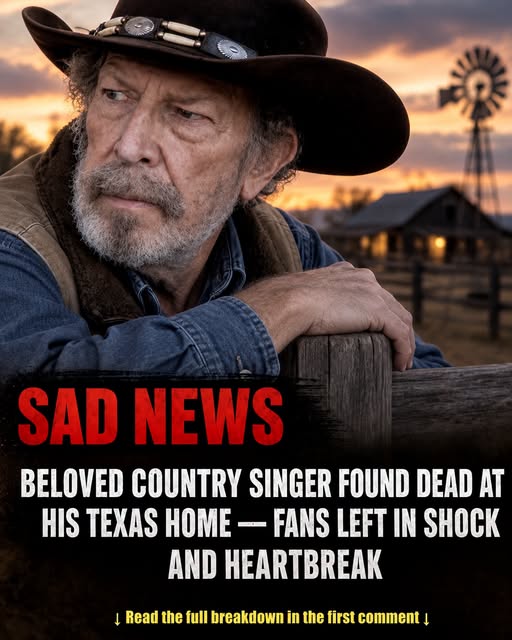
Texas didn’t just lose a musician.
It lost a grenade.
Kinky Friedman is gone, and with him goes a kind of fearless, profane honesty that this country barely knows what to do with anymore. He was never interested in making himself comfortable for other people. He mocked what he loved and loved what he mocked, turning Texas into both target and altar, a place he could tease mercilessly while defending its soul with the same breath.
He understood that belonging does not require obedience.
Sometimes loving a place means being willing to tell it when it is being ridiculous.
And Friedman was rarely afraid to say so.
His humor could be outrageous, his opinions unpredictable, and his public persona deliberately larger than life. But beneath the jokes was something more serious: a stubborn commitment to authenticity. He seemed to understand that a person did not have to choose one identity and stay inside it forever.
He could be contradictory.
He could be sentimental and irreverent.
He could be serious one moment and completely absurd the next.
And somehow, all of it was Kinky.
He leaves behind more than songs, novels, performances, and campaign buttons carrying his name. He leaves behind the example of a man who refused to live in a single box, who turned contradiction into a creative engine instead of treating it as a crisis.
A Jewish country singer fronting the Texas Jewboys.
A satirist writing mystery novels.
A performer who could turn an audience into a room full of conspirators.
A public figure who ran for governor as if the political stump were simply another stage on which to test the limits of what people expected.
None of it fit neatly.
That was precisely the point.
Friedman made a career out of refusing neatness.
He understood that identity could be layered without becoming false. You could be deeply connected to a culture while making fun of it. You could criticize the people around you while still loving the place they shared. You could be an outsider and an insider at the same time.
In his hands, contradiction became freedom.
That freedom was part of what made him so difficult to categorize—and so difficult to replace.
He gave people permission to be different without apologizing for the difference. Permission to be unruly. Permission to be funny in uncomfortable places. Permission to admit that the things we love can also frustrate us, embarrass us, and deserve criticism.
And perhaps most importantly, he gave people permission to tell the truth even when the truth was ugly.
Not polished truth.
Not carefully packaged truth.
The uncomfortable kind.
The kind that makes a room go quiet before somebody laughs.
The kind that forces people to wonder whether the joke is actually aimed at them.
Friedman understood that humor could do something confrontation alone often cannot. A joke can slip past defenses. It can make people laugh before they realize they are being challenged. Then, after the laughter fades, the uncomfortable idea remains.
That was part of his particular genius.
He could make absurdity feel honest and honesty feel mischievous.
He could turn Texas into a character in his own work—a place with enormous pride, enormous contradictions, and an enormous capacity for self-mythology. He loved its legends while poking holes in them. He celebrated its personality while refusing to pretend that everything about it deserved celebration.
That tension made his relationship with Texas feel genuine.
Because real affection is rarely perfect.
You can love something and still argue with it.
You can belong somewhere and still refuse to flatter it.
You can criticize a culture without abandoning it.
Friedman spent his life proving that those things could exist at the same time.
And perhaps that is why his absence feels larger than the loss of a single performer.
There are plenty of musicians.
There are plenty of writers.
There are plenty of political personalities.
But there are far fewer people willing to occupy the uncomfortable space between all of those worlds and refuse to explain themselves.
Friedman did.
He made his contradictions part of the art.
He made his eccentricity part of the message.
He made the refusal to fit neatly into a category into a category of its own.
His greatest legacy may therefore have less to do with any particular song, novel, campaign, or punchline.
It may be the permission he granted everyone watching.
Permission to be complicated.
To be funny and serious.
To be proud and critical.
To belong without surrendering your independence.
To question the culture you inherited while still loving the people and places that shaped you.
In an era when people are constantly pressured to declare exactly what they are, Friedman offered another possibility.
Maybe you can simply be yourself.
Even when yourself doesn’t make sense to everybody else.
Texas will go on without him. The music will continue. The stories will remain. The old jokes will be repeated. New generations will discover the books and songs and wonder how someone could have been simultaneously so outrageous and so deeply attached to the world he was mocking.
But something will still be missing.
A particular voice.
A particular kind of irreverence.
A willingness to walk into the room, say the thing everyone else was thinking but nobody wanted to admit, and then smile while the room tried to decide whether it should laugh.
That cannot easily be replaced.
Because Kinky Friedman was never simply part of Texas culture.
He was one of its provocations.
One of its contradictions.
One of the strange voices that made the place feel bigger, weirder, and more honest.
And now there will be a Kinky-shaped silence.
Not an empty silence, exactly.
More like the silence that follows a particularly good joke—the moment when everyone realizes the person who would have said the next thing is no longer there.
Texas will keep being Texas.
Louder.
Stranger.
Prouder.
More complicated.
And perhaps a little less willing to take itself too seriously.
Because Kinky Friedman taught generations that you could love something enough to make fun of it, criticize it, defend it, and still call it home.
He never needed to make his life tidy.
He only needed to make it his.
And in the end, that may be the most lasting thing he leaves behind: not a perfectly defined legacy, but the courage to remain gloriously, unapologetically difficult to define.
There will be more songs.
More books.
More jokes.
More people willing to challenge the world in their own strange ways.
But there will only ever be one Kinky.
And there will be a Kinky-shaped silence no one else can really fill.