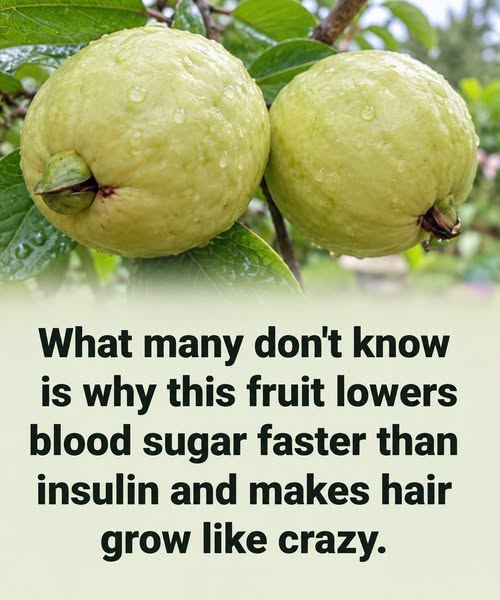
Guava doesn’t just taste sweet. It may also offer a surprisingly useful combination of nutrients for people who want to support steadier blood sugar. While many people immediately think of pills, powders, or heavily processed “diet” products, this humble tropical fruit provides something much simpler: fiber, vitamins, minerals, and naturally occurring plant compounds, all packed into one colorful fruit.
Guava is gaining attention as a potentially helpful part of a balanced diet for blood-sugar management. That doesn’t mean it is a miracle food, and it certainly doesn’t mean eating guava can prevent or reverse diabetes. But compared with many refined, highly processed snacks, whole guava can be a nutrient-dense choice that may fit well into a meal pattern designed to avoid large swings in blood glucose.
One of its biggest advantages is fiber.
Guava contains a meaningful amount of dietary fiber, particularly when the fruit is eaten whole rather than turned into juice. Fiber can slow digestion and the absorption of carbohydrates, which may help reduce how quickly glucose enters the bloodstream after eating. It can also contribute to a greater feeling of fullness, potentially making it easier to avoid constant snacking or overeating.
That matters because blood sugar isn’t influenced by a single food in isolation.
The overall meal matters.
Portion size matters.
Physical activity matters.
And the way carbohydrates are combined with protein, fat, and fiber can influence how quickly they are digested.
Instead of drinking guava juice, for example, eating fresh guava preserves the structure of the whole fruit and its fiber. Juice can make it much easier to consume a large amount of fruit sugar quickly while losing some of the natural benefits of the intact fruit.
The fruit’s glycemic impact is also relevant. Guava is generally considered a relatively low-glycemic fruit, meaning its carbohydrates tend to have a more modest effect on blood glucose than foods made primarily from refined starches or added sugars. However, “low glycemic” does not mean “free of carbohydrates,” and individual blood-glucose responses can vary.
That distinction is important for anyone already monitoring their blood sugar.
A food can be nutritious and still affect glucose levels.
So the goal isn’t to treat guava as something that makes blood sugar irrelevant.
The goal is to understand how it can fit into a larger pattern of eating.
Guava also provides vitamin C in substantial amounts. Vitamin C is an antioxidant nutrient involved in normal immune function, collagen formation, and many other processes throughout the body. The fruit also contains potassium and a variety of naturally occurring plant compounds.
Among these compounds are flavonoids and other antioxidants that researchers are studying for their possible effects on inflammation, oxidative stress, and metabolic health.
That research is interesting, but it needs to be interpreted carefully.
Laboratory studies and small human studies can suggest possible benefits without proving that eating a particular fruit will produce a major medical effect. A promising biological mechanism is not the same thing as a clinically proven treatment.
This is especially important when discussing guava leaves.
Guava leaves have been used traditionally in teas and other preparations in different cultures for generations. Researchers have also investigated compounds in guava leaves and their potential effects on carbohydrate digestion and post-meal blood glucose.
Some early research suggests that guava-leaf preparations may influence enzymes involved in carbohydrate breakdown, potentially reducing the speed at which certain carbohydrates are digested.
But that does not mean guava-leaf tea should be considered a diabetes treatment.
The evidence is still limited compared with established medical therapies, and homemade preparations can vary widely in strength and composition.
The safest way to think about guava is as a supportive food—not a replacement for medical care.
For someone trying to make meals more blood-sugar-friendly, fresh guava can be a useful option because it combines naturally occurring carbohydrates with fiber and micronutrients. Eating the fruit whole, including the edible skin when appropriate and well washed, can provide more of the fiber found naturally in the fruit.
Pairing fruit with protein or healthy fats can also make a meal or snack more satisfying. For example, guava can be eaten alongside unsweetened yogurt, nuts, seeds, or another protein-rich food. The combination can help create a more balanced snack than eating a large amount of fruit by itself.
Portion still matters.
Even nutritious foods can contribute carbohydrates to a meal.
And someone taking insulin or medications that lower blood glucose should not assume that adding a particular food will automatically improve their numbers. Medication, meals, activity, sleep, stress, and illness can all interact to influence blood glucose.
The larger lesson is that blood-sugar management rarely comes down to one “superfood.”
It is built from repeated choices.
More whole foods.
Enough fiber.
Appropriate portions.
Regular physical activity.
Adequate sleep.
And, when necessary, medication prescribed by a healthcare professional.
Guava can fit comfortably into that picture.
It can replace a sugary dessert.
It can become part of a balanced breakfast.
It can add sweetness and texture to a snack without relying on added sugar.
And because it contains fiber and micronutrients, it offers more nutritional value than many highly processed sweet foods.
But there is an important difference between saying a food may support healthy blood sugar and saying it can control diabetes.
Those are not the same claim.
Guava is not a cure.
It cannot erase the effects of an unhealthy diet.
It cannot replace prescribed medication.
And it should not be used as a reason to stop monitoring blood glucose or following a clinician’s treatment plan.
What makes it interesting is precisely how ordinary it is.
You don’t necessarily need an expensive supplement or a complicated “detox” product to improve the nutritional quality of a snack. Sometimes a whole fruit provides a straightforward combination of fiber, vitamins, minerals, and plant compounds.
Guava is one example.
Its sweetness doesn’t automatically make it unhealthy.
Its fiber changes the way its carbohydrates are handled compared with many refined foods, and its nutrient profile gives it a place in a varied diet.
For people who enjoy it, that makes guava a practical choice rather than a miracle.
The key is how it is eaten and what surrounds it.
Choose whole fruit instead of sugary guava drinks.
Watch portions if carbohydrate intake needs to be controlled.
Combine it with protein or healthy fats when that fits your meal plan.
And pay attention to your own glucose response if you’re monitoring it.
Most importantly, keep expectations realistic.
The most powerful approach to blood-sugar health is not one exotic ingredient. It is a sustainable pattern that can be followed day after day.
Guava can be part of that pattern.
It may help provide fiber, contribute important nutrients, and offer a naturally sweet alternative to highly processed foods. Its leaves and plant compounds may also deserve continued scientific study, but research is not yet a reason to treat them as a proven therapy.
So enjoy the fruit for what it is: a flavorful, fiber-rich food with a useful nutritional profile.
Not a cure.
Not a magic weapon.
But potentially a small, delicious piece of a much bigger strategy for healthier eating and steadier blood-sugar management.