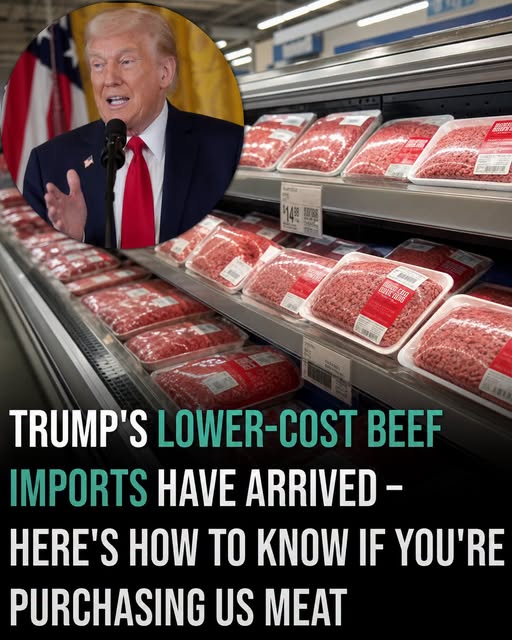
The label on your burger may have changed—and almost nobody noticed.
In the middle of a historic squeeze on U.S. cattle supplies and painfully high beef prices, the Trump administration has moved to allow more lower-tariff foreign beef into the American market. The goal sounds straightforward: increase supply, ease pressure on prices, and give consumers some relief at the grocery store. But the trade-off can be difficult to see because the difference between American and imported beef may come down to a few small words printed somewhere on the package.
Most shoppers see a USDA inspection mark and naturally assume the meat came from American cattle. But USDA inspection and country of origin are not the same thing. Imported beef can legally enter the United States, undergo required inspection, and eventually appear in products sold alongside domestically produced meat.
Lean beef trimmings are particularly important because they can be combined with fattier beef when producing ground beef. Once everything has been ground together, there may be no visual way for the person standing in the supermarket aisle to determine where every portion of that meat originally came from.
That makes the label important.
Under current voluntary USDA labeling rules, claims such as **“Product of USA”** and **“Made in the USA”** on covered meat products are reserved for products derived from animals born, raised, slaughtered, and processed in the United States. That wording carries much more information about origin than a USDA grade or inspection mark alone.
Other phrases can mean something different.
A package that emphasizes that meat was “processed” or packaged in the United States does not necessarily mean the animal itself was born and raised there. Imported meat can undergo additional handling or processing after entering the country, which is why shoppers interested specifically in U.S.-origin beef need to pay attention to exactly what the package claims rather than relying on familiar symbols.
The same confusion surrounds labels such as **“USDA Prime”** and **“USDA Choice.”** Those terms refer to USDA quality grades. They tell shoppers about characteristics associated with the meat’s quality; they are not, by themselves, declarations that the cattle were born and raised in America.
And when beef from different sources enters the supply chain, understanding the origin of a finished ground-beef product can become even more complicated. The burger in front of you may look identical to the one you purchased last year, even if the supply chain behind it has changed.
None of this automatically means imported beef is unsafe or inferior. Imported meat sold legally in the United States is subject to federal requirements. The issue is transparency and consumer choice: if buying beef from cattle raised entirely in the United States matters to you, you need to know which label claims actually communicate that information.
At a time when cattle supplies are tight and families are watching grocery bills climb, additional imports may help put downward pressure on costs. But cheaper beef and American-origin beef are not necessarily the same purchasing decision.
So next time you’re standing in front of the meat case, don’t assume the largest stamp tells you the entire story.
Look closer at the wording.
Because when it comes to where your beef actually came from, **a few quiet words on a crowded label can make all the difference.**