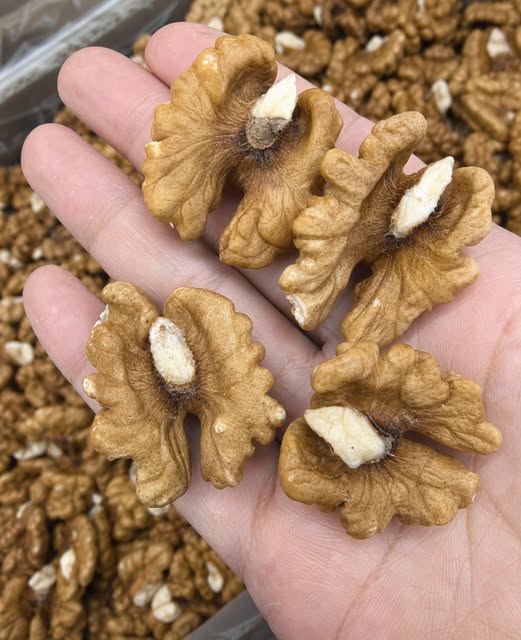
They look ordinary in your hand.
A rough shell.
A small handful.
Something you can toss into a bowl of oatmeal or eat straight from the package without giving it much thought.
But inside that simple shell is a surprisingly nutrient-dense food that can support your health in ways you may not notice immediately.
One small handful can contribute healthy fats, fiber, minerals, and antioxidants to your diet. Over time, those nutrients can become part of habits that support your heart, brain, metabolism, and overall well-being.
Most people underestimate them.
Your body doesn’t.
The difference begins with a single habit.
Inside every walnut is a distinctive combination of plant-based omega-3 fatty acid known as alpha-linolenic acid, antioxidants, fiber, and minerals. These nutrients don’t work like a magic switch, and walnuts aren’t a cure for disease, but they can play a useful role in an overall healthy eating pattern.
Their healthy fats are one reason walnuts have attracted so much attention.
Walnuts are particularly rich in polyunsaturated fats, including ALA. Replacing some sources of saturated fat with unsaturated fats can support healthier cholesterol levels and cardiovascular health.
That doesn’t mean eating a bowl of walnuts suddenly makes your heart invincible.
Nutrition rarely works that way.
The benefit comes from what you consistently eat instead of what you occasionally add.
When walnuts replace less nutritious snacks, highly processed foods, or foods rich in saturated fat, the overall pattern can become more supportive of heart health.
Their antioxidants add another layer.
Your cells are constantly dealing with normal metabolic processes and environmental stressors. Foods containing antioxidant compounds can contribute to the body’s broader defense systems against oxidative stress.
Walnuts also contain plant compounds called polyphenols, which researchers continue to study for their potential effects on inflammation, cardiovascular health, and other aspects of human health.
That is part of what makes them interesting.
They aren’t flashy.
They don’t need a complicated recipe.
They don’t require a supplement bottle.
They simply provide several useful nutrients in a small serving.
And their benefits may extend beyond the heart.
The brain depends heavily on healthy fats and a steady supply of nutrients. Walnuts contain fats and plant compounds that have made them a subject of research into cognitive and neurological health.
That doesn’t mean walnuts will suddenly make you smarter or eliminate mental fatigue.
But including nutrient-rich foods as part of a balanced diet can help support the body’s normal functions, including those involved in brain health.
There is another reason walnuts can be useful: they can make a snack more satisfying.
Their combination of fat, protein, and fiber can slow digestion compared with many refined carbohydrate snacks. That can help you feel fuller for longer.
Instead of eating something that gives you a quick burst of energy and leaves you hungry again soon afterward, a small serving of walnuts can provide a more substantial snack.
That may help reduce the temptation to keep reaching for food every hour.
And for some people, that matters more than any individual nutrient.
Healthy eating isn’t just about what happens inside the body.
It’s also about whether a habit is easy enough to repeat.
Walnuts are convenient.
You don’t need to cook them.
You don’t need special equipment.
You can keep them in the kitchen, pack a small portion for work, sprinkle them over breakfast, or add them to a meal.
That simplicity makes consistency easier.
Try adding them to oatmeal.
Stir them into yogurt.
Sprinkle them over a salad.
Mix them into whole-grain cereal.
Add them to roasted vegetables.
Or simply eat a small portion on their own.
A handful can provide a combination of nutrients that is difficult to replicate with many highly processed snack foods.
And the fiber matters too.
Fiber supports digestive health and helps feed beneficial microbes in the gut. Your gut microbiome interacts with the food you eat, and diets rich in plant foods and fiber are generally associated with a healthier microbial environment.
Walnuts can contribute to that pattern.
Again, the important word is contribute.
No single food can create a perfect gut.
No individual ingredient can guarantee immunity, emotional stability, or lifelong health.
But small additions can become meaningful when they are part of a broader dietary pattern filled with fruits, vegetables, whole grains, legumes, nuts, seeds, and other minimally processed foods.
That’s where the real power of walnuts lies.
Not in a miracle.
In repetition.
One handful today doesn’t transform your health overnight.
But a practical habit you can maintain for months and years can become part of the foundation supporting it.
There’s also something important about portion size.
Walnuts are nutrient-dense, which means they’re also relatively high in calories. More isn’t automatically better.
A modest serving is usually enough to enjoy their nutritional benefits without turning a simple snack into a very large calorie load.
For many people, roughly a small handful is a practical portion.
And if you’re adding walnuts to your diet, it’s worth thinking about what they’re replacing.
If they replace candy, highly processed snacks, or foods heavy in refined carbohydrates, the overall improvement may be more meaningful than simply eating walnuts in addition to everything else.
That distinction is easy to overlook.
Healthy foods don’t erase an otherwise unhealthy diet.
They work best as part of one.
Walnuts also bring useful minerals to the table, including magnesium, copper, and manganese. These nutrients participate in numerous processes throughout the body, from energy metabolism to normal cellular function.
The combination is what makes the food interesting.
Healthy fats.
Fiber.
Plant-based omega-3s.
Minerals.
Antioxidant and polyphenol compounds.
All packaged inside something that looks remarkably ordinary.
There is no dramatic transformation when you eat one.
You probably won’t feel your arteries becoming more flexible.
You won’t suddenly notice your cells being protected.
You won’t feel your gut microbes changing.
And that’s exactly why foods like walnuts are easy to underestimate.
Much of nutrition happens quietly.
There is no notification.
No instant sensation.
No obvious before-and-after moment.
The value is in what repeated choices can contribute to over time.
And that idea can be surprisingly powerful.
Health doesn’t always require dramatic changes.
Sometimes it starts with replacing one snack.
Then doing it again tomorrow.
Then adding a handful of nuts to breakfast.
Then choosing a salad instead of a heavily processed side.
Then building an eating pattern that feels normal rather than restrictive.
Walnuts can fit easily into that kind of approach.
They can also make meals more enjoyable.
Their rich, slightly earthy flavor adds texture to foods that might otherwise feel repetitive. A bowl of yogurt becomes more satisfying with crunch. Oatmeal becomes more substantial. A simple salad gains texture and healthy fats.
That matters because food isn’t just fuel.
Enjoyment makes healthy habits easier to maintain.
There is, however, one important caution.
Some people have tree-nut allergies, and for them walnuts can be dangerous. Anyone with a known allergy should avoid them and follow their healthcare professional’s guidance.
And if you’re managing a specific medical condition or following a medically prescribed diet, it’s sensible to discuss major dietary changes with a qualified healthcare professional.
For everyone else, the larger lesson is refreshingly simple.
You don’t need to chase every trendy superfood.
You don’t need expensive powders.
You don’t need a complicated morning routine.
Sometimes an ordinary food with a strong nutritional profile is enough to make a useful addition to your day.
Walnuts are a good example.
They don’t promise miracles.
They don’t need to.
They offer healthy fats that can support cardiovascular health, fiber that contributes to digestive health, plant compounds that researchers continue studying, and nutrients that your body uses every day.
The real benefit comes from making them part of a balanced pattern rather than treating them as a magic solution.
Think of them as one small piece of a much larger picture.
Sleep matters.
Movement matters.
Stress management matters.
Regular medical care matters.
And the overall quality of your diet matters.
Walnuts can’t replace any of those things.
But they can fit into the picture.
Maybe they become the handful you keep at your desk instead of reaching for a sugary snack.
Maybe they become part of your breakfast.
Maybe they become the crunch in your evening salad.
Or maybe you simply keep them around because they’re convenient and satisfying.
Whatever form they take, the important part is that the habit is realistic enough to continue.
Because long-term health is rarely built through one dramatic decision.
It’s built through hundreds of ordinary ones.
A better breakfast.
A walk.
A glass of water.
A good night’s sleep.
A serving of vegetables.
And perhaps, somewhere in the middle of all those small choices, a handful of walnuts.
They may look ordinary in your hand.
But ordinary foods can do useful things when you give them a consistent place in your life.
No miracle.
No instant transformation.
Just a simple, repeatable choice that can quietly support the body you depend on every day.