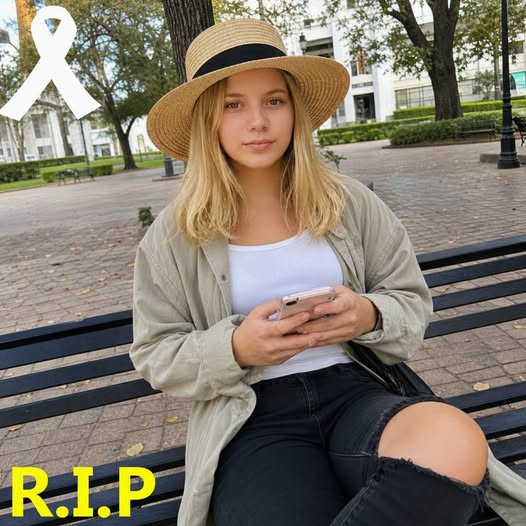
An ordinary night of laughter shattered in seconds.
Sirens cut through the music.
Strangers froze, then ran, then prayed.
At Luna Park in Pérols, a place built around lights, laughter, rides, and summer memories, the atmosphere suddenly changed when a 15-year-old girl collapsed in the middle of the fairground.
One moment, she was part of the crowd.
The next, people were desperately calling for help.
Nothing felt safe anymore.
The evening had begun like countless other nights at Luna Park. Neon lights flickered against the dark sky. Music drifted between the rides. Children begged their parents for one more turn on their favorite attraction. Families wandered between food stalls, games, and spinning rides, trying to hold on to the final days of summer.
Among them was a 15-year-old girl from a close-knit traveling fairground family.
The fairground was not simply somewhere she visited.
It was part of her world.
She had grown up surrounded by caravans, colorful attractions, familiar faces, and the constant movement from one town to another. She knew the rhythm of the fairground—the early mornings spent preparing rides, the long evenings beneath the lights, and the friendships formed among families who shared a life that most people only experienced for a few hours at a time.
Then, without warning, everything changed.
The girl suddenly collapsed.
At first, people nearby may not have understood what they were seeing. Then the realization spread.
Something was seriously wrong.
Voices rose through the crowd.
Someone called for emergency services.
People moved toward her before stopping, unsure whether they could help.
The music continued for a moment, creating an almost surreal contrast with the panic unfolding nearby.
Then the rides began slowing.
The laughter disappeared.
The lights were still shining, but the atmosphere beneath them had become unrecognizable.
Emergency medical teams rushed to the scene and began fighting desperately to save the teenager.
For the people watching, those minutes must have felt endless.
Visitors stood frozen.
Parents pulled their children closer.
Fairground workers waited anxiously.
Some people prayed.
Others simply stood in silence, unable to process what was happening in front of them.
Medics continued their efforts, but eventually the devastating news arrived.
The 15-year-old girl had died.
A place that had been filled with music and excitement was suddenly filled with grief.
The shock traveled quickly through the fairground community.
For families who live and work on the road, the loss was deeply personal. These communities can be unusually close, bound together by years of traveling, working, celebrating, and supporting one another.
She wasn’t simply a name in a news report.
She was someone’s daughter.
Someone’s friend.
Someone people had watched grow up.
Someone whose face had been familiar among the caravans and rides.
Someone whose future had seemed to stretch endlessly ahead.
And suddenly, that future was gone.
The tragedy also forced visitors to confront how quickly an ordinary evening can become something nobody could have imagined.
People had arrived expecting a night of fun.
They expected photographs beneath the lights.
They expected children begging for another ride.
They expected to go home with prizes, snacks, and memories of summer.
Instead, many left carrying a memory they never wanted.
In the aftermath, solidarity began appearing across the fairground community.
Other parks and traveling fairs expressed their support.
Some attractions stopped operating as a mark of respect.
Rides that normally spun beneath bright lights stood completely still.
The familiar sounds of music and machinery were replaced by quiet.
Candles appeared where neon lights had once dominated the night.
Flowers and messages were left in remembrance.
People who had spent years creating entertainment for strangers suddenly found themselves gathering together to mourn one of their own.
For the girl’s family, however, the grief is far deeper than anything a public tribute can express.
There are questions that cannot be answered with a candle.
What happened?
Why did she collapse?
Could anything have been done?
What caused the sudden medical emergency?
Investigators and medical professionals now have the difficult task of determining exactly what happened.
An autopsy is expected to help establish the cause of death, while authorities work to understand the circumstances surrounding the teenager’s final moments.
Until those answers are available, speculation can only create more pain.
The people who loved her deserve facts.
They deserve clarity.
And they deserve the opportunity to grieve without rumors replacing evidence.
But while investigators search for an explanation, the community is already trying to remember the person behind the tragedy.
Her smile.
Her personality.
The moments she shared with friends and family.
The ordinary days that seemed unimportant at the time but now feel priceless.
That is often what happens after an unexpected death.
The final moment becomes the easiest part of the story to repeat.
But a person’s life is never just the moment they died.
She was 15.
She had dreams.
She had people she loved.
She had memories still being created.
She had places she hadn’t seen and experiences she hadn’t lived.
She should have had years ahead of her.
Instead, one ordinary summer evening became the last night of her life.
For those who work in traveling fairs, the lights will eventually come back on.
The rides will spin again.
Music will once again fill the night.
Families will return.
Children will laugh.
But something will be different.
Every familiar face will remind the community of the girl who should still be there.
Every carousel turning beneath the lights will carry a memory.
And every summer night will contain the knowledge that an ordinary evening can change forever in a matter of seconds.
That is the cruelty of sudden loss.
There is no warning.
No opportunity to say goodbye.
No chance to know that the ordinary moment you’re living may someday become the memory you would give anything to return to.
For now, the fairground community is left with what remains.
Photographs.
Stories.
Shared memories.
Candles glowing beneath the night sky.
And the memory of a 15-year-old girl whose life should never be reduced to the moment when the lights went out.
The investigation may eventually explain how she died.
But no investigation can explain the size of the loss to the people who loved her.
She was more than a tragedy at Luna Park.
She was a daughter.
She was a friend.
She was part of a community.
And she was a young girl whose life deserved to continue.
The lights will return.
The music will play again.
The rides will move.
But for those who knew her, there will always be one empty place among the lights—a reminder of a life that ended far too soon and a girl who will be remembered not for the night she died, but for all the moments that came before it.