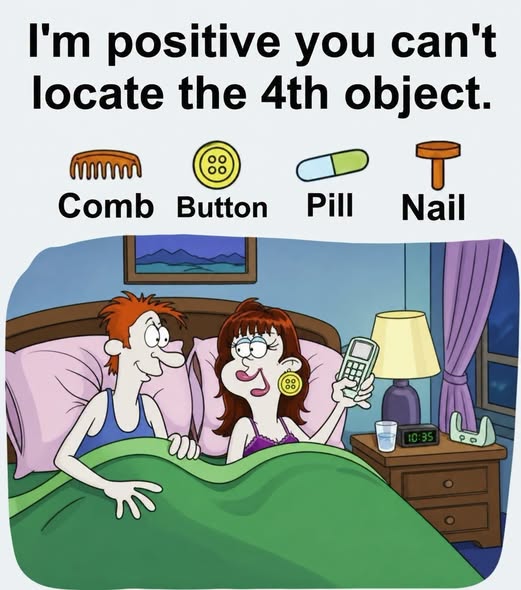
Sitting down with a puzzle can quietly change your life. One piece, one clue, one hidden object at a time, your brain is asked to slow down and pay attention. Focus sharpens. Patterns become easier to recognize. Stress can loosen its grip. Conversations deepen. What looks like a simple game becomes a small daily exercise for mental fitness, emotional balance, and connection with the people around you.
Puzzles turn idle moments into training sessions for your brain. Every time you match a jigsaw piece, solve a crossword clue, complete a Sudoku grid, or spot a hidden object, you’re practicing different forms of attention and problem-solving. You have to remember information, compare possibilities, recognize patterns, and resist the temptation to give up when the answer doesn’t immediately appear.
That process can be surprisingly satisfying.
Your brain receives a problem with no obvious solution, and you gradually transform confusion into order. A pile of disconnected pieces becomes an image. A collection of letters becomes a word. A difficult clue suddenly makes sense.
Those small victories matter.
They create a sense of progress and accomplishment that is increasingly rare in a world where so many tasks happen instantly. With a puzzle, you can’t simply swipe until the answer appears. You have to stay with the problem.
That persistence can be useful beyond the puzzle itself.
Memory, attention, visual-spatial reasoning, and problem-solving are all involved in different types of puzzles. Regularly engaging in mentally stimulating activities can be part of a broader lifestyle that supports cognitive health as you age.
But puzzles shouldn’t be treated as a guaranteed shield against dementia or cognitive decline. Research suggests that mentally stimulating activities may be associated with better cognitive outcomes, but no single puzzle can promise to prevent a neurological condition.
The real value may be in keeping your brain engaged.
Instead of passively consuming information, you’re actively working with it.
Instead of jumping between notifications, you’re concentrating on one task.
Instead of constantly searching for something new, you’re allowing yourself to stay with something difficult until it becomes understandable.
That kind of attention is increasingly valuable.
Our phones train us to switch constantly.
A notification appears.
A message arrives.
A video starts.
Another headline catches our attention.
A few seconds later, we’re somewhere completely different.
Puzzles offer the opposite experience.
They ask you to stay.
To look.
To think.
To try again.
That focused state can also feel calming.
When you’re absorbed in arranging pieces or solving clues, there is less room for the endless mental noise that follows you through the day. You aren’t necessarily solving your life while working on a puzzle, but you’re temporarily giving your mind a single, manageable problem.
That can make the activity feel almost meditative.
You sit down.
You breathe.
You look.
You search.
You make a mistake.
You try again.
And eventually, something clicks.
For people dealing with everyday stress, that temporary escape can be valuable. It doesn’t replace professional help when someone is struggling with significant anxiety or depression, but it can provide a simple way to create moments of calm during an otherwise hectic day.
Puzzles can also create something that screens often take away: shared attention.
Put a large jigsaw puzzle on a table, and suddenly people have a reason to sit together.
Someone finds an edge piece.
Someone else insists it belongs somewhere else.
A child discovers the missing corner.
A grandparent recognizes a familiar picture.
People talk while their hands stay busy.
There doesn’t have to be a formal conversation.
The interaction happens naturally.
That’s part of what makes puzzles powerful for families and friends. They create a shared objective without requiring everyone to agree on what to talk about.
The table becomes a gathering place.
A difficult puzzle becomes a group challenge.
A wrong guess becomes a joke.
A completed section becomes a tiny celebration.
And those small moments can become memories.
For older adults, puzzles can also provide a structured activity that feels purposeful without being overwhelming. Completing a section creates visible progress, and the finished result offers a tangible reminder that time and attention produced something meaningful.
For children, puzzles can introduce patience and problem-solving in a playful way. They learn that not every answer appears immediately and that making mistakes is part of figuring something out.
For adults, the same lesson can be surprisingly useful.
We spend so much time demanding immediate results from ourselves that we sometimes forget how satisfying slow progress can be.
A puzzle doesn’t care how quickly you finish.
It doesn’t send you a notification telling you to hurry.
It doesn’t compare your progress with someone else’s.
It simply waits.
And in that sense, choosing a puzzle can become a quiet act of resistance against a culture built around speed and distraction.
You don’t need an expensive setup.
You don’t need hours of free time.
You don’t even need to finish the puzzle in one sitting.
Ten or twenty focused minutes can be enough to create a small break from the constant flow of information.
One crossword clue.
A few jigsaw pieces.
A short Sudoku.
A hidden-object challenge.
The activity itself matters less than the attention you give it.
And perhaps that’s the deeper lesson.
The benefit isn’t really hiding inside the cardboard pieces or the printed clues.
It’s in what happens when you decide to stop scrolling and concentrate.
You give your mind something to work toward.
You give yourself permission to move slowly.
You create an opportunity to experience progress without pressure.
And if someone else joins you, you create connection at the same time.
In a noisy, distracted world, that can be surprisingly powerful.
Puzzles won’t solve every problem.
They won’t guarantee perfect memory or prevent every form of cognitive decline.
But they can give your brain a reason to engage, your mind a reason to slow down, and the people around you a reason to sit together.
Sometimes the healthiest thing you can do isn’t adding another productivity task to your day.
It’s choosing something simple.
A table.
A puzzle.
A little patience.
One piece at a time.