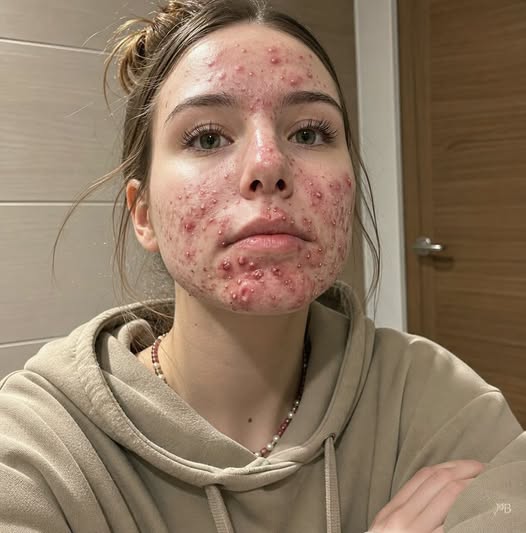
Adult acne doesn’t just sting your skin. It can hit your confidence just as hard. You thought breakouts were something you would leave behind after high school, only to discover them returning years later, often concentrated along your chin and jawline. One week your skin looks clear, and the next, painful bumps seem to appear out of nowhere. They may arrive after a stressful period, a restless night, a hormonal change, or even a shift in your daily routine. Dermatologists are seeing adult acne frequently, and the reasons behind it can be more complicated than simply having “bad skin.”
Chin breakouts in adulthood are rarely completely random. Hormonal changes can play a major role, particularly when fluctuations affect oil production and inflammation. Changes associated with perimenopause, menopause, menstrual cycles, or starting or stopping certain forms of birth control can sometimes contribute to acne appearing or becoming more persistent. Conditions such as PCOS can also be associated with hormonal acne, particularly when breakouts repeatedly appear around the lower face, chin, and jawline.
Stress can add another layer to the problem. During periods of prolonged stress, the body produces more cortisol and other stress-related hormones, which can influence inflammation and oil production. That does not mean every stressful day will automatically cause a pimple, but repeated stress can make already-sensitive skin more difficult to manage. Add poor sleep, skipped meals, long workdays, and little time for self-care, and the skin may have even more difficulty recovering.
Diet can also be part of the picture, although it is not as simple as saying that one particular food “causes acne.” Some research has associated diets high in refined carbohydrates and high-glycemic foods with increased acne in certain people. Dairy may also be associated with acne for some individuals, though the relationship is not universal. The important point is to pay attention to patterns rather than blaming yourself for every breakout.
At the same time, everyday habits can quietly sabotage even the best skincare routine. Harsh scrubs may irritate the skin instead of cleaning it more effectively. Heavy cosmetics can contribute to clogged pores when they are not well suited to acne-prone skin. Hair oils, conditioners, styling products, and other products that touch the face can sometimes contribute to congestion around the forehead, temples, or jaw.
Even seemingly harmless habits can matter. Touching your chin throughout the day transfers oil, sweat, dirt, and bacteria from your hands to your face. Resting your chin against your palm while working or scrolling on your phone can repeatedly irritate the same area. Pillowcases can also accumulate oil, skincare products, sweat, and hair products, which is why regularly changing bedding can be a simple part of maintaining cleaner skin.
The answer is usually not to attack the skin harder. In fact, aggressive cleansing, excessive exfoliation, and constantly switching between strong acne products can make irritation worse. A gentler approach is often more sustainable: use a mild cleanser, avoid unnecessary scrubbing, moisturize with products labeled non-comedogenic, and introduce targeted acne treatments gradually rather than using everything at once.
Consistency matters more than a complicated routine. Acne treatments often require time before meaningful improvement becomes visible, so changing products every few days can make it difficult to know what is actually helping. Keeping a simple routine and giving it enough time to work can be more effective than constantly chasing the newest skincare trend.
It is also important to recognize when breakouts may be connected to something beyond skincare. Acne that suddenly becomes severe, painful, persistent, or unusually resistant to over-the-counter treatments may be worth discussing with a dermatologist. If breakouts appear alongside other signs of hormonal changes, a healthcare professional can help determine whether an underlying issue deserves attention.
Adult acne can be frustrating, especially when you thought that chapter of your life was already over. But a breakout does not mean you have failed at taking care of yourself, and it certainly does not define how you look or feel. With gentle skincare, attention to triggers, healthier daily habits, and professional guidance when necessary, calmer and clearer skin is possible at any age.
Your skin may change throughout your life, but that does not mean your confidence has to change with it. Clearer skin can take patience, experimentation, and time—but feeling comfortable and at home in your own face is still possible.