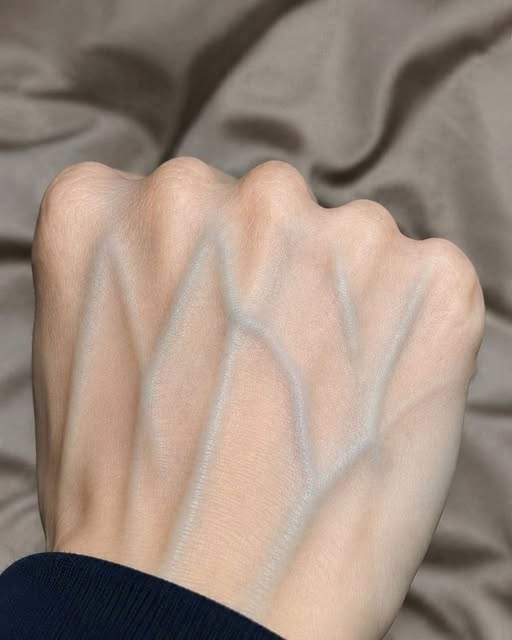
Your veins don’t just change for no reason. One day they may be barely noticeable, blending quietly beneath the skin. The next, they can appear raised, darker, or suddenly impossible to ignore. Is it simply a normal part of getting older, a result of exercise or changes in body composition—or could it be an early sign that something more serious is happening beneath the surface? From circulation problems and chronic venous disease to potentially dangerous blood clots or heart-related conditions, changes in your veins can sometimes provide clues about what is happening inside the body. The important question is not whether your veins are visible, but whether their appearance has changed suddenly and whether other symptoms have appeared alongside them. Your skin may occasionally be showing you something your body has not yet made obvious.
Visible veins can be completely normal, particularly with aging, regular exercise, or naturally low body fat. As people grow older, the skin can gradually become thinner and less elastic, making veins more noticeable than they were years earlier. Exercise can also increase blood flow and make veins temporarily more prominent, while well-developed muscles can push superficial veins closer to the surface. People with lean body types may naturally have veins that are easy to see, especially in the hands, arms, legs, or feet. In these situations, prominent veins do not automatically mean that something is wrong. Many athletes and naturally lean individuals have highly visible veins and remain perfectly healthy, particularly when there is no pain, swelling, tenderness, unusual warmth, or other symptoms suggesting an underlying problem. Appearance alone is not enough to diagnose a medical condition.
Concern becomes more appropriate when the veins change suddenly or are accompanied by other symptoms. A vein that becomes unusually swollen, tender, twisted, painful, or warm deserves more attention than veins that have looked the same for years. New heaviness in the legs, persistent swelling, skin-color changes, or discomfort after standing for long periods can occur with chronic venous insufficiency, a condition in which blood has difficulty returning efficiently toward the heart. Over time, this can contribute to varicose veins, aching, swelling, and changes in the skin around the lower legs. These symptoms do not necessarily indicate an emergency, but they should not simply be ignored if they are new or progressively worsening.
Deep vein thrombosis, or DVT, is another reason a sudden change should be taken seriously. A DVT is a blood clot that develops in a deep vein, most commonly in the leg, and it can sometimes cause pain, swelling, warmth, or a change in skin color. More importantly, a clot can become life-threatening if it travels to the lungs and causes a pulmonary embolism. Serious heart conditions can also affect how veins appear. In congestive heart failure, increased pressure within the circulation can cause certain veins, particularly those in the neck, to become more prominent, while fluid buildup may contribute to swelling in the legs. None of these conditions can be diagnosed simply by looking at a vein, but a rapid, unexplained change—especially when combined with pain, swelling, chest discomfort, or shortness of breath—deserves prompt medical evaluation. The goal is not panic. It is awareness, attention, and knowing when a change in your body is important enough to have checked.