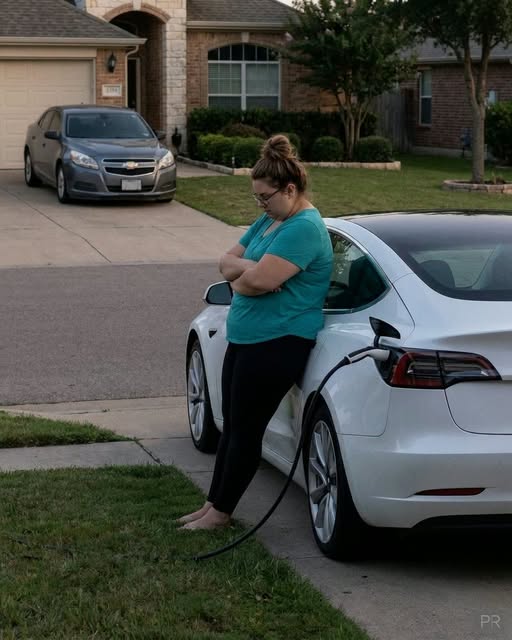
The night I caught Monica stealing my electricity, something inside me detonated. Years of swallowed anger, years of pretending that small injustices were somehow easier to tolerate than confrontation, all came rushing back at once. The “borrowed” tools that somehow never found their way home. The garden lights that mysteriously disappeared from my yard. The little things I kept telling myself weren’t worth fighting about. Every forgotten boundary flashed white-hot beneath the glare of my porch camera, made even more humiliating by the sudden realization that she had been taking something else from me too—my patience. And then came the bucket of neon humiliation, turning an already absurd moment into something the entire street could see. Phones appeared. Curtains moved. Neighbors gathered. The street watched a queen lose her crown in real time. But the cruelest twist was that karma hadn’t even started collecting its debt.
I used to think being a “good neighbor” meant absorbing small injustices and calling it empathy. Monica’s chaos always arrived wrapped in an explanation. There was always childcare, money trouble, stress, some emergency that supposedly made her behavior understandable. I convinced myself that refusing to help would make me cruel, so I kept forgiving what should have been confronted. My missing belongings slowly became part of her survival kit, while my silence became permission for the pattern to continue.
Every time I let something slide, the boundary moved a little farther. That night, watching her freeze under the weight of a hundred recording phones, I finally understood something uncomfortable: I hadn’t simply been kind. I had been complicit. By constantly excusing behavior that hurt me, I had helped create an environment where she believed there would never be consequences. Drawing that line in pink paint didn’t make me vindictive. It made me visible to myself for the first time in years. I could finally see how much I had tolerated just to avoid being called difficult.
When the eviction notice eventually came, it felt less like fallout from my outburst and more like a ledger finally being read aloud. The unpaid utilities, the tampered meter, the growing pile of noise complaints, and the problems with other neighbors revealed that my experience had never been the entire story. I had been only one thread in a much larger and increasingly tangled web Monica had spun around herself. For years, I had wondered whether I was overreacting, whether I should have been more understanding, whether being compassionate meant accepting behavior that made me uncomfortable. But as the consequences finally arrived, I realized that none of it had been created by one confrontation or one embarrassing night.
My story was simply one piece of a pattern that had existed long before I found the courage to speak up. As her truck slowly rolled away, I looked across the yard and saw my reclaimed garden gnome sitting where it belonged. It felt almost ceremonial, like a tiny symbol of something much bigger than a missing decoration. I wasn’t celebrating her loss, and I wasn’t proud of anyone suffering. I was quietly honoring the moment I finally chose myself. I learned that compassion does not require endless self-sacrifice, and being a good neighbor does not mean becoming someone else’s doormat. Sometimes real compassion begins with a firm, unapologetic no—and the courage to let other people face the consequences of the choices they make.