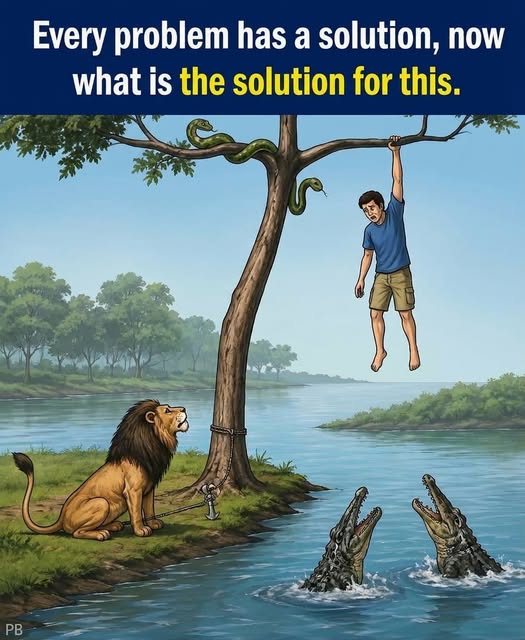
The man is already dead. At least, that’s what your brain decides in the first second. Venom waits at his feet, claws press into the grass, and powerful jaws move through the water nearby. There is no weapon in his hands. No safe place to hide. No obvious cover. No clear path to run. No chance, or so it appears. Your pulse quickens because everything about the scene triggers the same ancient alarm inside you: escape now. Move now. Do something before it is too late. And somewhere deep down, you recognize the feeling because this is what being truly cornered feels like—overwhelmed, surrounded, and completely out of options. Then one quiet, almost invisible decision changes everything. Instead of reacting to the fear demanding movement, he remains still. In a situation where every instinct screams to run, that refusal to move may be the very thing keeping him alive.
We are trained by fear to equate survival with motion. Do more. Move faster. Try harder. Find a solution immediately. Push through the obstacle before it gets worse. In almost every crisis, our minds begin sprinting in every possible direction, searching desperately for something—anything—that might restore a sense of control. We become like that man surrounded by predators, convinced that doing nothing means certain death. Yet his greatest source of power is the one we almost never practice: refusing to move until reality, rather than panic, presents a genuine opening. He does not need to defeat every threat around him. He does not need to control the animals or predict exactly what they will do. He simply stops making himself the center of every danger and allows the world around him to reveal its patterns. By letting the animals follow their own hunger, instincts, and movements, he begins to understand that not every creature is focused on him. The system around him is changing, even while he remains still.
That tiny shift mirrors some of the hardest moments in our own lives. Debt can feel like something closing in from every direction. Relationships can begin collapsing faster than we can repair them. An uncertain future can make every decision feel like it carries permanent consequences. When fear takes control, we often believe that we must immediately make a move, even when we have no idea whether that move will actually help. We confuse urgency with wisdom and movement with progress. Sometimes every possible “move” looks fatal simply because we are making decisions according to fear’s timetable rather than reality’s. The lesson is not passivity, and it is not about giving up or waiting forever. The lesson is timing. Act, yes—but act after you have watched long enough to recognize what is actually happening around you. Sometimes the opening you need is already there, but it is hidden beneath the noise of panic. The exit exists. The opportunity to survive exists. Most of us miss it because we become so desperate to escape that we thrash, react, and move blindly right past it.