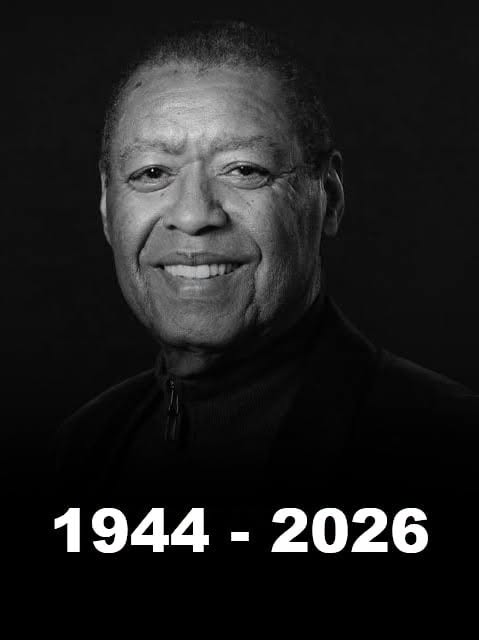
The news arrived with a heaviness that many music lovers will feel for a long time.
Ron Kenoly, the worship leader whose powerful voice helped generations of Christians find joy, faith, and connection through music, has reportedly died at the age of 81.
His passing leaves behind more than a career.
It leaves behind songs that became part of people’s lives.
For countless worshippers, Kenoly’s music wasn’t simply something they listened to.
It was something they experienced.
His songs were played in churches, sung by choirs, shared at conferences, and carried into homes around the world.
When his music reached a global audience, it helped introduce a different energy into contemporary worship.
Joyful.
Expressive.
Celebratory.
And deeply focused on praise.
The 1990s became an especially important period in his career.
Songs such as “Ancient of Days” became familiar to congregations across different countries, languages, and Christian traditions.
The music encouraged people to sing loudly, move freely, and participate rather than simply watch.
For many worshippers, that approach became part of the soundtrack of their faith.
Kenoly’s influence extended far beyond one church or one country.
Over the course of his ministry, he traveled extensively and led worship for audiences around the world.
His music crossed cultural boundaries in a way few artists manage to accomplish.
People who spoke different languages could still sing the same chorus.
Different denominations could recognize the same message.
Different generations could find something familiar in the music.
That was part of the reason his influence became so lasting.
Kenoly never seemed primarily interested in becoming a traditional celebrity.
His focus was worship.
The stage was not simply a place to perform.
It was a place to invite people to participate.
The microphone became a tool for bringing thousands of voices together.
That distinction mattered.
A concert can be about the person on stage.
Worship is supposed to point beyond the person on stage.
Kenoly understood that difference, and it shaped the way he approached his ministry.
For people who saw him perform, the most memorable part may not have been his voice alone.
It may have been the atmosphere created when an entire congregation began singing together.
One voice became hundreds.
Hundreds became thousands.
And eventually, the songs traveled far beyond the room where they were first sung.
That is the unusual power of worship music.
A song can outlive the person who introduced it.
It can be learned by children who never saw the original performer.
It can be sung by churches that exist thousands of miles away.
It can appear in a service decades after the recording was released.
That is the kind of legacy Kenoly leaves behind.
For many families, his music may be connected to memories that have nothing to do with the recording itself.
A Sunday morning.
A church conference.
A childhood spent sitting beside parents during worship.
A difficult season when a particular song brought comfort.
A celebration when an entire congregation sang together.
Music becomes attached to memory.
And once that happens, it becomes almost impossible to separate the song from the life surrounding it.
Kenoly’s contribution to Christian music therefore cannot be measured only through albums or performances.
His influence can be heard in the people who learned to worship through his songs.
It can be found in choirs that continue performing his music.
It can be heard in churches where younger generations are still discovering melodies that were introduced decades ago.
That is how musical influence survives.
Not through silence.
Through repetition.
Through people carrying the songs forward.
His death may mark the end of his physical voice, but it does not end the sound he helped create.
The recordings remain.
The memories remain.
The congregations remain.
And the songs remain available to generations who may never have had the opportunity to see him perform in person.
That is a powerful kind of legacy.
Kenoly’s journey also demonstrated how worship music could cross borders.
A song written or performed in one cultural setting could become meaningful in another.
The language might change.
The instruments might change.
The congregation might look completely different.
But the central message could remain recognizable.
In that way, his ministry became a bridge.
He helped demonstrate that worship could bring people together even when many other differences remained.
For those mourning his death, there will naturally be sadness.
An artist who provided the soundtrack to so many spiritual moments is suddenly no longer here to create new ones.
But grief can exist alongside gratitude.
Gratitude for the years of music.
Gratitude for the people who were encouraged through his ministry.
Gratitude for the songs that continue to be sung.
And gratitude for a voice that reached far beyond the room where it was first heard.
The absence will be felt.
There will be no new performances.
No new recordings from the man himself.
No opportunity for another generation to experience his ministry in exactly the same way.
But his work has already entered something larger than a single lifetime.
It has entered memory.
It has entered church history.
It has entered the personal stories of people who found hope, joy, or renewed faith through his music.
That is why the end of a singer’s life does not necessarily mean the end of the singer’s voice.
Sometimes the voice becomes stronger through the people who continue singing.
A choir begins a familiar song.
Someone recognizes the melody.
Another person joins.
Soon the entire room is singing.
And somewhere inside that sound is a small part of the legacy left behind.
Ron Kenoly spent decades bringing people together through worship.
Now, his own voice has fallen silent.
But the songs continue.
The choirs continue.
The congregations continue.
The children who learn those songs continue.
And the generations that follow can still discover the music that helped shape an era of worship.
The man may be gone, but what he gave to the world has not disappeared.
His voice is no longer on the stage.
It is in the songs people still sing.