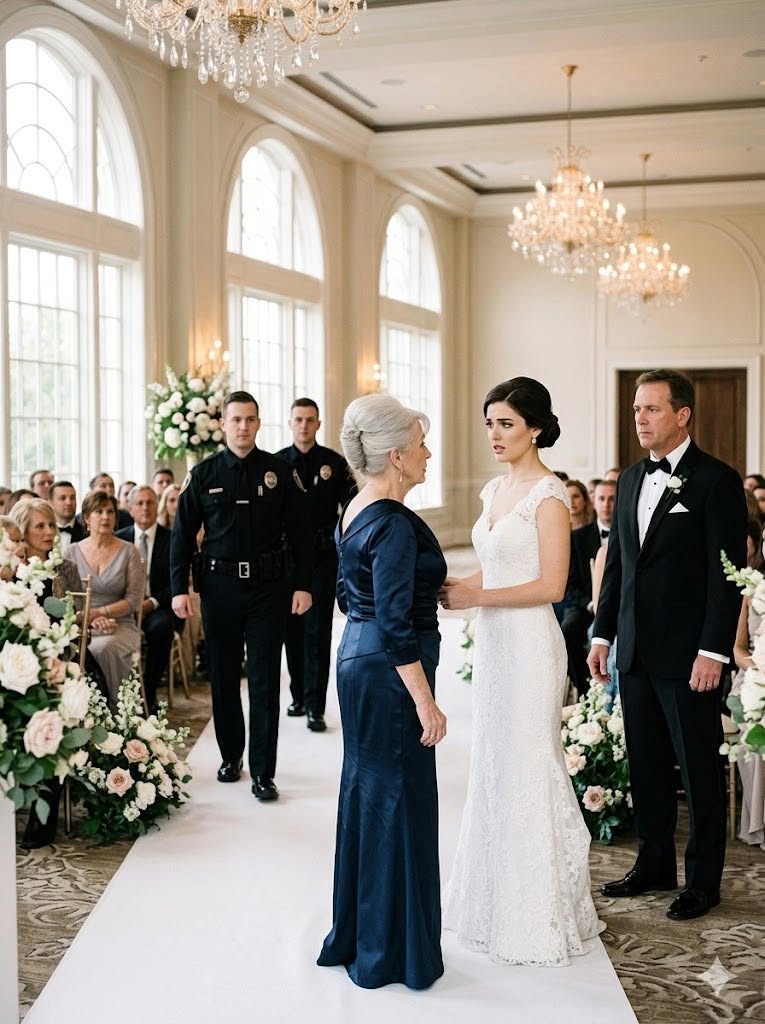
The moment Josephine revealed the truth, the air seemed to leave the room. Conversations stopped mid-sentence. Faces froze in disbelief. What had begun as a celebration of love, family, and new beginnings suddenly unraveled beneath the weight of a secret no one expected to hear. In a matter of moments, her son Bradley’s carefully constructed future collapsed under the force of a revelation that could no longer be hidden. Dreams were interrupted, relationships were tested, and a family found itself standing at a painful crossroads between loyalty and accountability.
For many parents, protecting a child feels as natural as breathing. From the day their children are born, mothers and fathers spend years shielding them from danger, easing their pain, and helping them recover from mistakes. But there are moments when protection itself becomes harmful, when rescuing someone from the consequences of their actions only deepens the damage already done. Josephine found herself facing exactly that kind of moment.
The truth she exposed was not merely an uncomfortable family secret. It involved deception, missing money, broken trust, and actions that had harmed more people than Bradley may have initially realized. What made the situation especially heartbreaking was that the wrongdoing did not come from a stranger. It came from her own son—the person she had spent a lifetime loving, supporting, and believing in.
The discovery left Josephine facing an impossible choice. She could remain silent and attempt to shield Bradley from the legal and personal consequences of his actions, or she could allow the truth to come forward, knowing it might destroy relationships, derail plans, and permanently alter the course of his life. Either path carried pain. Neither offered an easy solution.
In the end, she chose honesty.
To some observers, the decision appeared harsh. They questioned how a mother could expose her own child to public shame, legal consequences, and the collapse of a future he had worked toward. But Josephine saw something others did not. She understood that protecting Bradley from accountability would not save him. It would only teach him that consequences could be avoided, that trust could be broken without repair, and that the people who loved him would always clean up the damage left behind.
Her choice reflected a difficult but important distinction: love is not the same thing as rescue.
True love sometimes requires allowing someone to face the results of their own decisions. It demands the courage to stand firm when every instinct urges protection. Josephine realized that if Bradley was ever going to rebuild his life honestly, he first had to confront the truth honestly. Anything less would merely postpone the reckoning.
The fallout was immediate and painful. Relationships fractured. Friendships ended. The wedding that had once symbolized hope and celebration became overshadowed by disappointment and betrayal. Family members struggled to understand how events had reached this point. Some blamed Bradley. Others questioned Josephine’s decision. Many simply mourned the loss of what they believed the future would be.
Yet beneath the heartbreak, something important was preserved.
By refusing to hide the truth, Josephine protected the integrity of her family’s values. She demonstrated that principles matter most when they are hardest to uphold. She showed that accountability is not the opposite of love, but one of its most demanding expressions. In doing so, she left open the possibility that Bradley could someday rebuild his life on a foundation of honesty rather than denial.
Years passed.
Time softened some wounds but did not erase them. Bradley faced consequences that forced him to reflect on the choices he had made and the people he had hurt. The path forward was neither quick nor easy. Growth rarely is. There were difficult days, moments of regret, and painful realizations about what had been lost.
Then came the day of his release.
When Josephine arrived to meet him at the prison gate after parole, there was no dramatic reunion. No emotional speeches. No attempt to pretend the past had never happened. The moment was quiet, restrained, and deeply human. Years of pain, disappointment, and reflection stood between them.
Yet she was there.
Not because she approved of what he had done. Not because the consequences had disappeared. And not because everything was suddenly forgiven and forgotten. She was there because accountability had never erased her love. She offered him something simple but profound: her presence.
A ride home.
A conversation.
A chance to begin again.
What made that moment powerful was its honesty. Josephine did not hand Bradley a reset button. She did not erase his mistakes or rewrite history. Instead, she offered something far more valuable—the opportunity to move forward while fully acknowledging the past.
In that space between consequence and compassion, Bradley finally began to understand the lessons his parents had tried to teach him throughout his life. The greatest inheritance they could offer was never money, status, or comfort. It was character. It was resilience. It was the strength to face difficult truths rather than run from them.
And perhaps that became the real turning point in his story.
Not the day he was exposed.
Not the day he was sentenced.
But the day he realized that his mother’s hardest decision had also been her greatest act of love.
Because sometimes the people who love us most are not the ones who save us from consequences. They are the ones who help us become strong enough to face them.