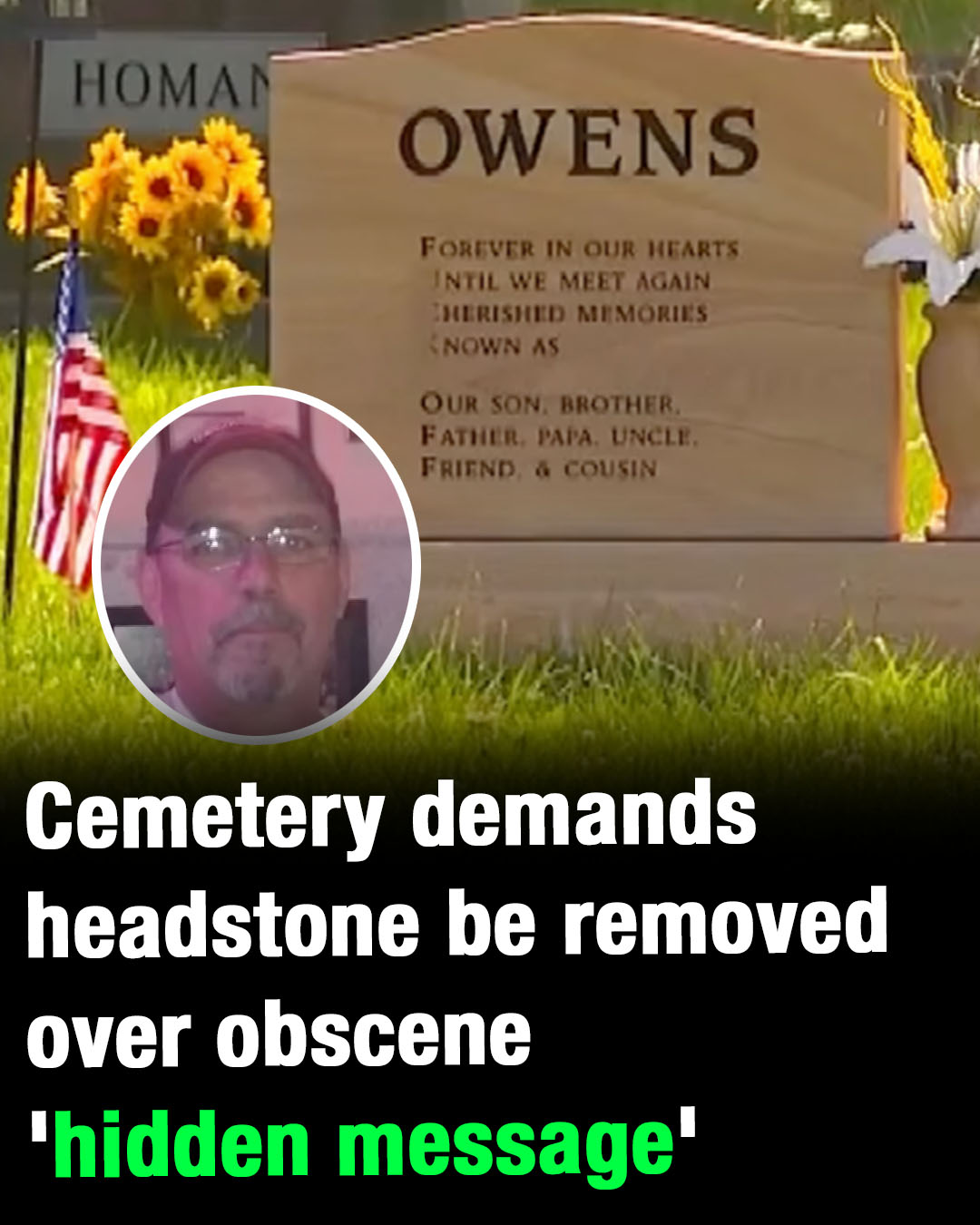
A dispute over a single gravestone has sparked an unexpected controversy in a small Iowa cemetery. What began as a family’s heartfelt tribute to a loved one has evolved into a legal and ethical debate about personal expression, public spaces, and where the boundaries should be drawn.
For the family of Steven Paul Owens, the inscription on his headstone was meant to reflect exactly who he was. Hidden within the wording was an acrostic message that spelled out a profanity—a phrase that, according to those closest to him, perfectly captured his sense of humor. To friends and family, the expression was never intended to offend. Instead, it represented the playful, unconventional personality they remembered so well. In their eyes, the message served as one final joke from a man who often used humor to connect with the people he cared about.
What the family saw as a touching and personal tribute, however, was viewed very differently by cemetery officials. Trustees responsible for maintaining the grounds argued that the hidden wording was inappropriate for a place dedicated to remembrance and reflection. Their concerns extended beyond the single headstone itself. They worried that visitors, including children, might eventually discover the message and that future families could feel uncomfortable purchasing nearby burial plots. Some feared that allowing such displays could encourage others to push boundaries even further, changing the atmosphere of the cemetery over time.
As the disagreement intensified, broader questions emerged. Should a gravestone be treated primarily as a private memorial, giving families wide freedom to honor loved ones in their own way? Or does it also function as a public monument located within a shared community space, requiring certain standards that everyone must respect?
Years after the controversy first surfaced, the headstone remains in place, and neither side has fully backed down. The family continues to defend what they consider a meaningful tribute, while cemetery representatives maintain that community standards should take precedence in a public setting. The conflict has become about far more than a few hidden words carved into stone—it now represents a deeper debate about memory, personal expression, and who ultimately gets to decide how the dead are remembered.
For some observers, the inscription symbolizes individuality and the right to celebrate a person’s true character, flaws and all. For others, it raises concerns about preserving dignity and maintaining respect within a space shared by many grieving families. As long as those perspectives remain divided, the argument is unlikely to disappear.
In the quiet surroundings of Warren-Powers Cemetery, one simple gravestone continues to provoke a surprisingly complex question: when personal remembrance meets public responsibility, whose values should prevail?