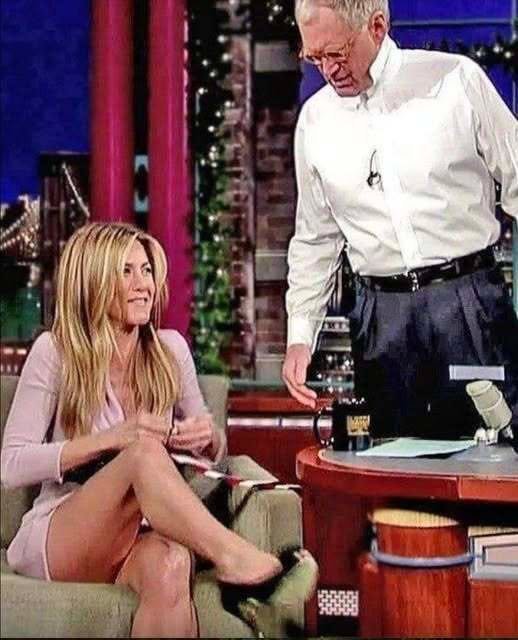
David Letterman was once considered one of the kings of late-night television — sharp, funny, unpredictable, and endlessly entertaining. For years, his interviews with celebrities became iconic moments in pop culture. But revisiting some of those conversations today has sparked a very different reaction from modern audiences. One interview involving actress Jennifer Aniston has especially resurfaced online, reigniting conversations about how women were often treated on television in the early 2000s.
At the time, the interaction was brushed off as playful late-night humor. Watching it now, however, many viewers see something far more uncomfortable.
The interview took place in 2006 when Jennifer Aniston appeared on The Late Show with David Letterman to promote her romantic comedy The Break-Up, which co-starred Vince Vaughn. From the beginning of the segment, Letterman repeatedly focused on Aniston’s appearance — specifically her legs — rather than the film itself.
Wearing a black blouse and shorts, Aniston became the target of continuous comments about her body. Letterman openly praised her legs multiple times throughout the interview, while cameras reportedly zoomed in on them during the conversation. What may once have been presented as harmless complimenting now feels deeply awkward to many viewers revisiting the clip years later.
At one point, Letterman remarked that she had “tremendous legs” and continued emphasizing them throughout the interview instead of moving naturally into discussion about her work. Aniston attempted to laugh it off politely, explaining she dressed lightly because of the weather, but the attention never fully shifted away from her appearance.
As the interview continued, the discomfort seemed to grow more noticeable. Letterman moved from comments about her body into personal questions about her rumored relationship with Vince Vaughn, including awkward remarks connected to scenes from the film. Throughout it all, Aniston maintained composure and professionalism — something many fans say she was forced to do repeatedly throughout her career while navigating invasive media attention.
What makes the interview feel even more uncomfortable today is the larger cultural context surrounding celebrity women during that era. In the 1990s and early 2000s, actresses were frequently subjected to highly personal, appearance-focused interviews that often blurred the line between humor and objectification. Conversations about women’s bodies, dating lives, and private relationships were normalized on television in ways that would likely receive far greater criticism today.
This wasn’t even the first uncomfortable interaction between Letterman and Aniston. Viewers also resurfaced a much older interview from 1998 in which Letterman unexpectedly grabbed a strand of Aniston’s hair and placed it in his mouth during the segment. Aniston visibly appeared uncomfortable afterward, wiping her hair with a tissue while trying to continue the interview professionally.
At the time, moments like these were often dismissed as quirky comedy or harmless awkwardness. But modern audiences increasingly view them through a different lens — one shaped by evolving conversations around boundaries, consent, workplace dynamics, and how female celebrities have historically been treated in entertainment media.
Despite those uncomfortable moments, Aniston continued returning to the show over the years, always handling herself with remarkable calmness and grace. One later appearance became famous for a much lighter reason: while promoting Marley & Me, she gifted Letterman the necktie she wore on the cover of GQ magazine. The playful exchange created a far warmer atmosphere and remains one of the more positively remembered moments between them.
Still, the resurfacing of these older clips has prompted broader reflection about how entertainment culture has changed. What audiences once laughed at without much thought is now being reexamined more critically. Many people aren’t necessarily trying to “cancel” old television moments — they’re simply recognizing how normalized uncomfortable behavior toward women once was in mainstream media.
Jennifer Aniston’s reactions throughout those interviews are part of why the clips continue circulating online. Even while visibly uncomfortable at times, she maintained dignity, professionalism, and composure under pressure — something many viewers now appreciate far more than they did at the time.
Ultimately, the renewed attention surrounding these interviews says less about one awkward conversation and more about how public attitudes have evolved. Humor that once passed unquestioned is now being viewed through a modern understanding of respect, boundaries, and the way women in entertainment were often expected to tolerate discomfort for the sake of keeping the show moving.