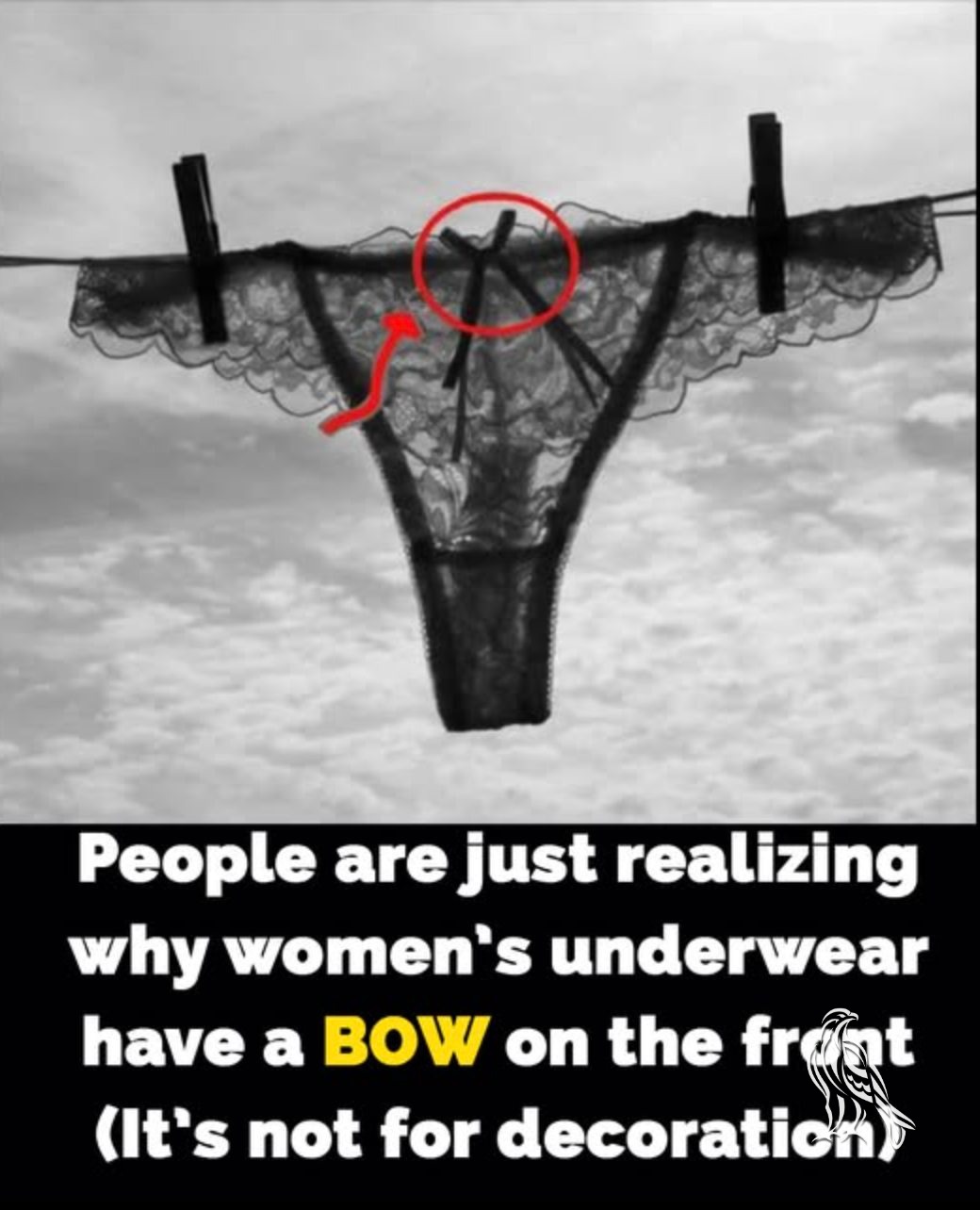
The bow was never just “cute.”
Long before it became a decorative detail stitched onto lingerie and underwear, that tiny ribbon existed for survival, practicality, and quiet routine. Its story began centuries ago in bedrooms illuminated not by electricity, but by weak candle flames and flickering oil lamps. In those dim rooms, women dressed largely by touch rather than sight, navigating layers of complicated garments in near darkness. What looks today like a playful or feminine decoration once served a deeply practical purpose rooted in everyday life.
Before elastic waistbands existed, women’s undergarments were secured with ribbons or cords tied carefully at the waist. The knot was usually positioned at the front, then finished with a small bow that could easily be identified by touch alone. In the dark, that mattered more than modern people might imagine. A woman could run her fingers along the fabric, locate the bow instantly, and know exactly which side of the garment faced forward without needing bright light or assistance.
That tiny bow was not fashion first.
It was orientation.
It was efficiency.
And in many ways, it was also a quiet form of independence.
In crowded homes where privacy barely existed, women often dressed quickly and silently before sunrise or after others had already gone to sleep. Bedrooms were shared. Mirrors were rare luxuries. Clothing itself was restrictive, layered, and heavily shaped by social expectations about modesty and femininity. The small ribbon bow became a practical guide through all of that complexity — a detail helping women manage their own bodies within systems designed to tightly control them.
The knot underneath the bow also carried another purpose.
It concealed utility beneath softness.
Fashion has always transformed practical necessity into symbolism over time, and eventually the little bow stopped being merely functional. As decades passed, it evolved into something associated with delicacy, innocence, romance, and eventually sensuality. What began as a tactile marker slowly absorbed emotional and cultural meaning far beyond its original design.
That transformation mirrors the history of women’s clothing itself.
Garments that once served practical purposes became loaded with ideas about beauty, attraction, discipline, and identity. Corsets reshaped bodies. Gloves signaled class and modesty. Lace suggested refinement. And the tiny front bow quietly shifted from a survival tool into a symbol of femininity stitched directly into intimate clothing.
Yet even as fashion evolved, the bow somehow survived every technological change around it.
Electricity arrived.
Bedrooms brightened.
Elastic replaced ribbons entirely.
Clothing became faster, simpler, and easier to wear. The original reason for the bow disappeared almost completely. Women no longer needed tactile markers to dress in darkness, and undergarments no longer relied on tied cords at the waist.
But the bow remained.
That is what makes it fascinating.
Today, most people never question why that tiny ribbon still appears on underwear, lingerie, camisoles, and sleepwear. It persists almost unconsciously, carried forward through generations of design long after its practical role vanished. In many ways, it functions like a living fossil hidden in modern fashion — a tiny surviving fragment of earlier lives still stitched quietly into contemporary fabric.
Some people remove it immediately, seeing it as childish, outdated, or unnecessary. Others find it charming, elegant, flirtatious, or comforting. Entire industries still use bows to communicate softness, innocence, intimacy, or seduction depending on the design and context.
And all of that meaning grew from a simple knot women once needed in order to dress themselves in the dark.
That is the strange power of fashion history.
The smallest details often survive the longest because people stop consciously noticing them. A tiny bow resting at the waistband of ordinary underwear now carries traces of centuries of adaptation, modesty, survival, ritual, and femininity without most wearers ever realizing it.
It sits quietly at the crossroads of utility and intimacy.
A decorative detail born from necessity.
A soft symbol shaped by rigid social rules.
A forgotten survival tool transformed into an enduring piece of modern identity.
And once you know its history, it becomes impossible to see it as “just cute” ever again.