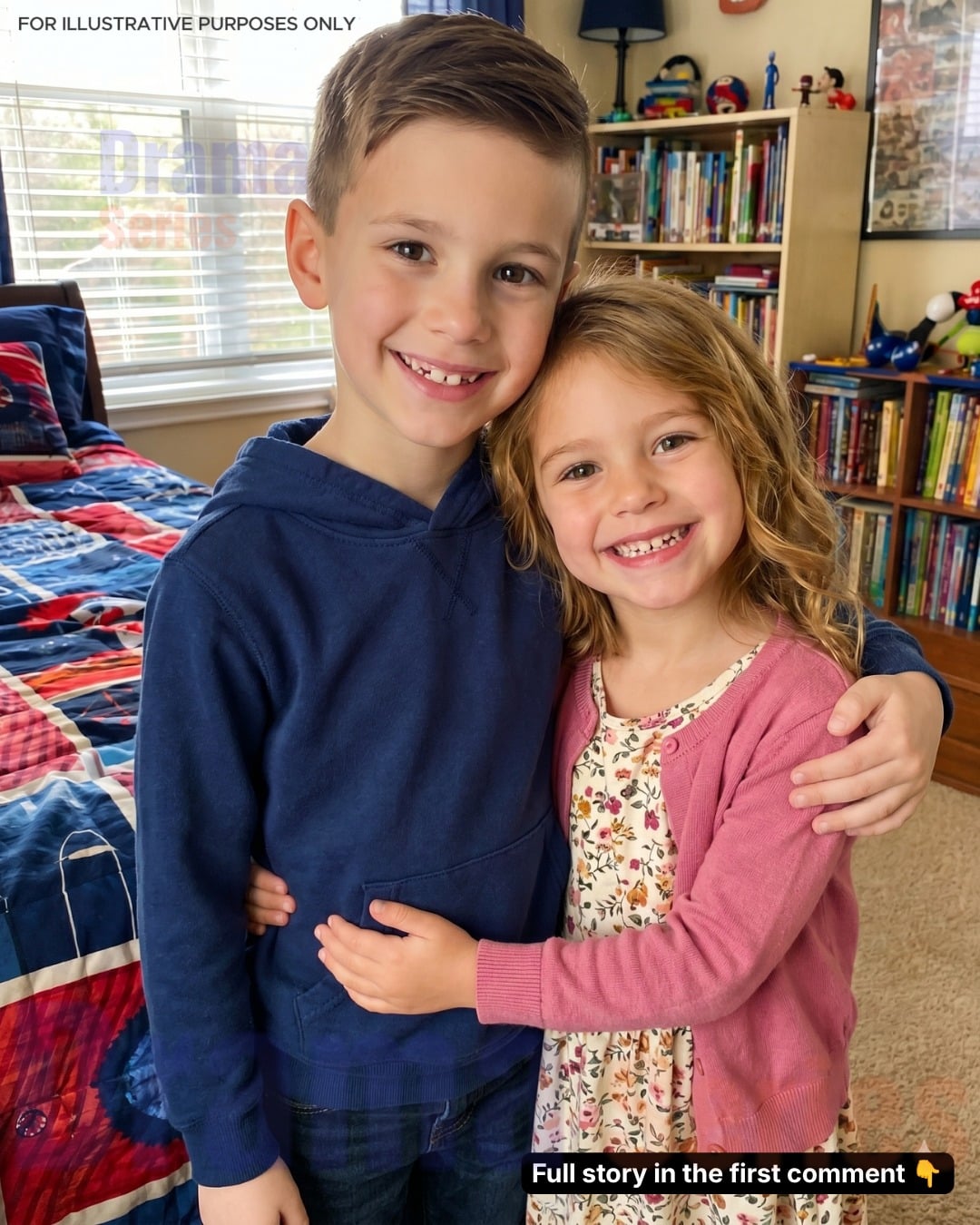
It started with eight words that split my world open all over again.
“Mom, I saw Lucas in the window.”
My daughter said it casually, almost absently, without looking up from her crayons. Sunlight spilled across the kitchen table while she colored tiny purple flowers with fierce concentration, completely unaware that her sentence had just stopped my heart.
For a second, I couldn’t breathe.
Lucas had been dead for nearly two years.
Even now, writing those words feels impossible. Dead. My son reduced to a word that sounded too small for the crater he left behind. Some mornings I still woke expecting to hear his feet pounding down the hallway. Sometimes I still caught myself buying his favorite cereal before remembering there was no one left to eat it. Grief had not softened with time the way people promised it would. It had simply become quieter, more patient, learning how to hide beneath ordinary moments before striking without warning.
And now my five-year-old daughter was telling me she had seen him.
“In the yellow house,” Ella whispered, finally glancing toward the window across the street.
I followed her gaze automatically.
The house sat still beneath the afternoon light, pale yellow paint fading near the shutters. We’d barely noticed it before. New renters had moved in recently, though I hadn’t introduced myself. Most days the curtains remained half closed, giving the place a withdrawn feeling, as though the house itself preferred silence.
“What did you see?” I asked carefully.
Ella shrugged, still drawing. “A boy. He looked like Lucas.”
The room tilted slightly.
Grief does terrible things to the mind. It teaches you to search for the person you lost everywhere — in crowded grocery stores, in playgrounds, in the shape of strangers crossing streets. I had spent months catching glimpses of Lucas in other children before reality slammed painfully back into place. But hearing Ella say it aloud awakened something darker inside me. A fragile, irrational corner of grief that still wanted miracles.
That night, I barely slept.
Every creak of the house felt amplified. My thoughts spiraled endlessly between logic and desperation. Maybe Ella had simply imagined it. Maybe grief had reached into her too. Or maybe there really was a boy across the street who resembled Lucas enough to reopen wounds I had barely managed to survive.
The next afternoon, I finally crossed the street.
I told myself I was being practical. A normal neighbor introducing herself. But my pulse betrayed me. By the time I reached the yellow house, my hands were shaking hard enough I nearly turned back twice. Some irrational part of me feared what I might see through the window before I even knocked.
A ghost.
A mistake.
A miracle too cruel to survive.
Instead, when the door opened, I found exhaustion.
The woman standing there looked young but utterly worn down, as though sleep had abandoned her long ago. Hospital bracelets still circled one wrist. Her eyes flickered nervously toward the hallway behind her before settling on me with cautious politeness.
“I’m sorry to bother you,” I began awkwardly. “My daughter thought she saw… someone in your window.”
The woman hesitated.
Then a small voice drifted from deeper inside the house.
“Mom?”
And suddenly there he was.
Not Lucas.
But close enough to break me anyway.
The boy stepped carefully into view, shy and uncertain, clutching a sketchbook against his chest. Eight years old, maybe. Thin shoulders. Dark hair falling slightly into his eyes. And something about the way he tilted his head — hesitant, gentle, observant — punched straight through every defense grief had built inside me.
For one suspended heartbeat, my body forgot reality entirely.
Lucas.
Not truly. Not logically. But grief doesn’t operate logically. It reacts to outlines, echoes, fragments. This boy carried just enough resemblance to awaken memories buried so deep they felt physical. My chest tightened painfully. I stared too long. Long enough for embarrassment to flood in afterward.
The boy shifted awkwardly.
“I’m Noah,” he said quietly.
His voice snapped me back into the room.
Over the following weeks, pieces of their story emerged slowly. Noah’s mother had moved there temporarily while undergoing treatments at a nearby hospital. His father was gone. Most afternoons Noah sat near the front window drawing because it helped pass the time while his mother rested. That was what Ella had seen: not a ghost, just a lonely little boy staring out at the world from behind glass.
But grief had transformed him into something haunted before I even knew his name.
At first, being near Noah hurt more than I expected.
Every similarity to Lucas felt dangerous. The way he laughed softly when embarrassed. The careful concentration while drawing. Even the shape of his small shoulders walking ahead of us one afternoon nearly brought me to tears. I worried constantly that I was projecting my son onto someone else’s child, trying unconsciously to resurrect what could never return.
Yet children understand things adults complicate.
Ella accepted Noah instantly.
Within days they were sprawled across our living room floor surrounded by crayons and paper scraps, arguing cheerfully about dragons and superheroes. Their laughter moved through the house like sunlight entering a room that had stayed dark too long. At first I found the sound unbearable because it reminded me so sharply of what was missing.
Then slowly, almost invisibly, something shifted.
The laughter stopped hurting quite as much.
I began noticing moments instead of absences. Ella smiling without forcing it. Noah relaxing enough to joke at dinner. The house no longer feeling frozen in mourning every second of the day. Lucas’s memory remained everywhere, but it no longer swallowed the oxygen from every room.
One afternoon, I watched Ella and Noah outside chasing soap bubbles through the yard while golden evening light spilled across the grass. Noah tripped, laughed, and looked over his shoulder with an expression so achingly familiar that grief surged again for a moment.
But this time, something else rose beside it.
Not terror.
Not longing for ghosts.
Gratitude.
Because I finally understood something grief had been trying desperately to teach me all along.
Love does not disappear when someone dies.
It changes shape.
For months, I had mistaken my grief for a hunger to see Lucas again, to find signs of him lingering somewhere nearby. But standing there listening to Ella and Noah laugh together, I realized what my heart had truly been begging for was connection — proof that love could still move forward instead of endlessly circling the emptiness he left behind.
Noah was never my son.
He could never be.
But somehow, through shared dinners, drawings taped to refrigerators, hospital visits, and children’s laughter drifting through open windows, he helped me understand that loving someone new is not betrayal. It does not replace the dead. It honors the part of them that taught you how deeply human hearts can care in the first place.
Lucas was still gone.
That truth would always hurt.
But for the first time since losing him, the pain no longer felt like the only thing left inside me.