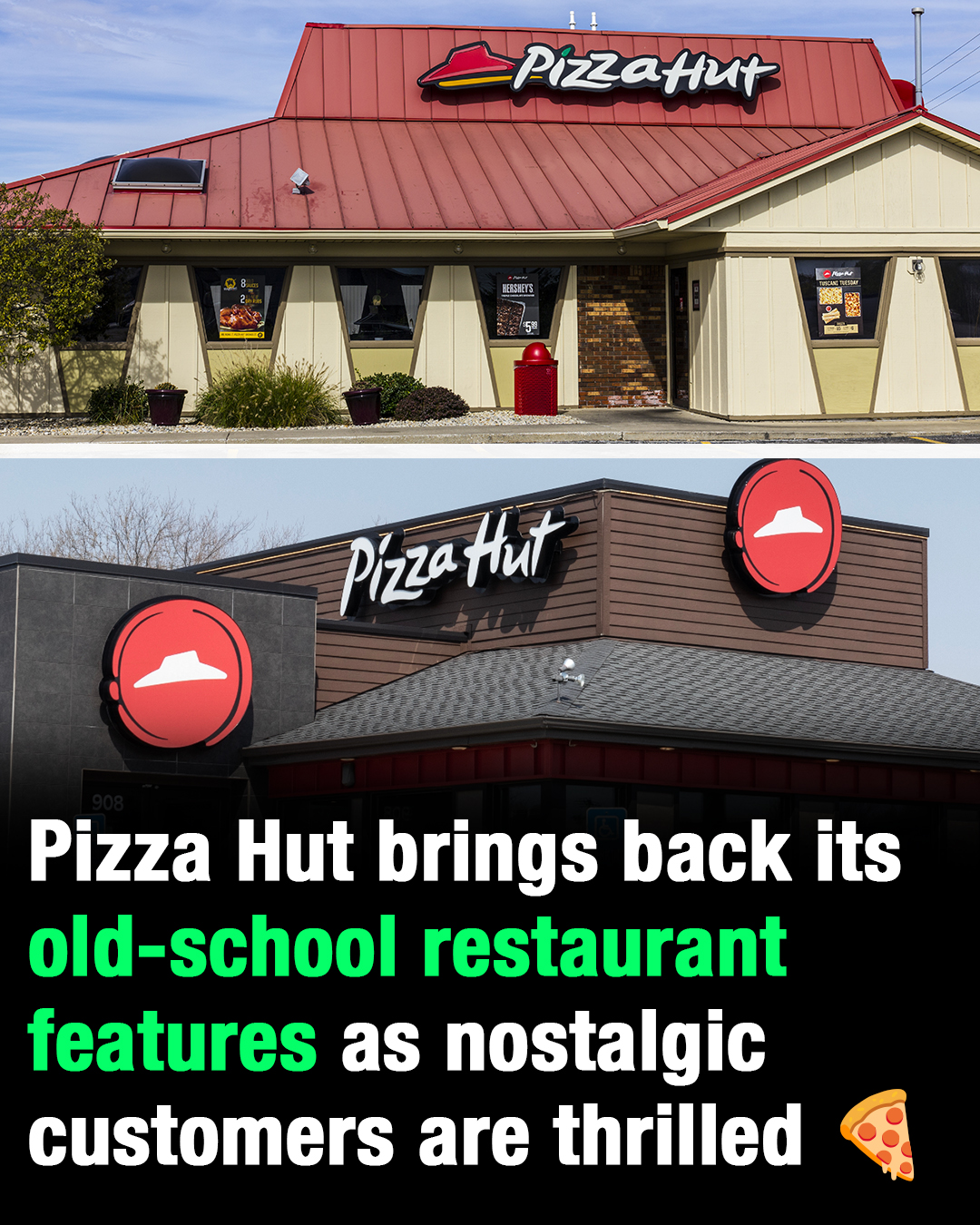
The first glimpse feels almost unreal, like stumbling into a memory that somehow survived untouched while the rest of the world rushed forward without it.
You see the glowing red roof first, shining against the night exactly the way it did decades ago. Then come the details your brain hasn’t thought about in years but recognizes instantly anyway: the deep red booths, the warm stained-glass lamps hanging overhead, the arcade cabinet flickering in the corner with its familiar electronic hum. Somewhere nearby, glasses clink against tabletops while children laugh over slices of pizza too hot to bite yet. Nobody seems to be hurrying. Nobody is staring silently into a phone.
For a moment, it feels impossible.
Because in an era dominated by sleek apps, self-checkout screens, ghost kitchens, and minimalist dining rooms designed more for delivery drivers than human beings, places like this were supposed to disappear forever. Corporate chains spent years sanding away personality in favor of efficiency. Dining became transactional. Faster. Cleaner. More optimized. Restaurants stopped feeling like destinations and started feeling like loading docks for takeout orders.
And then people began walking into Tim Sparks’ retro Pizza Hut restorations and realizing how much they missed.
Not just the food.
The feeling.
For Tim Sparks, recreating the classic red-roof Pizza Hut experience isn’t some ironic gimmick or marketing stunt. It’s an attempt to resurrect a specific kind of shared American memory — one tied to birthday parties, Little League celebrations, report-card rewards, awkward teenage dates, and exhausted parents treating Friday night dinner as an event instead of an obligation.
He understands something many corporations forgot: nostalgia is not really about objects. It’s about emotion attached to place.
So he rebuilds everything carefully, almost lovingly.
The iconic roofs return first, glowing like beacons from another decade. Inside come the dark wooden accents, the heavy booths built for lingering conversations, the Tiffany-style hanging lamps casting that unmistakable amber-red glow across the tables. Salad bars reappear. So do tabletop arcade games and machines humming softly in corners, especially classics like Pac-Man that instantly transport customers backward in time.
And people respond with surprising intensity.
Families drive for hours. Some cross state lines just to experience it once. Others walk through the doors and physically stop moving for a second, stunned by how powerfully the environment awakens memories they thought were long buried. Customers point at booths where they once sat as children. Older couples quietly tell stories about first dates. Parents watch their own kids discover the strange novelty of sitting through dinner without constant digital distraction.
Because that may be the most remarkable part of all.
The restaurants don’t simply recreate old décor. They recreate old behavior.
Children who normally scroll endlessly on phones suddenly crowd around arcade machines battling pixel ghosts together. Parents lean back in booths instead of rushing out the door with delivery bags. Conversations stretch longer. Laughter becomes louder. People linger over second slices instead of eating mechanically in silence.
It feels slower.
Human.
And perhaps that is why the revival resonates so deeply now, specifically in this era.
Modern life has become relentlessly frictionless. Food arrives through apps without eye contact. Music streams invisibly. Entertainment lives behind personal screens tailored to isolate rather than gather. Convenience dominates nearly every decision. Yet somewhere along the way, many people began realizing convenience and comfort are not the same thing.
The old Pizza Hut dining rooms represented something modern culture quietly erased: communal experience.
Back then, pizza night wasn’t simply about consuming food. It was an occasion. Families sat together longer because there were fewer distractions competing for attention. Arcade games created tiny social worlds inside restaurants. The environment itself encouraged presence. Even waiting for the pizza became part of the ritual.
That atmosphere is almost shocking to younger visitors who grew up in the age of constant connectivity.
Some walk in expecting a novelty attraction and leave unexpectedly emotional. Others become obsessed with documenting every detail online — the red plastic cups, the textured walls, the old-school menus — because the restaurant feels less like a business and more like a preserved cultural artifact from a less fragmented time.
Still, nostalgia has limits.
Many longtime fans insist the full experience can never truly return without the exact recipes they remember from childhood. Online debates erupt over crust texture, sauce flavor, cheese blends, and whether the modern food matches the emotional memory people carry. Some customers admit openly that the pizza itself almost matters less than the atmosphere surrounding it.
And maybe that’s the point.
Memory changes taste.
People are not only craving old recipes. They are craving the version of themselves that existed when those meals felt magical. The child waiting excitedly beside a glowing arcade cabinet. The teenager nervously sharing a pitcher of soda during a first date. The exhausted young parents enjoying one calm evening before life became too fast and complicated.
Tim Sparks seems to understand this instinctively.
He is not selling retro furniture or neon signs.
He is selling permission to slow down.
That is why customers walk through those doors smiling before they even sit down. Why older visitors sometimes grow unexpectedly quiet beneath the stained-glass glow. Why families linger long after the plates are empty.
Because for one strange, beautiful hour inside those red-roof restaurants, the world briefly stops feeling optimized and disposable.
And instead feels warm again.
Not modern.
Not efficient.
Just familiar.