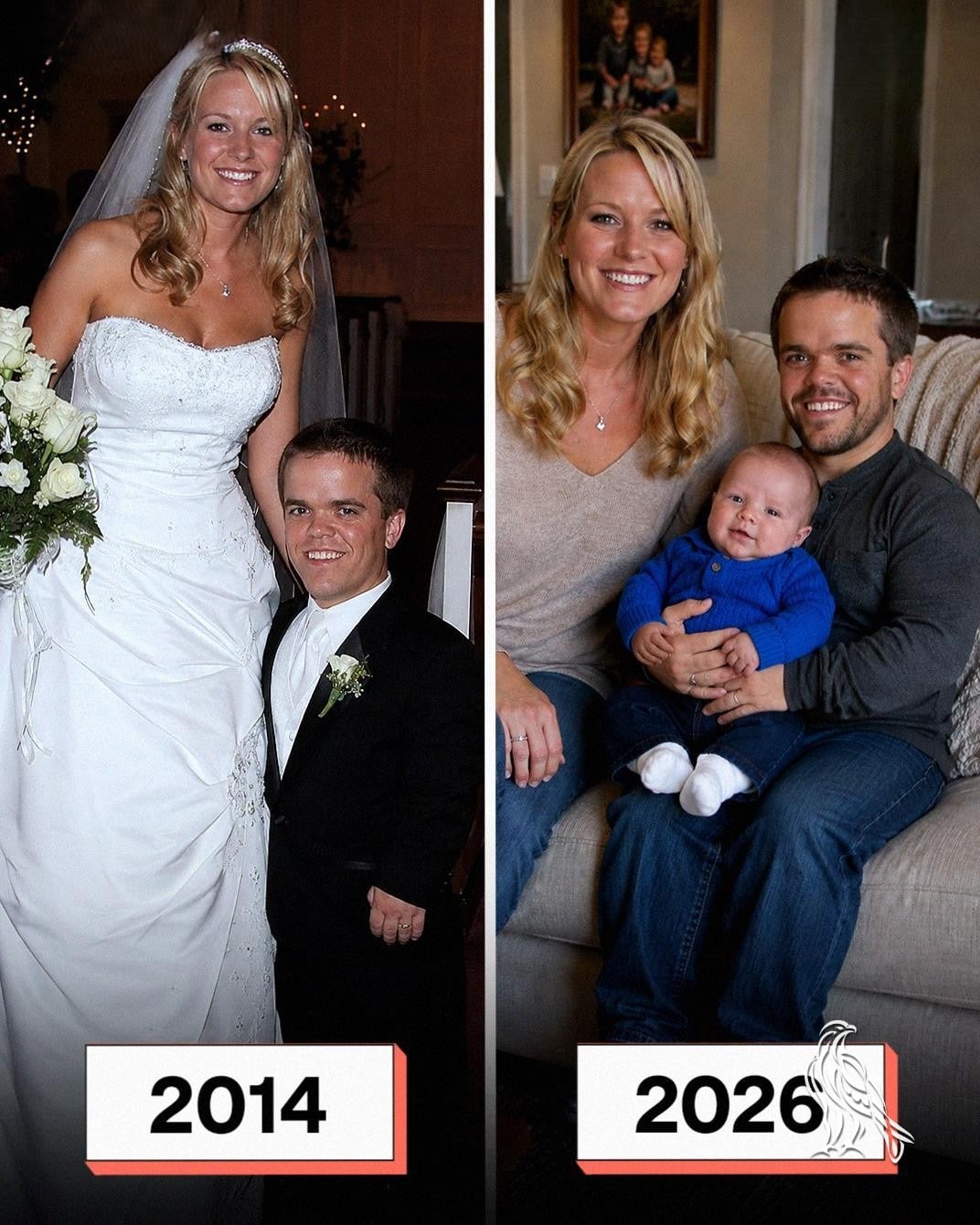
For years, they treated him like a joke that never stopped being funny to them.
Every family gathering carried another comment disguised as humor. Another insult slipped casually between bites of dinner. Another reminder that, in their eyes, he would never be enough for their daughter. They mocked his height first, as though something so small could define a man’s worth. Then they mocked his old car, his modest upbringing, the jobs he worked while trying to build something stable for himself. Even his quiet personality became ammunition. If he stayed silent, they called him weak. If he defended himself, they called him sensitive.
And every time, they expected us to smile politely and pretend cruelty was harmless because it arrived wrapped in laughter.
My parents especially believed they had earned the right to speak that way. They came from money, status, appearances — the kind of people who measured success by what could be displayed publicly. To them, Jordan was an embarrassment I would eventually outgrow. They spoke about him as though he were a temporary mistake in my life, not the man I loved.
Sometimes their insults were subtle enough to deny later.
“You could’ve done better.”
“Imagine what your children might inherit.”
“He’s nice, but…”
Other times, they were painfully direct. They treated his existence like something unfortunate I needed rescuing from. At family events, I would catch the looks they exchanged whenever he spoke. My mother once laughed openly after learning what he earned in a year. My father repeatedly referred to him as “that boy,” refusing to acknowledge the adult man standing in front of him.
What hurt most was not even the insults themselves, but the assumption underneath them: that Jordan would tolerate humiliation forever because they believed people without power always do.
But while they were busy underestimating him, Jordan was quietly building a life.
Not a flashy one. Not the kind designed to impress shallow people. He worked long hours, saved carefully, studied constantly, and built stability piece by piece with almost stubborn determination. He never wasted energy trying to prove himself to people committed to misunderstanding him. Instead, he focused on creating something stronger than their approval: peace.
That was the thing my parents never understood.
Jordan’s strength lived in restraint. In patience. In dignity. While they confused loudness for power, he quietly became independent of everything they once believed he needed from them. Their acceptance stopped mattering long before they realized it.
Then life shifted.
The business my parents spent decades treating like proof of superiority collapsed faster than anyone expected. Investments failed. Debts surfaced. Relationships with wealthy friends suddenly became distant. The confidence they wore like armor disappeared almost overnight, replaced by panic they tried desperately to hide.
For the first time in my life, I saw fear in my father’s face.
And then one evening, they appeared at our door.
No dramatic entrance. No polished arrogance. Just two exhausted people standing awkwardly in the hallway of the modest home they once mocked openly. My mother’s eyes looked smaller somehow, stripped of the certainty she carried for years. My father barely met Jordan’s gaze.
The conversation stumbled forward painfully.
At first they spoke indirectly, circling around the truth with embarrassed politeness. Financial difficulties. Temporary problems. Unfortunate timing. But eventually the real request emerged, fragile and humiliating in their mouths.
They needed $20,000.
Not from me.
From him.
The same man they had spent years degrading suddenly possessed the stability, discipline, and compassion they now desperately hoped to access. The irony hung so heavily in the room it almost felt physical. For a moment nobody spoke. I could practically hear old insults echoing silently between us.
Jordan listened quietly the entire time.
No anger. No raised voice. No attempt to humiliate them back. That almost made the moment more painful to watch. Because kindness from someone you once hurt feels heavier than revenge ever could.
When they finished speaking, the room fell silent.
Then Jordan answered.
“No.”
Just that.
Calm. Controlled. Certain.
Not cruel. Not dramatic. Simply honest.
He explained that respect cannot exist only when convenient. That relationships built on humiliation eventually collapse under the weight of their own cruelty. That years of mockery do not disappear the moment money changes hands. He told them he wished them no harm, but he would no longer sacrifice his dignity trying to earn love they had always treated like a transaction.
His refusal was not revenge.
It was self-respect.
And sitting beside him, I realized something profound in that moment: we were not rejecting family. We were rejecting the belief that abuse creates lifelong entitlement. We were refusing to continue a pattern where cruelty could be erased simply because the people responsible suddenly needed help.
My parents sat there stunned, surrounded by the silence they themselves had created over years of ridicule.
For once, nobody laughed.
Nobody made jokes.
Nobody held power over anyone else.
And as I watched them struggle to process the consequences of their own behavior, I understood something that changed me permanently: the joke had never truly been on my husband.
It had always been on them.
Because while they spent years trying to diminish another human being, Jordan quietly became someone strong enough to survive without their approval. And in the end, cruelty cost them the one thing they suddenly needed most — the generosity of the man they worked so hard to convince themselves was beneath them.