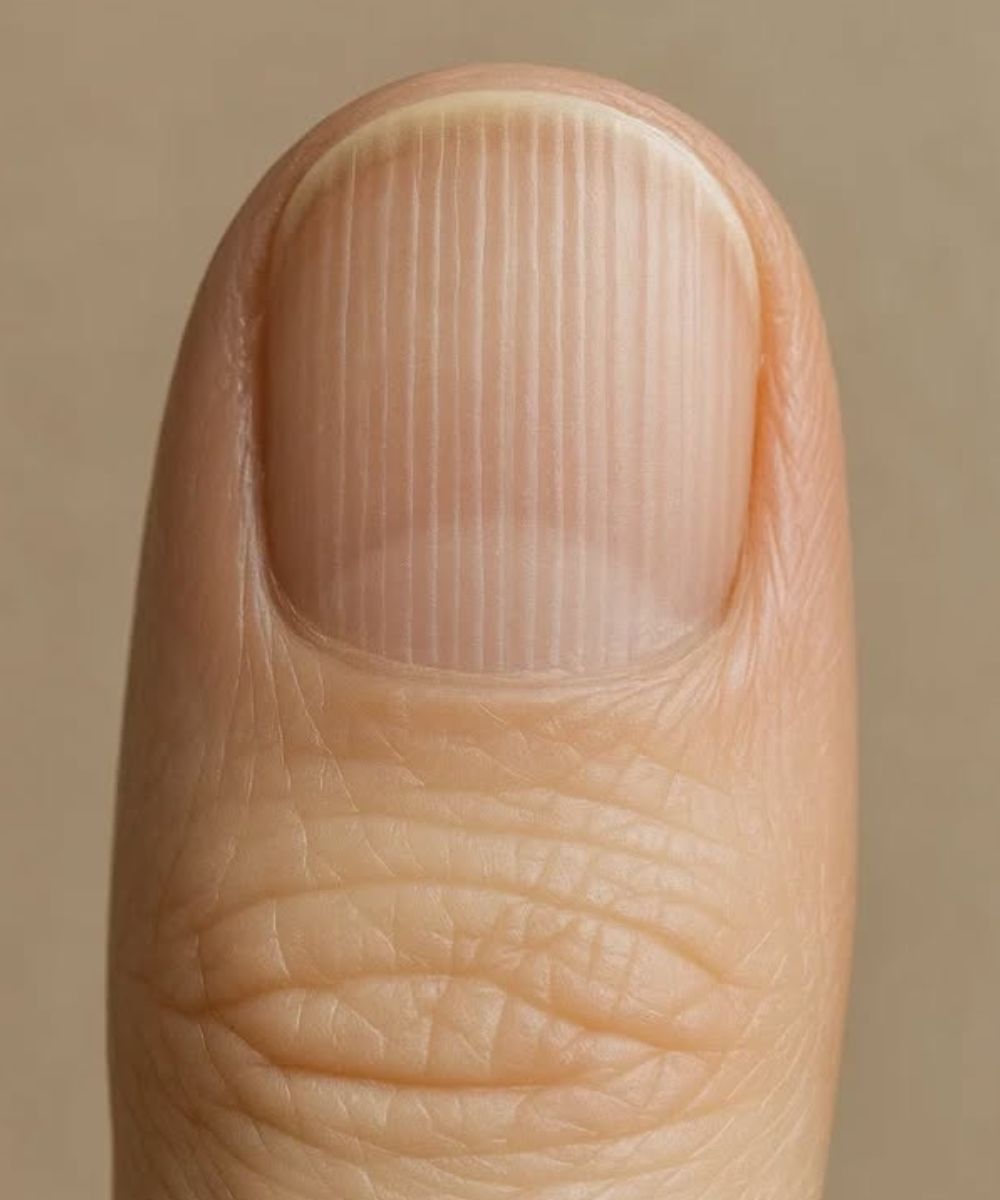
Tiny lines begin appearing across your nails almost so gradually that you barely notice them at first. One day your nails look smooth, and the next you catch the light at a certain angle and see faint ridges running from cuticle to tip. Suddenly your mind races toward frightening possibilities. Is it a vitamin deficiency? A hidden illness? A warning sign your body has been trying to send you for years? The deeper those lines seem to grow, the easier it becomes to spiral into worry, especially when you can’t remember seeing them before.
But in most cases, those vertical ridges are far less dramatic than your fears suggest.
For many people, the lines creeping up their nails are simply one of the body’s quieter signs of aging. Just like skin develops wrinkles and hair gradually changes texture, nails change too. Over time, the body naturally slows its production of keratin, the protein responsible for keeping nails strong and smooth. As keratin production shifts with age, nails often become thinner, drier, and slightly more brittle. Those once nearly invisible ridges begin standing out more clearly on the surface.
It happens so slowly that most people don’t notice until years have passed.
Everyday life also leaves its mark. Constant exposure to water, soap, cleaning chemicals, cold weather, and repeated hand washing gradually strips moisture from nails. Small injuries you barely remember — bumping a finger, typing endlessly, peeling polish, biting nails, or years of manicures — can subtly affect nail texture over time. Genetics play a role too. Some people are simply more likely to develop pronounced ridges as they get older, no matter how healthy they are.
Circulation changes can contribute as well. As the body ages, blood flow to certain areas becomes slightly less efficient, including the nail beds. This doesn’t usually signal danger, but it can influence how evenly nails grow. Combined with normal wear and tear, the result is often those thin vertical lines many people suddenly notice in middle age and beyond.
What matters most is not the ridges themselves, but the symptoms surrounding them.
If your nails keep their normal color and shape, and you are not experiencing pain, swelling, dark streaks, severe splitting, or sudden dramatic changes, vertical ridges are usually harmless. Doctors often view them the same way they view laugh lines or gray hairs: a normal part of the body changing with time.
Still, that doesn’t mean you can’t improve their appearance or support healthier nail growth.
Simple habits make a surprising difference. Moisturizing regularly helps restore hydration to both nails and cuticles, especially after washing your hands. Drinking enough water matters more than many people realize because dehydration can make ridges appear more pronounced. A balanced diet rich in protein, iron, omega-3 fatty acids, zinc, and vitamins like biotin can also help support stronger, smoother nails over time.
Protecting your hands from harsh chemicals is important too. Wearing gloves while cleaning or washing dishes prevents repeated exposure to substances that dry out and weaken nail surfaces. Even small lifestyle changes, like using gentler nail polish removers or avoiding excessive acrylics and gels, can help preserve nail health.
Some people choose to lightly buff ridges for cosmetic reasons, and done carefully, this can temporarily smooth the surface. But over-buffing can thin the nails further, making them weaker and more fragile. Often the healthiest approach is simply gentle care and patience.
Of course, there are situations where nail changes deserve closer attention. Deep horizontal grooves, sudden discoloration, black streaks, major thickening, severe brittleness, or nails separating from the nail bed can sometimes point toward medical conditions worth discussing with a doctor. The body does occasionally reveal internal problems through nail changes. But ordinary vertical ridges alone, especially those developing gradually with age, are usually not signs of serious illness.
That truth can feel strangely comforting.
Because in the end, those tiny lines crossing your nails are often not warnings of something failing inside you. They are reminders that your body carries time in quiet ways. Just as faces develop creases from years of smiling, worrying, surviving, and living, nails also record the passing years in their own subtle language.
And while those ridges may deepen with age, so does nearly every mark left behind by a life fully lived.