What sounded like a divine miracle quickly became something far stranger.
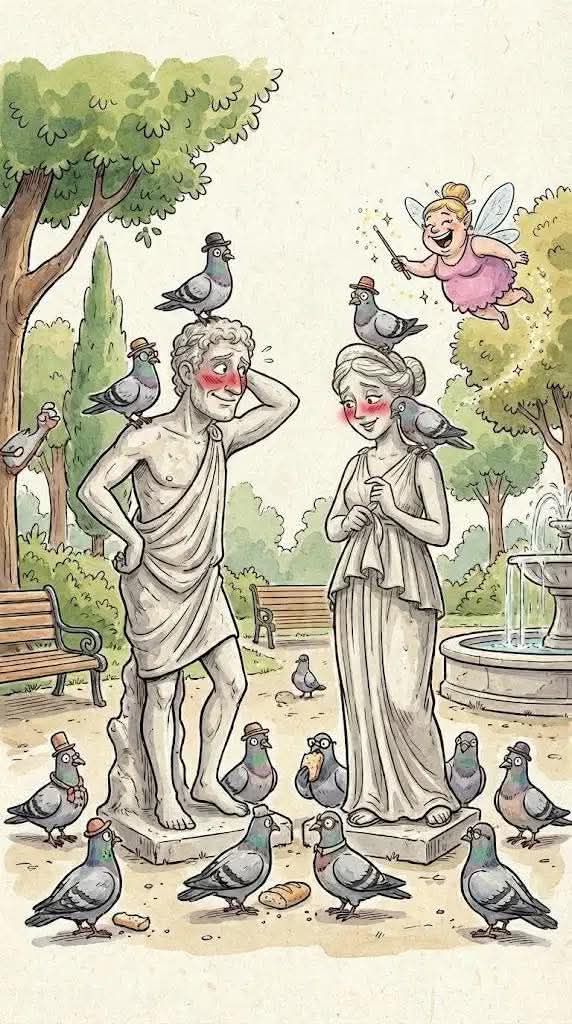
An angel descended from the heavens and stopped before two weatherworn stone statues that had stood frozen together in a quiet park for decades. Their faces were chipped by rain, their bodies stained by time, and year after year pigeons had perched on their heads without mercy, covering them in filth while they remained helpless to move, speak, or even protest. The angel, filled with compassion, decided to reward them with the impossible: thirty precious minutes of human life.
The moment the spell was lifted, the statues gasped as if taking their first real breath. Their stiff stone limbs softened into flesh, their eyes widened with amazement, and suddenly they could run, laugh, and feel the world around them. Without wasting a second, the two sprang to life and rushed hand in hand toward the trees nearby, disappearing into the thick bushes as the angel watched from a distance with quiet satisfaction.
The angel smiled to himself, convinced he understood exactly what was happening. After all those years trapped in silence beside one another, surely the pair wanted to spend their brief freedom embracing romance, sharing hidden feelings, or experiencing some deeply human tenderness they had been denied for so long. He imagined whispered confessions, stolen kisses, maybe even tears of gratitude for finally being allowed to live.
But from deep inside the trees came not soft murmurs or emotional declarations, but uncontrollable laughter. Wild, breathless laughter. The kind that sounded less like romance and more like mischief finally unleashed after years of frustration.
A short time later, the statues emerged from the bushes grinning harder than before. Their faces glowed with satisfaction. One of them looked at the angel and said, almost unable to contain the excitement, “Okay… now you hold the pigeon down while I poop on it.”
In that instant, the angel realized he had completely misunderstood them.
For years the statues had endured the same humiliation over and over again. Pigeons landed on their heads daily, soiling them while they stood powerless beneath the sky. Their dream had never been love or passion. What they wanted most was revenge. Freedom, even for only thirty minutes, became their chance to reverse the roles and give something else a taste of the indignity they had suffered for decades.
The story shifts from seeming heartfelt and sentimental into something unexpectedly sharp, crude, and strangely revealing. Beneath the absurd humor hides a darker truth about human nature. When people finally escape pain, humiliation, or powerlessness, they do not always become wiser or kinder. Sometimes their first instinct is simply to throw that same pain back into the world.
That is what makes the ending both funny and uncomfortable. The statues were not interested in becoming better than what hurt them. They only wanted to experience, for once, what it felt like to be the one in control instead of the victim.
And hidden inside the joke is a question that lingers longer than the laughter: when someone who has suffered is suddenly given freedom, power, or revenge within reach, will they rise above the cruelty they endured—or will they instinctively pass it on to the nearest, weakest target available?