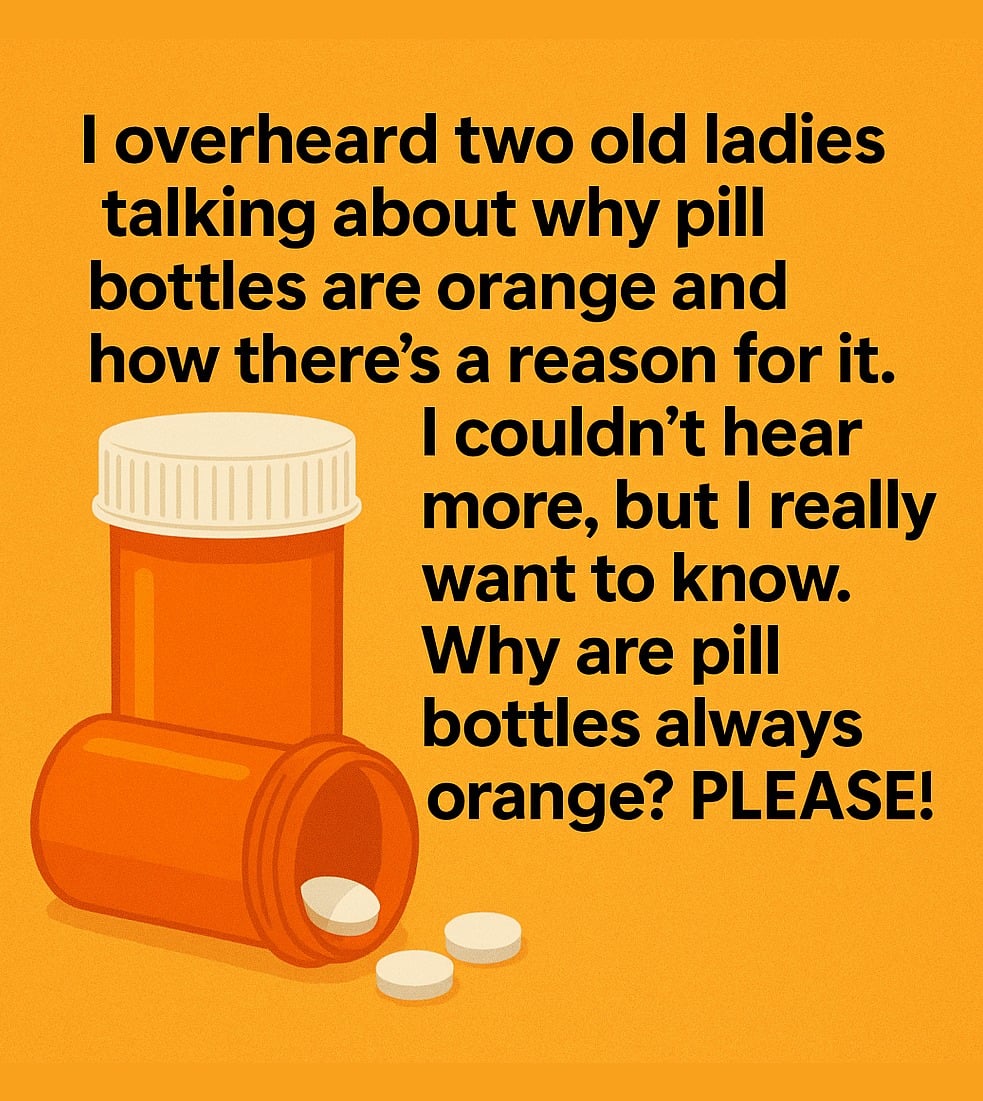
The truth has been sitting quietly in your medicine cabinet for years, hidden inside one of the most ordinary objects in your home.
That familiar orange prescription bottle most people never think twice about? Its color was never chosen randomly. It is not simply branding, tradition, or some outdated pharmacy habit passed down through decades.
It is protection.
Every time you twist open that orange cap, you are holding a carefully designed barrier between your medication and the invisible forces capable of damaging it slowly over time.
Because light — especially ultraviolet light — can quietly destroy certain medications.
Many prescription drugs are chemically sensitive. Prolonged exposure to sunlight or strong indoor light can gradually break down active ingredients, reducing effectiveness and, in rare situations, altering chemical stability enough to create safety concerns. The damage usually happens silently. No dramatic color changes. No warning smell. Just medication becoming weaker or less reliable while appearing completely normal.
That is where the orange bottle comes in.
The amber-orange plastic used in many American pharmacies is specifically designed to filter harmful UV rays while still allowing enough visibility for pharmacists and patients to inspect what is inside. It sits in a carefully balanced middle ground:
Dark enough to protect.
Transparent enough to remain practical.
A completely opaque container would make counting pills and reading contents difficult. A fully clear bottle would expose medications to too much damaging light. The orange tint solves both problems at once, quietly guarding the medication while preserving visibility and convenience.
It is a tiny piece of engineering most people interact with every day without ever noticing.
And over time, the bottle itself has become something more than packaging.
It became symbolic.
In the United States especially, the orange prescription bottle now instantly signals caution, medical trust, and responsibility. The moment people see one sitting on a counter or inside a bag, they understand instinctively that what is inside matters. Labels. Dosages. Warnings. Instructions. All contained inside that small orange cylinder.
Other countries approach medication storage differently. Some rely more heavily on blister packs or clear containers stored inside light-blocking boxes. But in much of America, the bottle itself became the first line of defense.
Of course, even the best bottle has limits.
Heat, humidity, and improper storage can still damage medications significantly. Bathrooms, despite being common storage spots, are often poor environments because constant moisture and temperature changes accelerate degradation. Direct sunlight near windows can also shorten shelf life dramatically for sensitive drugs.
That is why pharmacists frequently recommend storing medications in cool, dry places away from excess light and moisture.
Yet the orange bottle remains quietly important because it buys protection during the countless ordinary moments people never think about — medicine sitting on countertops, inside bags, beneath kitchen lights, or carried through bright parking lots and car rides.
And perhaps what makes this detail so fascinating is how invisible good design often becomes.
The safest systems in daily life usually go unnoticed precisely because they work so consistently. We rarely stop to admire seatbelts, smoke detectors, or tamper seals until something reminds us why they exist. The orange prescription bottle belongs to that same category of overlooked protection.
Small. Familiar. Easy to ignore.
Yet carefully built around the understanding that tiny details can preserve something far more important than plastic itself.
So the next time you reach into your medicine cabinet and grab that familiar orange bottle, you are not simply holding a container.
You are holding part of a quiet promise:
That what your doctor prescribed remains as safe, stable, and effective as possible by the time it reaches your hands.