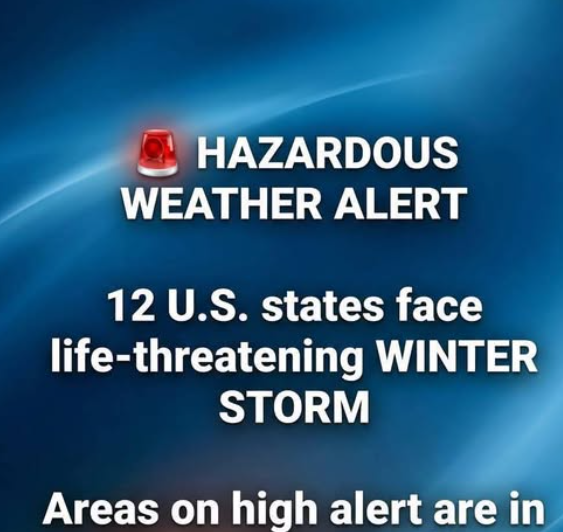
As a giant arctic blast brutally sweeps across the central heartland and spreads its icy grasp into the northeastern states, the United States is currently experiencing an unusual weather crisis. The National Weather Service has issued a series of urgent and more severe warnings, putting millions of Americans in the direct path of a quickly worsening winter emergency. The most dangerous and merciless aspects of winter—blinding snowstorms, dangerous ice buildup, and bone-chilling winds that can freeze exposed skin in a matter of minutes—are brought together by this complicated and powerful weather system, which is more than just a seasonal chill. This event has a huge influence on twelve states, ranging from the heavily populated regions of Pennsylvania and New York to the southern outskirts of Arkansas and Oklahoma. The forecast, which lasts until Saturday morning, presents a dire picture of broad disruption, logistical paralysis, and acute danger, necessitating prompt action from emergency management organizations and civilians alike.
The peak of this storm’s wrath is predicted to occur between Thursday night and Saturday morning, according to meteorologists, creating a crucial window during which the threat will be most severe. Snowfall totals are expected to reach a noteworthy four to six inches in areas like Northern Mississippi and East Arkansas. In the far northern states used to significant snowfall, this quantity would be seen as mild, but for the southern and mid-Atlantic regions, it poses a potentially disastrous situation. When these snow totals are combined with an already-existing covering of ice, conditions can cause entire cities to come to a complete stop. Ice accumulation continues to be the most pernicious and hazardous aspect of the storm, according to the National Weather Service. Even the most sophisticated vehicles are essentially powerless when a thin, seemingly insignificant layer of ice coats power wires, topples century-old trees, and turns roads into dangerous skating rinks.
This arctic intrusion’s geographic reach is astounding, covering a wide variety of temperatures, topography, and population density. The dangers change from snow and ice to the deadly combo of bitter cold and strong winds when the cyclone approaches the Appalachian Mountains. For example, wind chill readings in West Virginia might drop as low as -15 degrees Fahrenheit, according to experts. Frostbite can occur on exposed skin in as little as half an hour at such temperatures. The situation will be made worse by gale-force gusts that might reach 50 miles per hour, endangering the structural integrity of homes and other structures and causing hazardous whiteout conditions along mountain routes. In the depth of winter, the mix of wind, ice, and wet snow significantly raises the likelihood of extensive utility outages, depriving thousands of families of heat—a situation that may quickly turn from uncomfortable to potentially fatal.
As the storm gets stronger, travel conditions in the twelve states it is affecting are predicted to rapidly worsen, going from challenging to completely impossible. Particular risks are being emphasized, such as bridges and elevated roads, which freeze faster than level streets because they lack ground insulation. Even while local and state road officials have already mobilized legions of salt trucks and snowplows, the unrelenting precipitation may be too much for them to handle. Strong advisories are being issued by officials, stressing that any unnecessary travel should be delayed until conditions improve. It may seem inconvenient to postpone a trip for 48 hours, but the dangers of being stranded in a car while the storm rages on outweigh the inconvenience in the face of freezing temperatures and icy roadways.
Hours, not days, must be used to gauge preparation for homes in this winter system’s path. Residents are being asked by emergency management organizations to make sure they have everything they need to survive in the event that they get isolated. High-energy, non-perishable food products, plenty of drinking water, thick wool blankets or thermal sleeping bags, a dependable flashlight with extra batteries, and fully charged power banks for necessary gadgets should all be included in a sturdy winter survival pack. Layered gear is essential; in a storm of this size, the insulation and moisture control provided by contemporary synthetic textiles mixed with traditional wool can be the difference between life and death. Recognizing the early warning signs of hypothermia, such as excessive shivering, weariness, bewilderment, fumbling hands, and slurred speech, is equally crucial. Although these symptoms frequently develop gradually, prompt treatment is required to keep the illness from turning lethal.
It is not anticipated that this storm’s effects will be short-lived. According to forecast models, the dangerous circumstances are expected to last well into Saturday morning, and snow and ice buildup will continue to complicate cleanup efforts for days following. The lingering cold will continue to create hazardous circumstances even after the active snowfall stops. During brief daytime warming, snow on roads may partially melt and then refreeze overnight, forming sheets of black ice that are undetectable to drivers but have the potential to cause catastrophic collisions. It is impossible to overstate the psychological effects of such a protracted winter event in addition to the physical concerns. The storm’s already serious logistical problems can be exacerbated by ongoing exposure to emergency alerts, downed power lines, and darkened neighborhoods, which can increase feelings of vulnerability, loneliness, and anxiety.
This winter blast is predicted to have significant economic repercussions. Major shipping hubs in the Midwest and South may temporarily suspend operations, and transportation corridors that serve as the foundation of regional and national supply chains are expected to face severe delays. Local companies may close their doors out of worry for worker safety and property integrity, and municipal governments will have to deal with rising expenses for emergency services, utility repairs, and snow removal. However, human safety continues to be the top priority despite the financial hardship. The National Weather Service, emergency management organizations, and numerous municipal officials are putting up endless effort to guarantee that citizens have prompt access to tools, advice, and information intended to reduce risk.
A wide range of the American geography is represented by the twelve states that are now under severe winter weather warnings. Despite having different temperatures and geographical locations, this same storm is testing Pennsylvania, Arkansas, Oklahoma, West Virginia, and other states. As conditions change, the National Weather Service keeps an eye on the system and updates forecasts for ice accumulation, wind chill advisories, and snowfall. Through a variety of media, including government emergency management communications, NOAA weather radio, smartphone weather applications, and local news sites, residents are being advised to stay informed. Being caught off guard is mostly preventable in a world where information can be sent instantly, as long as people actively seek out updates and pay attention to the warnings.
The ability of towns and individuals to accept the power of nature will ultimately determine how this winter storm turns out. This is a crucial time for both individual accountability and group cohesion. Acts that can save lives include keeping an eye on senior neighbors, making sure pets are safely indoors, and rigorously following travel advisories. For millions of Americans, the next 48 hours will be a test of readiness, resiliency, and alertness as the first flakes start to fall across the plains, the winds kick up through the mountain hollows, and temperatures plummet to dangerously low levels. The storm is more than just a weather phenomenon; it’s a challenge that calls for caution, preparation, and attention.
The exceptional fury of winter 2026 has brought with it a catastrophic, multifaceted event that will have a long-lasting impact on the impacted states. The conditions brought about by this arctic incursion, which range from heavy snowfall to ice-covered roadways, from gale-force winds to below-freezing temperatures, serve as a sobering reminder of the might and unpredictability of nature. It is recommended that residents take decisive action, make complete preparations, and stay vigilant for any changes. In addition to helping their communities during a period of extraordinary adversity, those who do so will be in a better position to weather the storm safely. The country’s resilience will be put to the test in significant ways over the coming days, but lives can be saved and the worst effects of this historic arctic blast can be lessened with preparation, alertness, and careful attention.