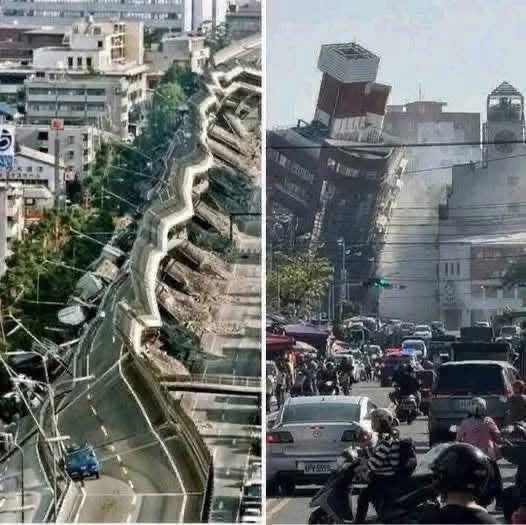
Late on Wednesday, a strong and unexpected earthquake blasted shockwaves across the Alaskan Peninsula, prompting tsunami warnings and placing several areas on high alert. With a magnitude of 8.2, the earthquake struck with tremendous energy, prompting concerns about its potential to affect coastal areas and beyond.
Early reports stated that the earthquake happened at a depth of about 35 kilometers below the Earth’s surface, 91 kilometers east-southeast of Perryville, Alaska. The sheer size of the incident was sufficient to trigger emergency procedures throughout a large area, even though the depth helped absorb some of the immediate surface damage.
Warning systems were activated shortly after the earthquake.
In coastal towns like Kodiak, sirens started to wail, warning locals to swiftly evacuate to higher land. Videos taken in the region depict the anxious mood as alarms went off in the streets, warning of a possible tsunami threat that would follow the seismic activity.
The authorities didn’t take long.
Alerts for southern Alaska were issued by the National Tsunami Warning Center, with a focus on coastal regions between Hinchinbrook Entrance and Unimak Pass. Because earthquakes of this size have the potential to produce hazardous ocean surges that can reach far-off shorelines, these warnings were not taken lightly.
The initial cautions went even beyond.
Monitoring systems evaluated the potential for wave propagation over the Pacific, temporarily placing areas like Hawaii and Guam under alert. The early caution was a reflection of the seriousness of the situation and the unpredictable nature of big seismic events, even though those advisories were eventually dropped after additional study.
Mike Dunleavy verified that Alaska’s emergency operations center was engaged as soon as the earthquake occurred. This action made it possible for local, state, and federal agencies to coordinate quickly, enabling quick action in the event that circumstances worsened.
Global monitoring systems were also activated in the interim.
Working with organizations in nations like Japan and New Zealand, the Pacific Tsunami Warning Center started examining seismic data and wave patterns. The magnitude of the earthquake necessitated international coordination and attention due to the possibility of trans-Pacific consequences.
More information started to surface as the hours went by.
After the main earthquake, a number of aftershocks were recorded by the US Geological Survey. Two of the at least eight further tremors that were recorded had magnitudes greater than 6.0. Even though these aftershocks were to be expected following such a significant earthquake, they caused further anxiety in already uneasy areas.
There are risks associated with aftershocks.
Subsequent earthquakes can undermine structures, produce landslides, or add to the region’s instability even if the initial earthquake does not result in major damage. The situation is still unclear for locals in the impacted areas, not only in the immediate aftermath but also in the hours and days that follow.
Early reports said that there were no quick confirmations of significant damage or injuries, despite the earthquake’s severity. Given the scope of the incident, this result provides some relief even if it is still being confirmed. Officials stress that situations can change quickly and that assessments are ongoing, but they are still wary.
The lack of imminent harm does not remove risk in such circumstances.
Determining the complete impact requires ongoing seismic study, coastline monitoring, and infrastructure inspections. While warnings and advisories are still in effect, authorities continue to advise locals to stay vigilant, heed official instructions, and avoid complacency.
The speed at which the tragedy transpired was, for many, its most remarkable feature.
Normal activities for a moment.
Alarms, alerts, and confusion followed the next, which was a strong shift beneath the Earth’s surface.
One characteristic of earthquakes, especially large-scale ones, is their quick transition. Communities must rely on cooperation, response systems, and readiness to handle the aftermath when there is little to no warning.
The Pacific region, sometimes known as the “Ring of Fire,” is particularly vulnerable to these kinds of incidents. Earthquakes and volcanic eruptions are commonly caused by the movement of the Earth’s plates in this region, which is known for its high tectonic activity. Although seismic activity of this magnitude is still relatively uncommon and substantial, Alaska, which is located along this zone, regularly experiences seismic activity.
This occurrence is unique because of its rarity.
An 8.2 magnitude earthquake is a significant geological event that can affect large areas; it is not just another tremor. Millions of tons of explosive power’s worth of energy is released during such an earthquake. Coordinated efforts across several systems and locations are needed to comprehend and respond to that level of energy.
Monitoring ocean behavior has continued to be the main emphasis in the hours after the earthquake.
Although they don’t necessarily follow earthquakes, tsunamis can move quickly over whole ocean basins. In order to reduce risk and give coastal communities time to relocate to safer places or evacuate, early detection and warning technologies are essential.
The situation seems to be stable thus far.
Authorities, however, are not taking any chances.
Emergency squads are still in operation. Monitoring is still going on. There are always open lines of communication.
The event serves as a sobering reminder of the might of natural forces and the significance of preparedness for locals living in impacted areas. Although earthquakes cannot be avoided, their effects can be controlled with planning, awareness, and quick action.
Officials will keep the public informed as new information becomes available, making sure that accurate data replaces ambiguity.
For the time being, safety, alertness, and comprehending the entire extent of what has just happened continue to be the key priorities.
Because even if the ground may no longer tremble, the consequences of such an incident don’t go away right away.
They develop throughout time.
The entire world is keeping a close eye on it.