Before the clouds eventually broke and unleashed a torrential downpour that rocked the windowpanes and turned the backyard into a shallow lake, the sky had been a bruised hue of purple for hours. It was the kind of storm that made you want to curl up with a warm beverage under a blanket while you listened to the rain beating rhythmically against the roof. However, one homeowner’s cozy interior environment was about to be destroyed by an unnerving discovery that resembled a scene from a low-budget horror movie. A regular trip to the restroom turned into a battle with the unknown as the lightning flickered out and the thunder finally rolled into the distance.
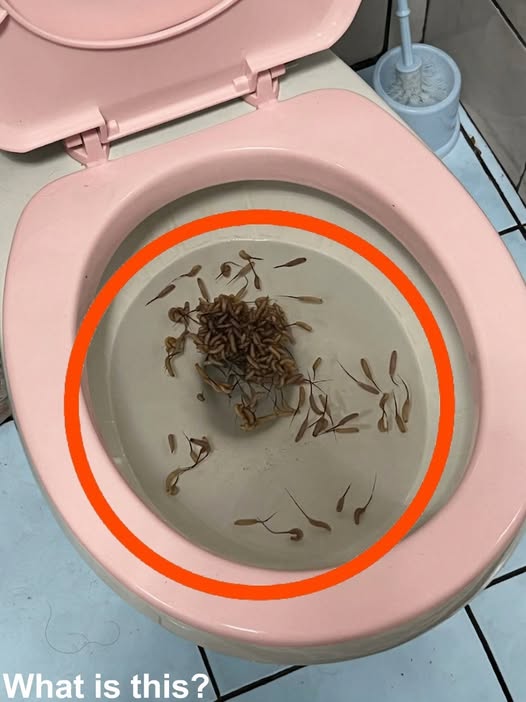
Something was moving in the toilet’s porcelain bowl. The water appeared to be just shaken by the storm’s pressure at first, but when the ripples subsided, the reality took on a darker hue. The water was filled with dozens of squirming, black forms. They moved with a frenzied, undulating energy that made the skin crawl, and they were little and brownish-black. They appeared to be parasites in the bathroom’s dim light, either a swarm of invasive worms or some ancient larvae that had been roused from the city’s old sewer system.
Panic is a harsh, chilly emotion. It strikes all at once rather than gradually. Immediately, the worst-case scenarios raced through the head. Was there an infestation in the house? Had a sewer backup brought biological risks into the residential area as a result of the heavy rains? Anyone would run for the door at the mere prospect of sitting in a room where such animals might emerge from the plumbing. The restroom is a place of vulnerability where we anticipate complete privacy and sanitation, thus there is an innate fear linked with it. It felt like a transgression of the highest order to see that refuge overrun by writhing, living creatures.
The homeowner stood motionless for a few minutes, contemplating whether to flush the issue away or rush to the phone to contact an emergency plumber or possibly an exterminator. Curiosity, or maybe a persistent sense of incredulity, compelled a closer examination. They inhaled deeply, reached for a flashlight, and leaned over the bowl, shining a harsh, clinical white light on the water. The scary mystery of the “monsters” started to fade under the glare.
They weren’t worms. They lacked the translucent horror of intestinal parasites and the segmented, greasy appearance of leeches. Rather, they possessed long, tapering tails that swept back and forth with amazing speed, and rounded heads. They were tadpoles.
There was a huge rush of relief upon realizing this, but it was soon followed by a deep sense of bewilderment. It seemed unbelievable that a horde of baby frogs could have found their way into a second-story restroom during a downpour, but there they were, swimming in circles in the most domestic of places. In reality, the “nightmare” was a little, misguided biological miracle.
It turns out that even in the most unnatural settings, nature finds a way. Extreme rainfall causes the surrounding environment to go into a frenzy. Frogs seek out any source of standing water because they have an innate need to mate in the newly created ponds and puddles. In this instance, a peculiar conduit was probably produced by the combination of high humidity and rising water levels in the external pipes. Certain frog species are extremely skilled climbers, able to scale vertical surfaces or get via roof vent pipes. It’s very likely that a mother frog entered the plumbing vent or an open drain in search of a safe haven from the swift currents of the flooded yard, where she laid her eggs in the calm, still water of the toilet bowl.
What had started off as a terrifying moment turned into an odd sense of duty. The knowledge that these were living things that had just taken a terribly wrong turn took the place of the terror of an infestation. Minutes before, flushing them away had seemed like a sensible option, but now it felt cruel. These were the initial phases of a life cycle that had no place in a sewage treatment facility but rather in the natural world.
The homeowner made the decision to temporarily take care of this unintentional aquarium. One by one, they delicately removed the tiny swimmers from the dish using a tiny plastic container. Because the tadpoles moved so quickly, it was a laborious operation that required patience and a steady touch. After the bowl was clear, a little more fresh water was added, and the container was taken outside into the moist, post-storm air.
The smell of ozone and moist earth filled the air as the backyard continued to drizzle. A small natural pond that had spilled during the height of the flood was located close to the property’s edge. The tadpoles were released into the murky, black water by gently tilting the container. They vanished almost immediately, diving into the muck and reeds where they would have a chance to develop into the frogs they were destined to be.
The homeowner went back inside and saw the bathroom in a different light. Although the immediate danger was passed, the incident served as a sobering reminder of how thin the line is between the wild and our regulated human environment. Despite our efforts to protect ourselves from the elements by building walls, installing plumbing, and sealing windows, nature persists. It just took one intense downpour to close the distance.
A few useful actions were done to stop the “toilet tadpoles” from performing again. Mesh covers were installed on roof vents, which are frequently the point of entry for daring frogs, and drains were inspected for adequate screening. Most individuals ignore these easy upkeep chores until they find themselves staring down at a bowl full of unexpected guests.
Although startling at first, this peculiar encounter turned out to be a tale of harmony. It was the fleeting, strange meeting point of two very different universes. What appeared to be a biological threat was actually just a mother frog trying to protect her young in a momentarily submerged environment. It teaches anyone who might discover something “scary” in an unexpected location that sometimes the things that bump in the night—or squirm in the pipes—are simply lost travelers searching for a place to call home. The sense of complete household predictability was ultimately the only thing seriously harmed, and it was replaced by a tale that would be recounted for years to come.