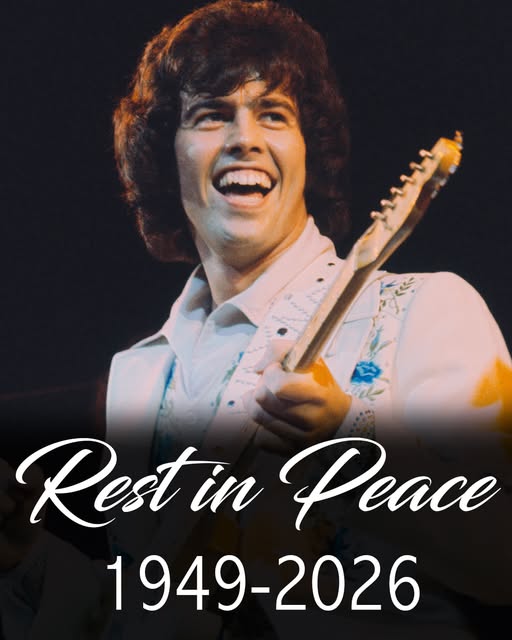
This week, a pivotal period in American music came to an end when the world learned of the tragic death of Alan Osmond, the devoted father and creative force behind the illustrious Osmond family, at the age of 76. The impact of his leaving has shocked generations of admirers who saw the Osmonds not merely as a band but as a cultural institution, even if the news spread with a quiet dignity that suited the man himself. Alan passed away surrounded by his wife Suzanne’s unshakable love and their eight loving boys, capping a life that was both harmonious and disciplined. The story he leaves behind is one of unmatched resiliency, faith, and a dogged quest of perfection, despite the family’s decision to keep the precise cause of death a secret.
Alan was born in 1949 and was the oldest of the siblings who performed, so it was only natural for him to take on the roles of leader, visionary, and protector. Alan assumed responsibility early on, while his older brothers, Virl and Tom, were unable to participate in the musical act due to hearing disability. He began harmonizing in barbershop quartets at the young age of twelve, setting the stage for what would eventually become a worldwide phenomenon. He was more than just a vocalist; he was the creator of a sound that would rule the radio for many years. Along with siblings Wayne, Merrill, and Jay, Alan turned a family pastime in the area into a professional force that finally embraced Donny, Marie, and Jimmy’s megawatt glory.
The Osmonds were well-known for a variety of things, including their synchronized choreography, their radiant smiles, and their wholesome image. However, within the industry, they were recognized for something far more exacting: they were the One Take Osmonds. It was necessity, not ego, that gave rise to this title. The brothers were only allowed a few hours of studio time each day due to California’s stringent child labor rules. Alan led the group through intense at-home rehearsal sessions to increase their productivity. In order to provide faultless performances as soon as the red recording light flickered on, they would practice until every note was precise and every movement was second nature. Alan frequently remembered this time with a sense of pragmatic pride, pointing out that the strain of the deadline only strengthened their bond as a team and sharpened their skills.
Alan’s genuine brilliance frequently existed behind the scenes, despite the fact that many viewed him as the voice in the harmony or the steady hand on the guitar. He was a musical experimenter and prolific songwriter who resisted the group’s categorization into a single genre. Alan was the driving force behind their transition toward edgier, more sophisticated sounds, even as they perfected the bubblegum pop that made them teen idols. He played a key role in the production of Crazy Horses, a song whose strong riffs and socially concerned lyrics about environmental pollution surprised both critics and admirers. It was a daring break from their polished image, demonstrating Alan’s awareness of how the world was evolving and his guts to take his family into uncharted creative territory.
Their frequent appearances on The Andy Williams Show, which exposed millions of families to their refined style of entertainment, were the driving force behind their quick ascent. Alan handled this unexpected international fame with a level of composure uncommon in the business. He stayed grounded in his personal beliefs even as they played for royalty and filled stadiums around the British Isles and beyond. As a devoted follower of The Church of Jesus Christ of Latter-day Saints, Alan saw his work as a way to spread optimism and light rather than as a goal unto itself. He served with distinction in the California Army National Guard, where his disciplined demeanor earned him the nickname “Mormon Dream” among his fellow troops in the 144th artillery battalion. His sense of civic obligation complemented this spiritual foundation.
But Alan’s character was put to the ultimate test by his physical struggles rather than the demands of the stage. At the height of his adulthood, in 1987, he received a multiple sclerosis diagnosis. The diagnosis was a terrible blow to a guy whose life was characterized by movement, performance, and precision. However, in keeping with his personality, Alan decided to approach the long-term illness with the same determination that he used for his music. Refusing to allow his physical limitations depress him, he became a ray of hope for others who had the illness. His influence never diminished, even though by 2007 he was forced to retire from the physical constraints of touring and performing. He assumed the position of mentor and guardian of the family’s extensive heritage, making sure that the principles they had established were upheld for the following generation.
The family Alan created with Suzanne Pinegar, whom he married in 1974, brought him the most happiness in his private life. Their marriage, which lasted more than 50 years and produced eight boys, was an example of a long-lasting partnership. Alan lived to see his heritage flourish into thirty grandkids and five great-grandchildren, and he took great delight in seeing his children continue the family’s legacy of skill and devotion. For Alan, the quiet times spent at home with his large family laughing took precedence over the platinum records and the plaques on the Walk of Fame.
Tributes are coming in from all across the world as word of his passing spreads. Fans, former colleagues, and other musicians who grew up with Osmond posters on their walls are all grieving together. They recall a man who was more than simply a pop sensation; he was a trailblazer who demonstrated that one might become globally famous without losing one’s soul. He instilled in a generation the value of perseverance and the necessity of staying close to one’s family through life’s highs and lows.
The tale of Alan Osmond is a classic American epic. It is the tale of a fighter who faced a crippling illness with a smile on his face, a leader who kept his family together in the midst of celebrity, and a youngster from Utah who used his voice to reach the globe. More significantly, he leaves behind a template for a life well lived, but he also leaves behind a collection of music that will be performed for as long as people respect harmony and heart. The sounds of his song linger as the curtain closes on his last performance, serving as a constant reminder of a legend who really did it right on the first try. The heavens are definitely much more harmonious today, even though the world is a little quieter. Alan, you will always have a song to sing. Rest in peace.