As I watched my younger sister, Lily, glide down the aisle, the sunlight catching the delicate lace of her gown and scattering tiny diamonds across the polished floor, I felt a tightness in my chest that had nothing to do with the floral arrangements or the romantic music echoing through the cathedral. To the guests filling the pews, this was a picture-perfect wedding day: the culmination of youth and charm, a fairy tale moment where a young woman had found her soulmate. But to me, every step she took was a quiet triumph over a history too painful and nuanced for any stranger to fully grasp. It was the apex of a decade-long journey born from the wreckage of our childhood—a journey stitched together from unspoken sacrifices, shared grief, and responsibilities that had fallen squarely on my shoulders when I was barely an adult myself.
The transformation of our lives had happened in the blink of an eye. Years ago, when our mother passed away, the vibrant heartbeat of our home was extinguished. The warmth and laughter that had once seemed so ordinary evaporated overnight, leaving only silence and shadow. Our father, paralyzed by sorrow so deep it rendered him almost spectral in his own house, retreated entirely into himself, leaving no space for the living. At twenty-two, I was a woman barely beginning to explore her own potential, yet suddenly thrust into the role of protector, caretaker, and anchor. There was no legal decree, no formal ceremony; the universe itself had passed judgment. Lily was just a child, her bright, trusting eyes wide with confusion, watching me navigate a life I hadn’t been ready to shoulder. From that moment, my ambitions, my dreams, even the tiniest whims of independence were filtered through a singular, unwavering mission: ensuring that Lily felt safe, loved, and seen in a world that had become unpredictably cold.
The years that followed were a blur of laborious learning, exhausting responsibility, and the kind of endurance that leaves no room for complaint. While my friends explored their early careers, celebrated minor milestones, and flirted with the freedom of early adulthood, I became a master of survival. I learned the silent mathematics of groceries, the art of balancing overdue bills, the gentle science of packing nutritious lunches before the sun had risen. Nights were spent whispering soothing words to a sick child, promising reassurance I wasn’t always sure I could deliver. Every day demanded the slow burn of devotion—the invisible, often unrecognized kind that isn’t grandiose or dramatic but essential. I wasn’t performing heroics; I was cultivating consistency, creating stability from chaos, and turning fractured moments into a semblance of normalcy.
Through the years, Lily and I became inseparable—not just sisters, but a two-person unit against the world. I watched her evolve from a grieving child into a woman of formidable intelligence, empathy, and grace—a reflection of resilience born from necessity. And so, as I sat in the front row that morning, the sun illuminating her serene face, my chest swelled not merely with pride but with profound relief. We had weathered storms that threatened to swallow us whole, and now, at this altar, I saw the fruits of years of quiet labor.
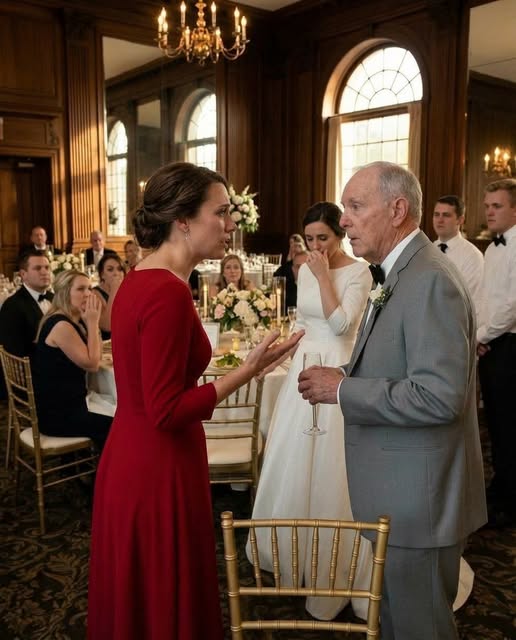
Yet the serenity of the day was disrupted at the reception, in a way I had not anticipated. The grand ballroom, opulently draped in silk, filled with laughter and music, was pierced by a voice from the groom’s family during a toast. At first, it followed the expected path: compliments, light humor, and familial warmth. But then, subtle yet unmistakable, condescension crept into the narrative. The speaker recounted Lily’s humble beginnings, casting them not as a testament to her resilience but as a deficit to be surpassed—a narrative that framed our upbringing as tragedy, one she had “escaped” by marrying into a more established family. The words, coated in pity, dismissed the countless nights, early mornings, and unwavering support I had provided. They ignored the scaffolding I had built beneath her, the countless invisible threads of care that allowed her to flourish.
The room seemed to pause, as if holding its breath in uncomfortable recognition of the distortion. Heat rose in my neck—not from anger, but from a fierce, protective instinct. If I remained silent, our story would be rewritten by someone who had never bled for it. I stood, glass in hand, steady and composed. I didn’t seek drama, confrontation, or vindication. I sought truth. I spoke of struggle as honor, of resilience born not from luck but from relentless care and responsibility. I shared the quiet heroism of early mornings, long nights, and the invisible labor that builds not just a child, but a foundation for a lifetime.
I explained to the assembled guests that family is not a status symbol. It is not something to be overcome. It is the bedrock on which life is built. Lily’s strength was not a miracle, a break from her past—it was a direct consequence of it, shaped by love, sacrifice, and unwavering presence. I spoke of showing up when nothing is guaranteed, when failure is the only constant, and how these acts of devotion are what truly define a family.
Before I could finish, Lily rose from the head table and approached me. Her eyes glimmered with unshed tears, but her smile radiated warmth and certainty. Taking the microphone, she spoke with a calm authority: the person who had shaped her world was not a distant figure of status or a celebrated mentor, but the sister who had quietly borne the weight of her upbringing. She described how my presence had been her anchor, her constant, the quiet force that made her life possible. The room shifted. Condescension gave way to comprehension. Respect replaced ignorance. The narrative had been reclaimed, and in doing so, so had our dignity.
As the night wore on, laughter and music mingled with an air of reflective appreciation. Guests moved with a renewed awareness, conversations touched on the depth of unseen effort, and a quiet reverence hung over the room. When Lily and her new husband departed, the reality settled in: the grand gestures and public accolades were fleeting, but the invisible work—the hours of care, the love given without expectation—was eternal. Family, I realized, is measured not by applause or recognition, but by the steadfast presence in the shadows, the willingness to endure quietly, and the care we provide when no one is watching. We had made it, not by running from our past, but by carrying it with us as the very essence of what made us unbreakable, whole, and capable of loving deeply.