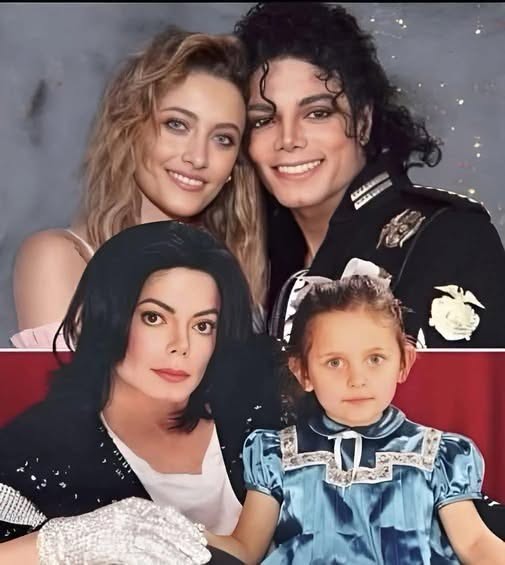
For most of her life, Paris Jackson has carried the weight of a name that never really fades. Long before she had the space to define herself, the world had already formed its opinions—about her family, about her father, about a legacy that continues to divide people years after his passing. While millions recognized Michael Jackson as a global phenomenon, she experienced him in a way no audience ever could.
To the public, he was larger than life—a performer who reshaped music, dominated charts, filled stadiums, and influenced generations. His name became synonymous with success, spectacle, and cultural impact. But beyond that image, beyond the headlines and constant attention, there was another version of him—one that existed quietly, far from cameras and expectations.
That is the version Paris has chosen to share.
For years, she remained mostly silent on the deeper conversations surrounding her father. Not because she was avoiding them, but because she understood that anything she said would immediately be pulled into an already loud and complicated narrative. Now, as she speaks in her own voice, her perspective doesn’t try to rewrite history or challenge every claim tied to his name. Instead, it introduces something different into the discussion: context, memory, and humanity.
She doesn’t describe him through awards or achievements. She doesn’t measure his life through record sales or performances. Instead, she talks about him as a person—someone who carried immense pressure from a very young age, someone shaped by expectations long before he had the freedom to choose his own path.
From her perspective, his life wasn’t defined only by success, but also by sacrifice.
As a child, he was pushed toward perfection—expected to perform, to deliver, to stand out. That pressure didn’t disappear with time; it only grew. Fame opened doors, but it also brought scrutiny, isolation, and a level of attention that made it nearly impossible to live as an ordinary person. Paris describes this reality not with bitterness, but with clarity. She recognizes that his life came at a cost—one many could observe, but few could truly understand.
At the same time, she doesn’t ignore the controversies.
The accusations, documentaries, and ongoing debates remain part of how the public views him. She doesn’t try to silence those conversations or dismiss them entirely. Instead, she approaches them with a sense of acceptance shaped by her own experience growing up in the middle of it all.
“Everyone has their truth,” she has said.
It’s not a statement meant to confirm or deny—it reflects the reality that people interpret events differently, often through their own perspectives. Within that, she draws a clear boundary between public perception and personal experience.
Because while the world debated, she lived with him.
She remembers the moments that never became headlines—simple, quiet memories. Mornings where he made pancakes, private conversations, small efforts to create a sense of normalcy in a life that was anything but normal. These are the memories she holds onto—not as a defense, but as a reflection of who he was to her.
Her childhood, however, was far from typical.
Growing up behind masks and security wasn’t about mystery or image—it was about protection. Her father, having lost much of his own childhood to fame, tried to shield his children from the same experience. Many people misunderstood that decision, seeing it as unusual or excessive. But from her point of view, it was an act of care—an attempt to give them something he never had.
That protection, though, didn’t last forever.
When she lost him at just eleven years old, everything changed. The loss itself was overwhelming, but it was intensified by its public nature. Grief is difficult in any situation. Grief under constant public attention is something entirely different. Cameras, speculation, and endless scrutiny collided with a deeply personal loss that should have remained private.
She has spoken openly about how that period nearly consumed her.
The combination of grief and pressure created a weight that was hard to carry. For a long time, she struggled—not only with losing her father, but also with the expectations and assumptions placed on her because of who he was. It became clear that simply enduring wasn’t enough. She needed to define herself on her own terms.
Over time, she began to find her way.
Through music, creativity, and personal growth, she started building a life that acknowledged her past without being controlled by it. She didn’t try to replicate her father’s path or step directly into his legacy. Instead, she chose her own direction—one that allowed her to express herself honestly.
That journey wasn’t immediate.
It involved setbacks, reflection, and the willingness to confront both public perception and personal truth. But gradually, she found a balance—one where she could honor her father without losing herself under the weight of his name.
Today, she carries forward the values she believes he passed on.
Not lessons about fame or status, but about how to move through the world with intention. She speaks about kindness, about choosing creativity instead of conflict, about maintaining grace even in the middle of noise. These are the qualities she associates with him—not as an icon, but as a parent.
“He wasn’t perfect,” she has said.
And that recognition matters.
It shifts the conversation away from extremes—away from seeing him as either flawless or entirely defined by controversy. Instead, it places him in a more human space: complex, imperfect, capable of both strength and vulnerability.
That, ultimately, is what she is trying to express.
Not a defense of a legend.
Not a denial of the past.
But a reminder that behind every global figure is a private life the public never fully sees—a life filled with relationships, struggles, care, and moments that cannot be reduced to headlines or debates.
For Paris, this isn’t about changing how the world sees her father.
It’s about holding onto how she remembers him.
About preserving the version of him that existed beyond the stage, beyond the spotlight, beyond the narratives that still surround his name. It’s about allowing both realities—the public and the personal—to exist without one erasing the other.
And in doing so, she is also defining herself.
Not as a reflection of a legacy, but as an individual who has lived through something rare and difficult, and who has chosen to move forward with clarity instead of resentment.
Her voice brings something long missing from the conversation.
Not noise.
Not argument.
But perspective.
And within that perspective lies a quiet truth: even the most recognized figures in the world are, at their core, still human—seen one way by millions, and in an entirely different way by the few who truly knew them.