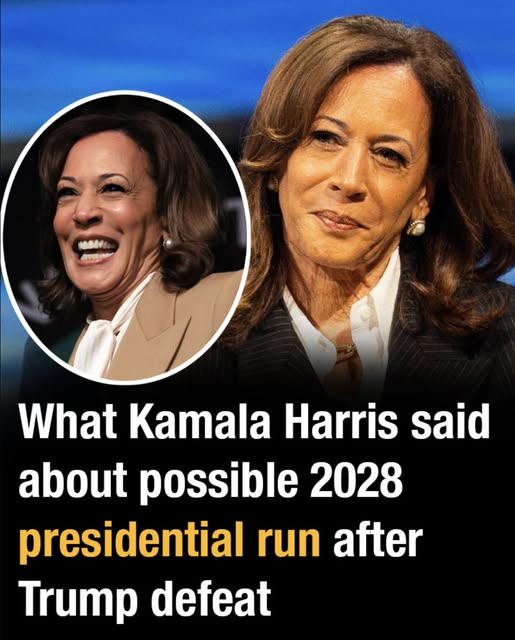
The political landscape of the United States has long been defined by resilience and an ability to reinvent itself, yet the current climate feels unusually volatile and uncertain. In the aftermath of a deeply consequential election cycle, one question has lingered across Washington and throughout the country: what comes next for Kamala Harris? Now, that question is beginning to take shape. Harris has indicated that she is seriously considering a run for the presidency in 2028—a move that signals not retreat, but strategic re-entry into the highest level of political competition.
Her tone is not that of a defeated figure stepping away from public life. Instead, she speaks with the measured confidence of someone who has operated at the center of global decision-making. Her recent travels across the United States—from major urban hubs to smaller communities in the South—have served as more than symbolic appearances. They reflect a deliberate effort to reconnect with voters, understand shifting concerns, and assess the political terrain ahead. Through these engagements, she has begun shaping a message that suggests many Americans feel strained by current systems and are searching for a different direction.
A key element of her emerging platform is a contrast with the policies associated with Donald Trump and his political movement. Harris has increasingly focused on foreign policy, emphasizing the importance of stability, alliances, and measured decision-making. In particular, she has raised concerns about escalating tensions in regions such as Iran, framing her perspective around the need to avoid unnecessary conflict while still maintaining strong national defense. Her positioning suggests an attempt to balance strength with restraint—arguing that leadership should rely on strategy and diplomacy rather than unpredictability.
Still, the road to 2028 presents real challenges. Within her own party, there are ongoing debates about leadership, messaging, and voter outreach. Some supporters view Harris as experienced and capable, especially given her time in national office. Others question whether she can expand her appeal among working-class voters and communities that felt disconnected in previous elections. Harris appears aware of these concerns and is gradually adjusting her approach, adopting a more direct and less scripted communication style that reflects the urgency many voters feel.
Her increased focus on Southern states is particularly notable. By engaging with voters in regions that have traditionally leaned toward her opponents, she is signaling a willingness to compete broadly rather than concentrate only on established strongholds. In these areas, she has emphasized economic issues such as cost of living, infrastructure, and local opportunity, attempting to connect national policy debates to everyday concerns. This shift represents an effort to build a wider coalition and address criticisms that earlier campaigns did not fully resonate across all demographics.
Internationally, her movements are being closely observed. Leaders and analysts across the globe are paying attention to how she frames U.S. engagement with allies and rivals. Her statements suggest a preference for multilateral cooperation and a more traditional diplomatic approach, while still maintaining a firm stance on national interests. This combination—projecting both strength and caution—is central to the image she appears to be cultivating as a potential candidate.
Back in the United States, media attention surrounding her possible candidacy continues to grow. Each public speech, interview, or policy comment is examined for signals about her intentions and timing. For now, she has not made a formal announcement, instead maintaining a careful balance between visibility and ambiguity. This allows her to remain part of the national conversation while observing how political dynamics evolve.
Underlying all of this is a sense of unfinished business. As the first woman to serve as Vice President, Harris already holds a historic place in American politics. Her narrow loss in a previous presidential race adds another layer to her potential return, shaping a narrative of persistence and long-term ambition. Her possible candidacy is not only about policy direction, but also about legacy and the opportunity to redefine how her leadership is viewed.
For voters, the coming years will likely be a period of evaluation. As current policies unfold, the electorate will weigh competing visions for the country’s future. By staying active in public life and continuing to engage with key issues, Harris is positioning herself as a clear alternative—someone ready to step forward if the political moment aligns in her favor.
Whether or not she ultimately secures the presidency in 2028 remains uncertain. What is clear, however, is that she intends to remain a central figure in American politics. Her strategy reflects patience, calculation, and a recognition that in modern political life, timing and perception can be just as critical as policy itself.