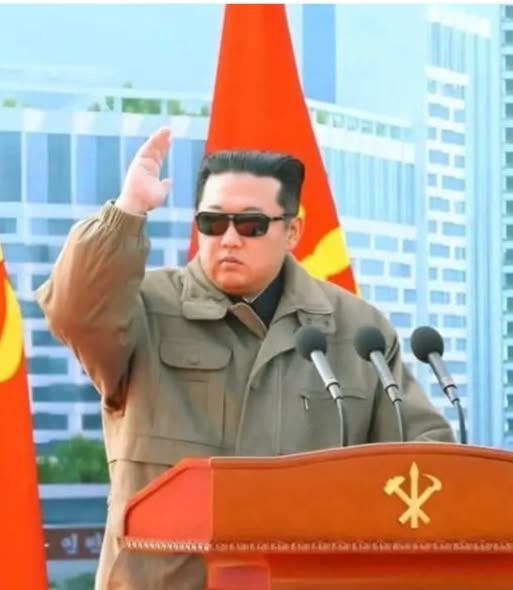
The digital world was recently pushed to the edge of collective confusion as a wave of explosive claims spread rapidly across social media, alleging that the Korean government had issued a formal order to launch a military attack on another nation. Within minutes, these statements shifted from obscure posts into a global viral phenomenon, triggering widespread anxiety and intense geopolitical speculation. For a brief moment, it appeared as though the world might be witnessing the opening stages of a serious regional conflict.
However, as more reliable verification processes began to take hold, a far more grounded reality emerged: the entire narrative was false. No such military order had been issued, and the claims circulating online were the product of misinformation amplified at scale. The episode became a stark illustration of how quickly digital ecosystems can transform uncertainty into perceived crisis, especially when fear-driven content spreads faster than factual correction.
The viral story gained traction because it was constructed to feel plausible. It referenced a highly sensitive geopolitical region where tensions are often discussed in global media, giving it an appearance of credibility. Social media algorithms further intensified the spread, prioritizing engagement-heavy posts—shares, reactions, and comments—over accuracy. As a result, visibility became mistaken for validity, and repetition gave the illusion of truth.
In reality, verified information from official South Korean government channels and established international news organizations showed no indication of any military escalation. Authorities instead emphasized stability, routine defense monitoring, and continued diplomatic engagement. No troop mobilizations or official documents supported the claims circulating online. The contrast between the online narrative and the verified reality highlighted how easily perception can diverge from fact in a fast-moving information environment.
The incident also exposed several structural weaknesses in modern information consumption. Fear remains one of the most powerful drivers of online behavior; alarming headlines tend to bypass careful reasoning and trigger immediate sharing. Combined with the economic incentives of click-driven media, this creates an environment where sensational claims can spread far more rapidly than careful reporting. Even well-intentioned users can unintentionally contribute to the amplification of false narratives simply by reacting before verifying.
This is why established verification standards remain essential. Reputable global news organizations such as the Associated Press, Reuters, and the BBC rely on cross-confirmation, multiple independent sources, and official statements before publishing sensitive claims. Similarly, government press releases remain the most authoritative source for military and diplomatic information. When reports appear that suggest sudden escalation or imminent conflict, cross-referencing with these trusted sources is critical.
South Korean officials, in this case, responded by reaffirming that their focus remains on regional stability and diplomatic engagement. Their clarification helped stabilize the information space, but only after the false narrative had already circulated widely. This delay between misinformation and correction is a recurring challenge in the digital age, where falsehoods often travel farther and faster than the truth.
More broadly, the incident reflects how East Asia’s strategic importance often makes it a focal point for speculation and rumor. Analysts consistently emphasize that real military actions are governed by strict protocols, political oversight, and public accountability. They are not initiated silently or without clear confirmation from official channels. This reality stands in contrast to the rapid, uncontrolled narratives that can emerge online.
Ultimately, the episode serves as a reminder that critical thinking is no longer optional in the digital era. The speed of information requires users to slow their reactions, verify sources, and resist the impulse to share unconfirmed claims. A single unverified post can contribute to global panic when multiplied across networks.
In conclusion, the claim that Korea issued an order for military attack was entirely false. No such action occurred, and official sources consistently confirmed stability and normal diplomatic posture. The real story is not one of military escalation, but of how easily misinformation can simulate crisis in a hyperconnected world.