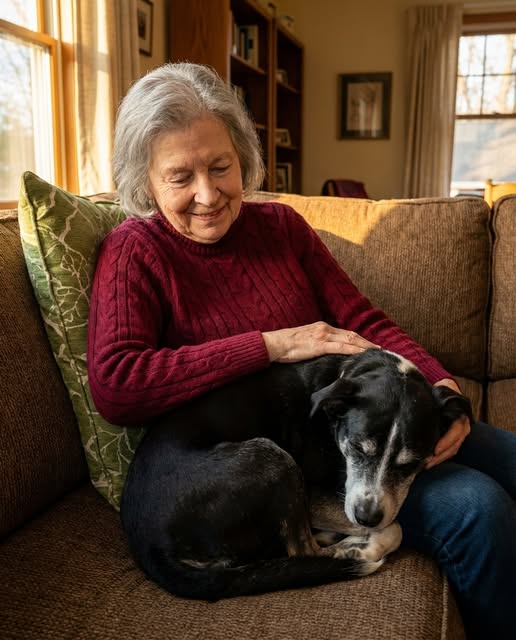
The day we buried my grandmother, I realized something unsettling—while I was holding onto memories, everyone else was already thinking about money. As the ceremony came to an end, my relatives weren’t gathered in grief, but in quiet expectation, waiting for what they believed they were entitled to. I stood there with Berta, Grandma’s loyal old dog, holding her leash as she pulled toward the grave, refusing to leave. In that moment, it hit me that Berta and I might have been the only ones truly mourning. I had spent the last months taking care of Grandma through her illness, never expecting anything in return. Still, I had no idea that the simple choice I was about to make—bringing her dog home—would change everything.
At Grandma’s house, tensions escalated quickly when the lawyer arrived. Everyone expected an inheritance, but instead they were told there was nothing left for them. The reaction was instant—shock, anger, disbelief. Accusations filled the room, and long-hidden bitterness suddenly surfaced. Then the focus shifted to Berta. While others dismissed her as a burden and even suggested she be given away, I couldn’t accept it. She had been Grandma’s companion for years, and leaving her behind felt wrong. Even though I knew it would make my life harder, I chose to take her with me. I thought I was simply doing the right thing. I didn’t realize I had just fulfilled a condition no one else had even noticed.
A few days later, exhausted after work, I noticed something unusual on Berta’s collar—an engraving I had never seen before. Curious, I inspected it more closely and found a hidden compartment with a small key inside. That discovery led me to a locker at a nearby station, where I found a folder addressed to me. Inside was a handwritten letter from Grandma explaining everything. She had planned it all carefully. Her entire estate was meant to go to the person who showed genuine care, not greed—the one who would take responsibility for Berta without expecting anything in return. In that moment, everything became clear. What others saw as nothing, she had turned into a quiet test of character.
Not long after, some of my relatives showed up, clearly having followed me, hoping to claim what they believed was rightfully theirs. But the lawyer arrived as well and made it clear that Grandma’s wishes were final. The decision had already been made—not by wealth or status, but by actions. As I held the documents in my hands, I didn’t feel victorious. I felt humbled. Grandma hadn’t just left behind an inheritance—she had left behind a lesson. Later, as I thought about what to do next, I realized the best way to honor her wasn’t just to accept what she left me, but to live in a way that reflected her values. Because in the end, it was never about what she gave—it was about why she gave it.