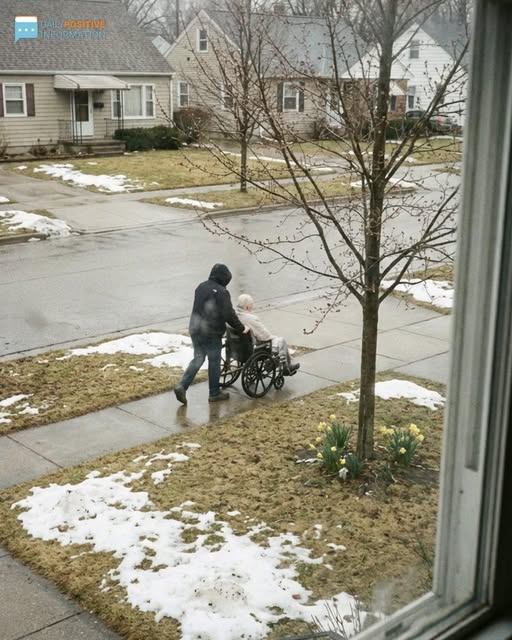
The six-month mark is a deceptive milestone. In a relationship, it marks the end of the honeymoon phase. In a tragedy, it marks the moment the casseroles stop arriving. In our situation—this strange, stitched-together family arrangement—it was when the polite surface began to fracture, revealing the sharp, complicated edges beneath.
We were “making it work,” as I told anyone who asked, but the meaning of “work” was flexible. Alyssa was no longer just the hired caregiver, but she wasn’t fully “Sister” yet either. She existed in a liminal space, a gray zone that confused the neighbors and made my accountant visibly uneasy.
The first real obstacle wasn’t emotional; it was administrative.
The Lawyer’s Office
Three weeks after the DNA results, Mom insisted we visit the family attorney, Mr. Abernathy. His office carried the scent of lemon polish and aged leather, a smell I associated with my father’s estate planning and end-of-life documents. It was a place where history was translated into legal terms.
We sat in a semicircle: Mom in her wheelchair, me in a rigid wingback chair, and Alyssa perched on the edge of the sofa, looking like she expected security to escort her out at any moment.
“So,” Mr. Abernathy said, peering over his glasses. He was an eighty-year-old man with hedge-like eyebrows who had known my father for four decades. “Let me confirm. You want to amend the trust to include… a third beneficiary?”
“Yes, Arthur,” Mom replied, her voice stronger than it had been in months. “Alyssa is Robert’s daughter. She is entitled to her share.”
Mr. Abernathy studied Alyssa, not with warmth, but with the calculating stare of someone trained to guard assets from claimants.
“And do we have proof of this?” he asked. “Beyond verbal assertion?”
I slid the folder across the table. “We have two independent DNA tests, Mr. Abernathy. One initiated by Alyssa, one by me. Both are conclusive.”
He opened it with slightly trembling hands and read in silence. The ticking clock on the wall felt unusually loud, cutting time into heavy, measurable pieces.
“Robert…” Mr. Abernathy murmured as he closed the folder. He removed his glasses and pressed his fingers to the bridge of his nose. “He sat in this very chair five years ago updating his final wishes. He never mentioned any of this.”
“He was good at keeping things buried,” I said flatly.
“This complicates matters,” he continued. “The estate is already settled. Reopening it will trigger tax consequences, legal challenges, and—if we redistribute land assets—”
“I don’t want the land,” Alyssa interrupted. It was the first time she had spoken. Her voice was quiet but steady.
We all turned toward her.
“I don’t want the farm shares,” she continued, eyes lowered. “I don’t want to force anyone to sell anything or disrupt Margaret’s inheritance… or the grandchildren’s.”
“Then what do you want, dear?” Mom asked gently.
“Just… acknowledgment,” Alyssa said softly. “And maybe help with my student loans. They’re overwhelming. If there are cash assets… that would be enough. I don’t want to take the ground out from under you.”
I looked at her. She was wearing a sweater I had bought her for her birthday last month. It hung slightly too large on her frame. She looked small in this room of heavy wood and heavier legacy. She was trying so hard to be unobtrusive, to be the opposite of the disruption she inevitably represented.
“No,” I said firmly.
Alyssa looked at me, startled.
“You don’t get to negotiate based on guilt,” I told her. “If you are his daughter, then you are his daughter. You take the share. We are not buying you off with tuition relief. We are recognizing you as a rightful heir. If we have to sell the south pasture, then we sell it.”
Mr. Abernathy looked between us and let out a long sigh that sounded like a deflating tire.
“Very well,” he said, reaching for his legal pad. “But I must warn you, I will bill additional hours. This is going to be a paperwork nightmare.”
“Bill them,” I replied.
Walking out of that office into the bright, harsh sunlight, I felt something shift. Inside those walls, I had chosen her. I had stood with her against the skepticism of history and inheritance.
Alyssa paused by her car—a worn Honda Civic that rattled at idle.
“You didn’t have to do that,” she said. “The land… that’s your father’s legacy.”
“He’s your father too,” I replied. The words felt strange leaving my mouth, metallic and unfamiliar, but true. “And apparently his legacy is more complicated than property lines and stock certificates.”
She gave a small, fragile smile. “Thank you, Margaret.”
“Don’t thank me yet,” I said. “Wait until you see the property tax bill.”
The Town Talks
The legal side was arithmetic. The social side was warfare.
We live in a town of eight thousand people. In a place this small, secrets don’t stay buried—they compost, then sprout gossip.
For months, people assumed Alyssa was simply “the help.” But as she began attending Sunday dinners, driving Mom to church, and sitting in the family pew, the whispers began.
It reached a breaking point in the produce aisle of the Piggly Wiggly.
I was inspecting cantaloupes. Alyssa stood a few feet away, debating between kale and spinach for Mom’s smoothies.
Mrs. Higgins cornered me. She was the town’s unofficial historian and professional gossip, seventy years old, with hair dyed a color not found in nature, and politeness she used like a blade.
“Margaret,” she said sweetly, blocking my path with her cart. “How is your mother doing?”
“She’s improving, Brenda. Every day.”
“And I see you still have that… girl helping her.” She gestured vaguely toward Alyssa. “She’s very dedicated. I saw her driving your mother’s Buick. That’s not really agency policy, is it?”
“She’s not with an agency anymore,” I said, turning back to the melons.
“Oh? Private hire? That can be risky, dear. You never really know people like that.” She lowered her voice. “I heard she has no local family. A drifter.”
Heat rose in my neck. I looked at Alyssa. She had frozen mid-choice, kale in hand. She had heard everything. Of course she had. And she was waiting—for me to distance myself, to soften it, to say she was “just help.”
I dropped the cantaloupe into my cart. It landed with a dull thud.
“Actually, Brenda,” I said loudly enough for the stock boy to hear, “she’s not a drifter. She’s my sister.”
Mrs. Higgins blinked. “I beg your pardon?”
“Alyssa,” I called. “Come here.”
Alyssa walked over, wary and tense.
“Brenda, I don’t think you’ve been properly introduced,” I said, placing an arm around her shoulders. She stiffened, then slowly relaxed into it. “This is Alyssa. My father’s daughter. My sister.”
Mrs. Higgins looked between us, searching for resemblance, finding it in my father’s unmistakable nose.
“I… I didn’t know,” she stammered. “I thought you were an only child.”
“So did I,” I said lightly. “Life surprises us.”
We walked away. I felt her shaking slightly under my arm.
At the checkout, Alyssa glanced at me. “You just told the town’s gossip.”
“I did.”
“By noon, everyone will know.”
“Good,” I said. “Let them talk. I’m done with whispers.”
“You called me your sister.”
“Well,” I swiped my card, “half-sister takes too long.”
The Box in the Attic
Summer faded into autumn. The valley turned red and gold. With the season change came cleaning fever. Mom was improving physically, but mentally she was entering what she called “Swedish death cleaning.”
“The attic,” she declared. “It’s full of your father’s junk. It needs to go.”
So on a rainy Saturday in October, Alyssa and I climbed into the attic.
It was an excavation of a life. Tax documents from 1985. Broken fishing rods. Heavy stacks of National Geographic magazines.
We worked in rhythm. Alyssa handled the heavy lifting; I sorted keep, donate, and trash.
“What’s this?” Alyssa asked.
She stood in the far corner under the eaves, pulling out a military-green metal footlocker locked with rusted hardware.
“I don’t know,” I said. “Dad wasn’t military. He had flat feet.”
We found a screwdriver and forced it open
The Medical Crisis
But life has a way of testing your resolve right when you think you’ve finally made it through the hardest part.
In January, exactly one year after Mom’s fall, I received a call from Alyssa at 2:00 a.m.
“Margaret, it’s Mom. I think she’s having a stroke.”
Her voice was steady—almost clinical—but I could hear the fear hiding underneath it.
“I’ve already called 911,” she continued. “Left-side facial droop. Slurred speech. I put her in the recovery position. Unlock your front door—I’m picking you up on the way to the hospital.”
I pulled on clothes over my pajamas. Mark drove me to the ER.
When we arrived, Mom was already in a room. Alyssa stood in the corner in pajama pants and a coat, speaking with the neurologist.
“Onset was at 1:50 a.m.,” Alyssa was saying. “She took aspirin at 1:55. Blood pressure was 180 over 110. She has a history of atrial fibrillation.”
The doctor was nodding, writing quickly. “Good catch. The aspirin likely helped preserve brain function. You’re a nurse?”
“Student,” Alyssa said. “And her daughter.”
The doctor didn’t hesitate. “Well done, daughter.”
It was a TIA—a transient ischemic attack. A mini-stroke. Serious, but survivable.
I stood in the doorway, watching Alyssa gently stroke Mom’s hair. Mom looked groggy and frightened, holding Alyssa’s hand tightly like it was the only stable thing in the world.
I realized then that without Alyssa, Mom might have died alone in that house. I wouldn’t have known until morning.
I walked over and stood on the other side of the bed, taking Mom’s other hand.
“We’re here, Mom,” I said.
Alyssa looked across the bed at me. Her eyes were heavy with exhaustion.
“I was so scared,” she whispered. “I thought I’d lost her just when I found her.”
“You didn’t,” I said. “We didn’t. Because you were there.”
We spent the night in two plastic chairs in the hallway, drinking terrible hospital coffee. We talked about death. We talked about how strange it is to love the same person from different angles.
“Do you think Dad is watching?” Alyssa asked at 4:00 a.m., staring up at the fluorescent lights.
“I hope so,” I said. “I hope he sees you saving the woman he left behind. I hope he sees us sitting here. I hope he knows his mistake turned into something that still matters.”
The New Normal
Mom recovered, but she was weaker now. She needed more care than before.
We held a family meeting.
“I can’t do this alone anymore,” Alyssa admitted. “I’m finishing my clinicals. I need time to study.”
“We’ll hire night help,” I said. “Mark and I will cover weekends.”
“And I’ll move in,” my son Ben added. “I’m saving for a house anyway. I can take the guest room and be there in emergencies.”
It became a village—a messy, patched-together village built around an eighty-three-year-old woman and a secret that had reshaped everything.
Last Sunday, we were all at Mom’s house. Spring had returned. Daffodils were pushing up through the soil—the same ones Mom and Alyssa had planted together the previous fall.
I watched them from the kitchen window. Alyssa was helping Mom walk toward the garden bench. They were laughing. Mom pointed at a bird; Alyssa followed her gaze.
They looked alike—the posture, the gestures, the tilt of the head.
I didn’t feel jealousy anymore. I didn’t feel anger toward my father. I just felt… full.
I stepped outside with a tray of lemonade.
“Alright, you two,” I called. “Break time.”
Alyssa looked up, shielding her eyes from the sun. “Hey, sis! Mom was just telling me about the time you tried to bake a cake with salt instead of sugar.”
“That never happened,” I said, setting the tray down.
“It absolutely did,” Mom laughed. “Margaret was twelve. She wanted to impress a boy.”
“I have never tried to impress a boy,” I said, sitting beside them.
“Lies,” Alyssa said with a grin.
We sat there in the sunlight—three women connected by blood, divided by history, and brought back together by the stubborn force of truth.
My phone buzzed. A notification from Ancestry.com—I hadn’t turned it off since the DNA test.
New DNA Match found: 2nd Cousin.
I swiped it away without opening it.
I already had enough family right here.
The crack in my life hadn’t broken the foundation. It had only let the light in. And in that light, we were growing something new—something resilient, something real.
“So,” Alyssa said, nudging my shoulder. “Next Sunday is my birthday. Mom says we’re doing a barbecue.”
“Mark is already marinating the ribs,” I said.
“And I,” Mom said, tapping her cane, “am having a margarita.”
“Mom, you’re on blood thinners,” Alyssa and I said at the same time.
We looked at each other and laughed—the same tone, the same instinct, the same father’s voice echoing in two different people.
It wasn’t the ending I expected for my life. But as an English teacher, I know the best stories are the ones where the characters surprise you.
And this? This was a very good chapter.
Let us know what you think about this story on the Facebook video, and if you liked it, share it with friends and family—because family is what you make it.