Lily Tomlin was born in 1939 in Detroit, Michigan, into a modest household where humor quickly became an essential part of daily life and an intrinsic aspect of her personality. From a very young age, she demonstrated a keen sense of observation and a natural ability to make others laugh, recognizing that comedy could serve as both a bridge between people and a coping mechanism for the struggles of everyday life. Growing up in a working-class environment, she witnessed firsthand the small moments of absurdity and resilience in daily interactions, which later informed her sharp, insightful humor. This early connection between comedy and human experience would go on to shape the trajectory of her entire career, influencing the way she approached performance and storytelling. What began as small, local stand-up performances and modest improvisational work gradually evolved into a path toward national recognition, as her unique voice and comedic sensibility began to draw attention beyond Detroit.
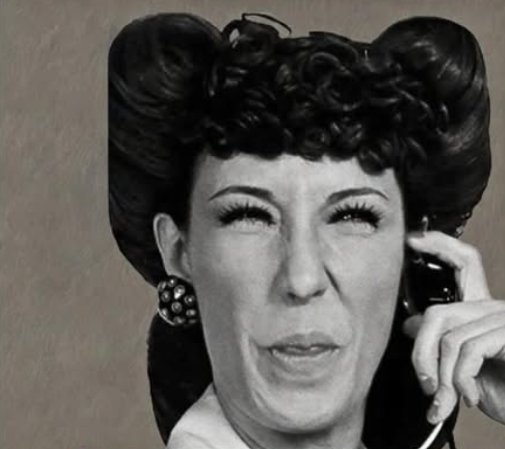
Tomlin’s breakthrough came when she joined the popular and groundbreaking sketch comedy show Rowan & Martin’s Laugh‑In in the late 1960s, a program known for its rapid-fire jokes, political satire, and eccentric sketches. On the show, Tomlin introduced audiences to characters that would become iconic in American comedy. Among the most memorable were Ernestine, the sharp-tongued and sarcastic telephone operator whose witty commentary on everyday frustrations captivated viewers, and Edith Ann, a precocious little girl seated in an oversized rocking chair who delivered innocent yet surprisingly profound observations about the world. Through these characters, Tomlin skillfully blended humor with subtle social commentary, highlighting absurdities in daily life, gender roles, and societal expectations without ever being heavy-handed. Her performances on Laugh‑In solidified her reputation as one of the most recognizable and influential comedic voices of her generation, allowing her to connect with audiences on multiple levels—through laughter, empathy, and thoughtful reflection.
Yet Tomlin’s ambitions extended far beyond sketch comedy and television. Unlike many comedians of her era, who often remained confined to one medium, she actively explored theater, film, and dramatic roles, embracing a remarkable versatility that would define her career. Her foray into dramatic acting revealed a depth and range that contrasted with the comedic personas she was known for, proving that she could handle complex, emotionally charged storytelling with the same precision and authenticity as her humor. One of her most celebrated dramatic performances came in Robert Altman’s 1975 film Nashville, in which she portrayed a character grappling with serious and often poignant personal struggles. The role allowed Tomlin to demonstrate her capacity for nuanced, emotional performance, earning critical acclaim and revealing to audiences a side of her talent that went far beyond laughter and lighthearted entertainment.
Despite her success in drama, Tomlin continually returned to comedy, demonstrating an ability to balance both sides of her artistic identity. She achieved enormous commercial success with the 1980 film 9 to 5, in which she starred alongside Jane Fonda and Dolly Parton. The film followed the story of three women confronting workplace inequities and challenging the unfair treatment they endured under a patriarchal office system. Through humor, satire, and sharp social commentary, Tomlin’s performance highlighted issues of gender inequality and workplace discrimination in a way that resonated with audiences nationwide. 9 to 5 became not only a commercial hit but also a cultural touchstone, cementing her status as a performer capable of combining comedy with meaningful social critique.
Decades later, Tomlin reached a whole new audience with the television series Grace and Frankie, where she reunited on screen with Jane Fonda. The show explored themes of friendship, aging, love, and identity with a combination of humor, honesty, and sensitivity that allowed both Tomlin and Fonda to showcase their talents in a modern context. For younger viewers, the series introduced Tomlin not as a distant legend from the past but as a vibrant, evolving performer who continued to innovate and inspire. The show highlighted her enduring ability to connect with audiences across generations, proving that her comedic and dramatic talents were timeless and adaptable to contemporary storytelling.
Beyond her work on screen and stage, Lily Tomlin has long been a committed advocate for social causes, including feminism, LGBTQ+ rights, and broader social justice initiatives. Throughout her career, she has used her platform to support and amplify marginalized voices, demonstrating that her influence extends far beyond entertainment. Over the years, Tomlin has been recognized with some of the highest honors in her field, including Emmy, Grammy, and Tony awards, acknowledging both her artistic achievement and her impact on culture. Yet perhaps her most enduring legacy lies not in accolades, but in the courage she consistently demonstrated: the courage to blend comedy with meaning, to entertain while provoking thought, and to approach her work with honesty, empathy, and intelligence. Through laughter, insight, and unwavering authenticity, Lily Tomlin has shown that entertainment can both delight and inspire, encouraging audiences to reflect, care, and sometimes even summon the courage to be a little braver in their own lives.