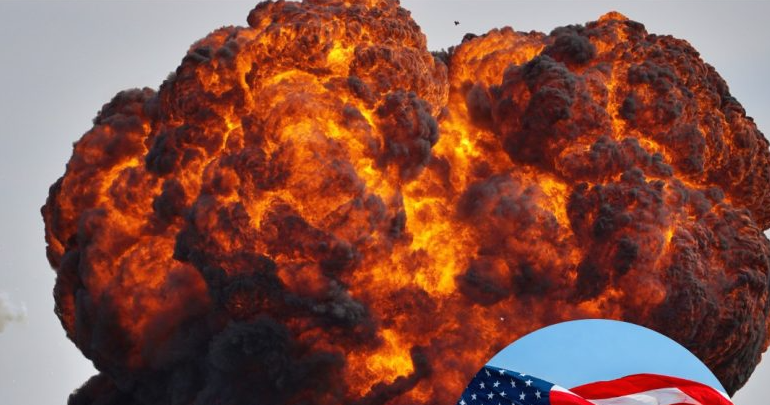
The uncomfortable truth about the safety of American communities is far more complex than most people realize. Popular notions of “safe” areas often rely on factors like picturesque landscapes, suburban tranquility, or perceived low crime rates, but when it comes to the most extreme threats—namely nuclear warfare—these assumptions are largely irrelevant. Experts and defense analysts stress that the geography of safety in the United States is determined less by comfort or scenic appeal and far more by military targeting priorities, strategic assets, and the placement of critical infrastructure. In other words, the places that feel safest to everyday citizens might not align with what military planners consider least vulnerable during a nuclear exchange.
For example, large portions of the East Coast, despite being densely populated with major cities, financial centers, and ports, are in some ways relatively insulated from immediate nuclear targeting. This is not because the region is unimportant, but because nearby military assets such as missile silos, strategic command centers, or intercontinental ballistic missile (ICBM) launch facilities are sparse or situated further inland. Likewise, certain parts of the Midwest, including pockets of the Great Lakes states, do not host the same concentration of hardened nuclear facilities that make the Upper Midwest a priority for strikes in theoretical war scenarios. Even states with high population density along the Atlantic Seaboard, such as New Jersey, or heavily populated coastal tourist regions in Florida, may experience fewer initial direct attacks compared with the more isolated plains states where hardened silos are concentrated. Meanwhile, areas like the forests of Maine or the hills of Vermont, though relatively remote and sparsely populated, could enjoy a lower likelihood of becoming a primary target simply due to the absence of strategic military installations.
By contrast, states that are often perceived as “empty” or lightly populated—Montana, Wyoming, the Dakotas, Nebraska, Colorado, Iowa, and Minnesota—contain significant concentrations of hardened missile silos, nuclear storage facilities, and launch sites designed for retaliatory capabilities. These facilities, capable of deploying intercontinental ballistic missiles or housing nuclear warheads ready for rapid response, automatically elevate these regions to high-priority targets in the event of a full-scale nuclear confrontation. The strategic calculus behind targeting is not arbitrary; military planners consider the survivability, readiness, and retaliatory potential of these sites. As such, the seemingly desolate landscapes of the Upper Midwest are anything but safe—they represent critical nodes in the nation’s nuclear deterrent strategy.
Even for areas far removed from known silos or military installations, any perceived safety is tenuous. Analysts warn that in a modern nuclear scenario, secondary and tertiary targeting—designed to disrupt logistics, infrastructure, communication networks, and population centers—can extend the risk far beyond the primary targets. With thousands of nuclear warheads in existence globally, many major cities, ports, naval bases, and military hubs across both coasts are within potential strike range. Fallout patterns, wind currents, and radiation spread can reach hundreds of miles from a direct detonation, threatening populations that initially appeared insulated from danger. Supply chains, critical medical facilities, and emergency services can be disrupted even in areas untouched by the initial blast, demonstrating that no location is entirely free from the indirect consequences of nuclear conflict.
The geography of danger, therefore, reflects military priorities rather than population density or urban sprawl. Places far from silos or major military complexes may experience delayed impacts or reduced immediate risk, but the interconnected nature of modern warfare ensures that even “safe” regions remain vulnerable to cascading effects. Preparedness cannot be localized to a single city, county, or state; emergency planners emphasize that readiness must be nationwide. Radiation exposure, long-term environmental contamination, disruption of food and energy supplies, and social chaos can reach far beyond the immediate epicenters of attacks, illustrating the systemic vulnerability of even the most remote or seemingly secure communities.
Ultimately, the lesson for both policymakers and ordinary citizens is stark and sobering: there is no truly safe haven in the nuclear age. Awareness of the risks, investment in civil defense planning, and robust contingency measures are crucial to mitigating harm. Public understanding of the geography of danger—rooted in strategic logic rather than anecdotal comfort—underscores the fragility of human settlements when confronted with the destructive potential of modern nuclear arsenals. In an era defined by technological sophistication and global interconnection, the illusion of safety is just that—an illusion. While some regions may enjoy a delayed impact or relative reprieve from direct targeting, the cascading effects of nuclear conflict will inevitably ripple through every corner of society, leaving no community entirely untouched.