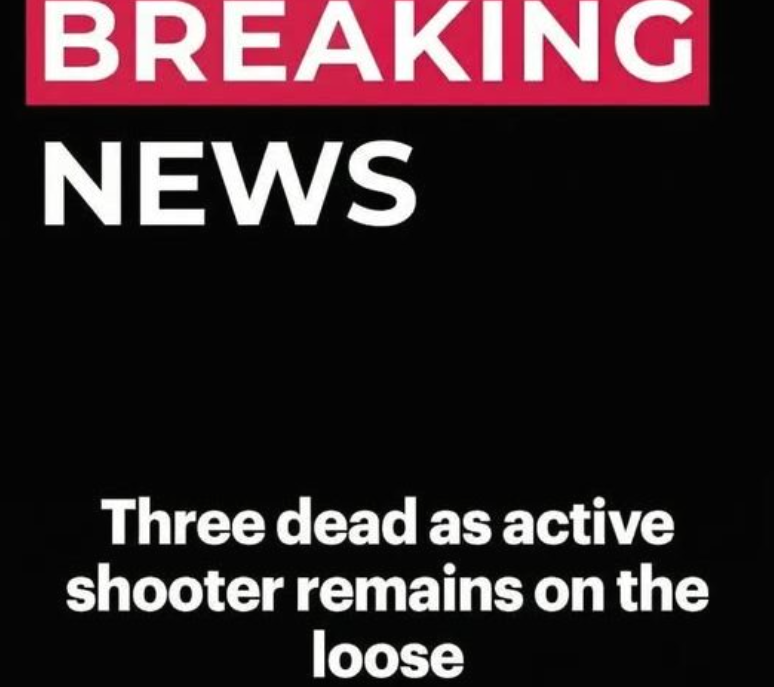
The quiet calm of Lake Cargelligo, a small but resilient community in the Central West of New South Wales, was shattered on a January afternoon in 2026. What began as an ordinary summer day quickly turned into a multi-location tragedy that left three people dead and another hospitalized in serious but stable condition. The incident has sparked one of the largest regional police operations in recent memory and forced a painful reckoning with the reality that violence can reach even the most close-knit rural communities.
The emergency began with frantic reports of gunfire on Bokhara Street. When police and paramedics arrived, they found a devastating scene: a man and a woman dead inside a parked vehicle. The circumstances suggested a sudden and deliberate attack. Before authorities could fully secure the area, more gunshots were reported just blocks away on Walker Street. At that second location, officers discovered another woman deceased and a man suffering from serious gunshot wounds. He was treated at the scene and airlifted to a major trauma hospital, becoming the sole surviving witness to a shooting that unfolded in minutes.
The law enforcement response was swift and extensive. In a town where police presence typically centers on community engagement, the arrival of Strike Force officers, the Tactical Operations Unit, and PolAir helicopters marked a dramatic escalation. A perimeter was set, and residents were instructed to remain indoors as emergency alerts and door-to-door patrols delivered urgent warnings. The surrounding geography—open farmland and dense scrub—complicates the search, offering concealment to anyone familiar with the local terrain.
Authorities have identified a primary suspect who remains at large and is considered armed and dangerous. Police believe the individual may have fled in a council-owned vehicle, adding complexity to the search. The possibility that the suspect had access to local infrastructure has deeply unsettled a town where personal connections run deep. The manhunt has expanded beyond Lake Cargelligo into neighboring areas, with highway patrol monitoring major routes throughout the Central West.
Early investigations suggest the violence may be domestic-related. Reports indicate a prior Apprehended Violence Order (AVO) or similar protective measure may have been in place. This detail has reignited national debate about how effectively the legal system protects victims of domestic abuse, particularly in regional areas. Critics argue that in smaller towns, protection orders can be undermined by close proximity between individuals and slower emergency response times. For many, the tragedy represents a catastrophic failure of safeguards intended to prevent precisely this outcome.
The emotional toll on Lake Cargelligo is immense. In small communities, such events are deeply personal. The victims were not strangers—they were neighbors, coworkers, and friends. Familiar places—the local café, the lakefront walking paths—now carry the weight of crime scene tape and collective grief. Community leaders and counselors have mobilized, but life as it was before that afternoon has been fundamentally altered. The town now waits anxiously for news of an arrest before it can begin the long process of mourning.
From a broader perspective, the tragedy highlights vulnerabilities in rural Australia. Regional policing in 2026 faces challenges including vast distances, limited on-site resources, and cultural factors that can discourage reporting domestic violence. The incident reflects the difficulty of containing fast-moving, multi-site attacks in areas where immediate specialized support is limited. The use of drone surveillance and AI-assisted vehicle tracking in the ongoing search marks a shift toward more technologically integrated rural policing.
As the manhunt continues into its second day, the heavy police presence remains a constant reminder that the threat has not yet passed. Helicopters overhead and patrol vehicles on quiet streets reinforce a sense of unease. At the same time, the community has responded with solidarity—supporting first responders, organizing assistance efforts, and working to prevent misinformation from spreading online.
Investigators are now focused on both digital and physical evidence. CCTV footage is being reviewed, and officers are tracing the suspected council vehicle’s movements. Particular attention is being given to the time between the two shootings—a critical window during which the suspect moved through town.
Ultimately, the tragedy in Lake Cargelligo is a story of rupture—a community forced to confront the unthinkable while authorities race to ensure no further harm is done. The three victims will be remembered not as statistics, but as integral members of the town’s fabric. Their deaths have intensified calls for stronger domestic violence protections and enhanced regional security measures.
As evening falls over the lake, the town remains vigilant, hoping for justice, accountability, and the restoration of a sense of safety in the everyday rhythms of local life.