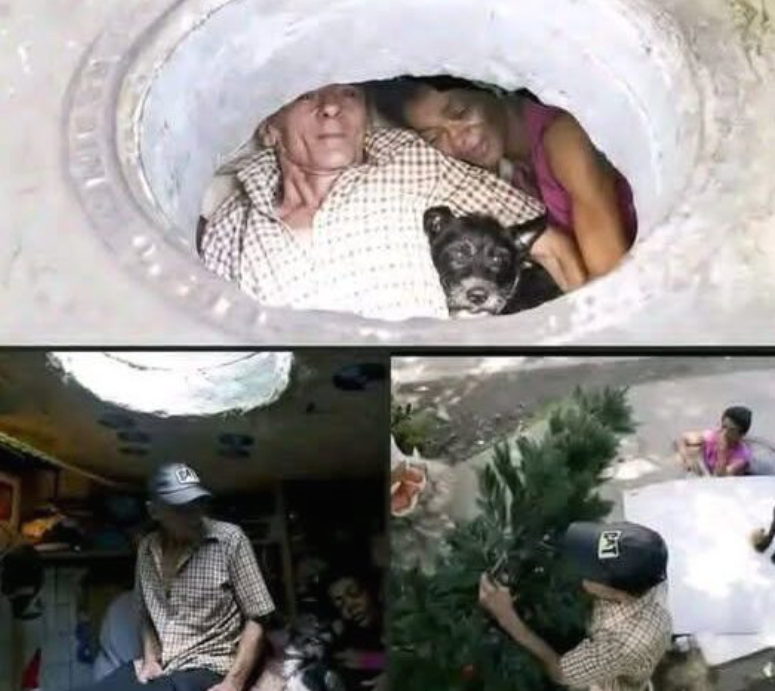
In the fast-changing economic climate of 2026, the line between having a stable home and losing it has grown dangerously thin. In cities and rural communities alike, rising rents, a severe shortage of affordable housing, and weakened social support systems have pushed more people to the brink. What was once considered secure can unravel quickly, forcing individuals and families to rethink what “home” truly means. For one couple and their devoted dog, that search for safety led them to a place never meant for living: the hollow interior of a large concrete drainage pipe. Their story reflects a modern reality in which the promise of stability is often replaced by the urgent need for basic shelter.
To someone passing by, the pipe might look like nothing more than abandoned construction material — a leftover piece of infrastructure waiting to be moved. But a closer look reveals something far more human. Inside the curved concrete walls, a mattress has been carefully positioned. Personal belongings are not scattered randomly; they are arranged with intention. Folded clothes, neatly stacked containers, and a few small personal items show a deliberate effort to create order. It is not simply a hiding place. It is a fragile attempt to build a livable space within harsh circumstances.
Life inside a concrete tube is far from comfortable. The structure offers minimal protection from the elements. When strong winds blow, they pass directly through the open ends. Rain brings dampness that clings to the walls and chills the air inside. Cold settles into the concrete and lingers. Yet, despite these hardships, the pipe serves as a barrier against even harsher exposure. Without a formal roof or secure walls, this limited enclosure becomes invaluable. It provides a place to rest, regroup, and temporarily withdraw from public scrutiny and nighttime dangers.
At the heart of this story is the couple’s dog. For many experiencing housing instability, pets represent more than companionship. They provide emotional stability in moments when everything else feels uncertain. Caring for an animal introduces routine and responsibility — feeding, walking, protecting. These daily acts help preserve dignity and structure in lives otherwise disrupted. In return, the dog offers loyalty, warmth, and comfort. During cold nights and uncertain mornings, that presence can make an immense difference.
The difficulties of living in such conditions extend well beyond discomfort. Exposure to extreme weather, the danger of flooding within drainage systems, and the absence of sanitation create constant risk. Access to clean water, safe food storage, and hygiene facilities — things many people take for granted — become daily challenges. What may appear temporary can gradually become prolonged. As days turn into weeks, survival demands nearly all available energy: finding food, staying dry, keeping possessions secure, and ensuring the dog’s well-being. Reentering traditional housing can begin to feel increasingly out of reach.
This situation reflects a broader housing crisis unfolding worldwide. By 2026, homelessness is no longer defined solely by personal struggles; it is increasingly tied to economic instability. Many facing displacement are dealing with sudden setbacks — unexpected medical expenses, job loss in an unpredictable market, or family breakdowns that remove critical support. Their circumstances often stem not from lack of effort, but from systems that have become difficult to navigate or insufficient to provide stability.
Even within the concrete walls of that pipe, resilience is visible. The organized belongings, the couple’s partnership, and their continued care for their dog demonstrate a powerful instinct to create “home” wherever possible. Human beings seek structure, familiarity, and connection, even in the most challenging environments. That resilience is admirable — but it should not be necessary simply to survive.
Housing represents more than physical shelter. It forms the basis for health, safety, and long-term planning. Without stable housing, access to employment, healthcare, and education becomes more difficult. Behind every improvised shelter — whether a vehicle, a tent, or a drainage pipe — there is a person or family with a story shaped by circumstance.
Addressing this crisis requires more than short-term solutions. Sustainable change involves expanding access to affordable housing, strengthening community support systems, and recognizing the inherent dignity of every individual. Stability should not depend solely on resilience or luck. It should be supported by structures that prevent people from falling through gaps in the first place.
It can be easy to look away from scenes like this or to view them as isolated problems. Yet the couple’s situation highlights how fragile stability can be. Economic pressures, health emergencies, or job disruptions can affect anyone. Their experience serves as a reminder of the importance of empathy and systemic improvement.
The image of two people and their dog seeking refuge inside a concrete pipe is unsettling. But it also underscores a deeper truth: while physical structures may fail, compassion and collective responsibility remain powerful tools. A society’s strength is measured not by its tallest buildings, but by how it cares for those at risk of losing shelter altogether. Moving forward, meaningful progress will depend on restoring pathways to secure housing and ensuring that no one must rely on discarded infrastructure as a place to call home.