I am thirty-nine now, and for years I convinced myself that my past was settled territory—charted, survived, and left behind. I believed my early twenties were sealed off in a distant mental archive, unable to touch the life I had built since. But the past doesn’t disappear simply because we stop looking at it. It waits. And when it returns, it does so with intention.
Fifteen years ago, I divorced a man named Caleb. We were young and overconfident, scraping by on optimism and a shared bank account that was almost always empty. At the time, I thought our struggles were ordinary ones: bills, uncertainty, mismatched dreams. Then I learned the truth—Caleb’s cheating wasn’t a one-time failure. It was habitual. He had been involved with multiple women, constructing a complex web of deception. When everything finally came to light, the pain wasn’t just heartbreak; it was humiliation. I felt foolish for not seeing what had been happening all along.
When I confronted him and asked for a divorce, his response was disturbingly casual. He showed no anger, no regret—just relief. While my friends and family expected shouting, tears, and dramatic confrontations, the most unexpected response came from his mother, Dorothy. I went to her home to tell her in person, believing she deserved honesty. I assumed she would defend her son. Instead, she broke down at her kitchen table, crying as she told me she hadn’t raised him to be that kind of man. On the day our divorce was finalized, Dorothy stood beside me in the courthouse. She hugged me afterward and told me I deserved more. Then she disappeared from my life—until three weeks ago.
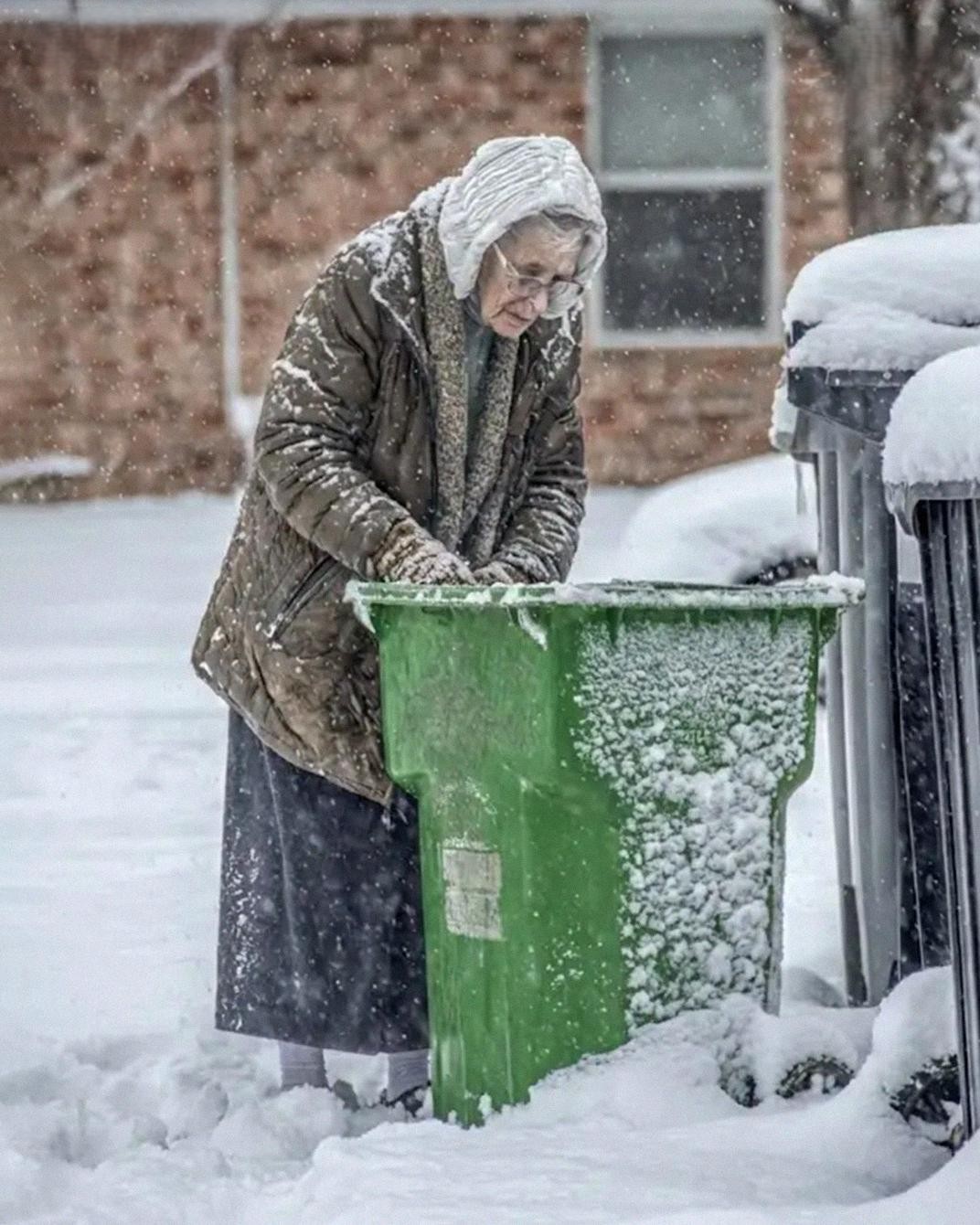
Today, I work at a distribution company downtown. It’s stressful, thankless work filled with system failures, staffing shortages, and constant urgency. One particularly exhausting day, after losing days’ worth of data and an employee quitting without notice, I stepped outside to the loading dock just to breathe. That’s when I saw an elderly woman in an oversized gray coat digging through the dumpster, her hands shaking as she pulled out a crushed sandwich.
I didn’t recognize her at first. Time and hardship had erased the woman I remembered. But when she looked up, I saw Dorothy. I said her name, and she panicked, trying to leave out of shame. I stopped her, begged her to stay, and slowly—painfully—she told me what had happened since we last saw each other.
After the divorce, Dorothy had confronted Caleb and demanded he change or lose her. He chose to walk away from her instead, accusing her of betrayal for supporting me. Years passed with no contact. Then one night, Caleb showed up at her door with a toddler named Eli. He claimed the child’s mother was gone and that he couldn’t handle it. Dorothy took them in. A week later, Caleb vanished again—leaving his son behind without explanation. He never returned. He never called.
Dorothy raised Eli alone. She worked multiple low-paying jobs, sold her belongings, then her home. Eventually, she was living out of her car, parking near Eli’s school so his routine wouldn’t be disrupted. She scavenged for food so he wouldn’t see her starving. Hearing this, something inside me shattered. I told her to bring Eli to me immediately.
When he arrived—a quiet, watchful child who looked like he was always ready to run—I didn’t hesitate. I brought them both home. That night, they slept in real beds. Eli fell into a deep, heavy sleep—the kind that comes only when fear finally loosens its grip.
The next morning, I realized how fragile their situation truly was. Dorothy had no legal guardianship. She had been terrified that asking for help would mean losing Eli altogether or that Caleb would return out of spite.
What followed were weeks of legal meetings and emotional adjustments. We returned to the same courthouse where Dorothy had once stood beside me, this time to secure her guardianship of her grandson. Officials told us how common abandonment like this was. Slowly, daily life began to change. Eli started school and relaxed. Dorothy found her confidence again, filling my kitchen with warmth and routine.
One night, she broke down, apologizing through tears for the burden she believed she’d become. She questioned where she had failed as a mother and feared repeating those mistakes with Eli. I couldn’t give her answers about Caleb. I could only tell her that he no longer defined our lives. What mattered was what we were building now.
When the guardianship papers finally arrived, the house felt different—lighter. I looked around at Eli’s drawings on the fridge, the extra shoes by the door, the quiet signs of belonging. Out of a broken marriage had grown an unexpected family.
The past hadn’t returned to hurt me. It had returned to offer something better. We don’t know what the future holds or whether Caleb will ever resurface. But the doors are locked, the house is warm, and everyone inside is home. Sometimes, the most painful chapters lead us somewhere we never imagined—and give us a grace we didn’t know we needed.