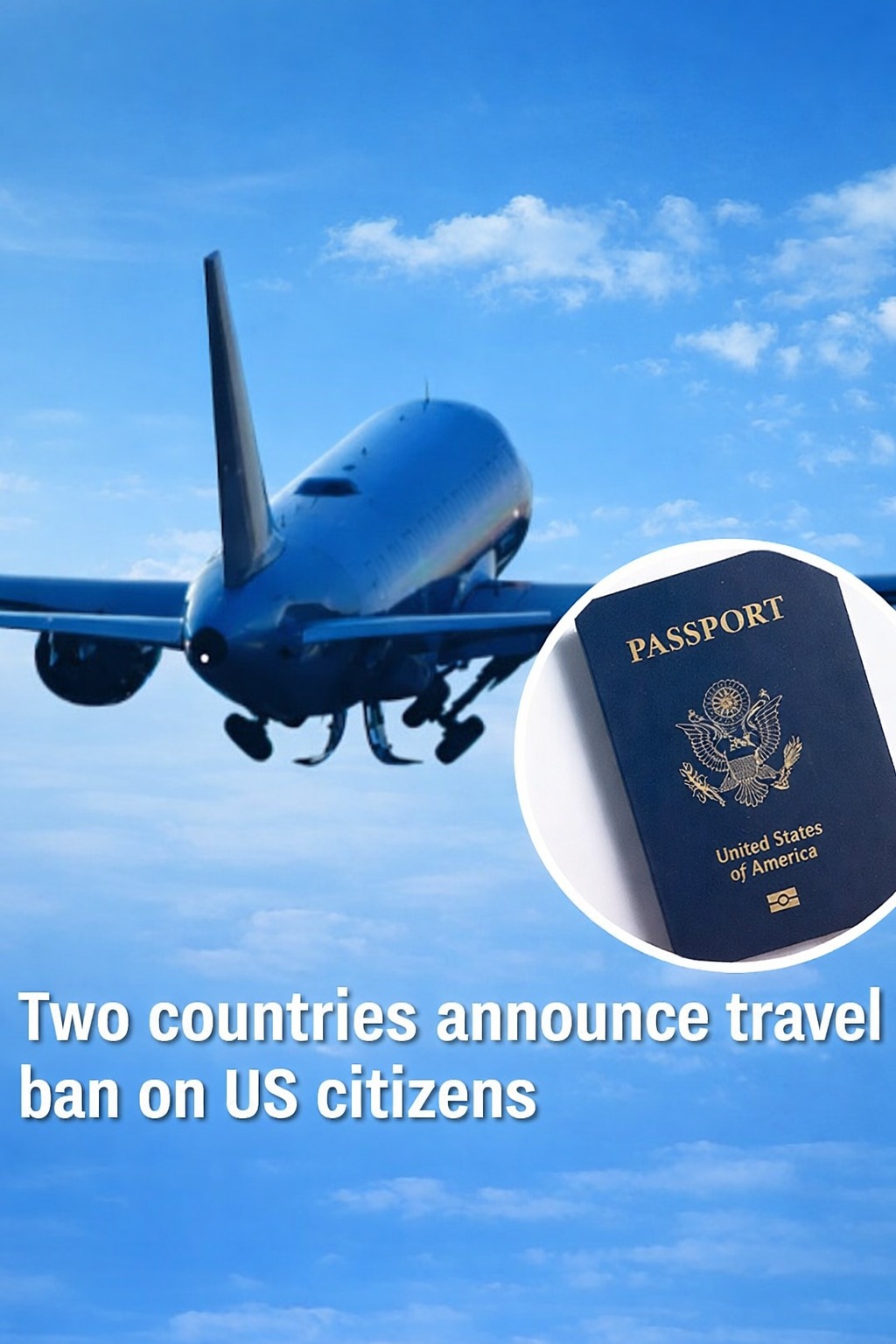
Two bans. Two flags. One rapidly escalating diplomatic firestorm that is sending shockwaves across West Africa and Washington alike. In the wake of President Donald Trump’s announcement of a sweeping expansion of U.S. travel restrictions, the diplomatic world has shifted in ways few could have predicted. Within days, the governments of Mali and Burkina Faso struck back with a measure that stunned American officials and analysts: U.S. citizens are no longer welcome within their borders. Official statements describe the action as a matter of “reciprocity”—a tit-for-tat response meant to assert equality in the face of what they see as unfair treatment—but the implications go far beyond semantics. Critics warn that the bans are the opening salvo in a dangerous new chapter of international tension, one that could destabilize regional cooperation, upend migration patterns, and exact unforeseen costs on ordinary citizens who find themselves caught between two powerful states with conflicting agendas.
Mali and Burkina Faso’s decisions are more than symbolic acts of defiance; they are signals of a widening fracture in America’s engagement with a strategically vital region. For decades, the Sahel has been a focal point of U.S. security, development, and counterterrorism efforts. From humanitarian aid programs to military partnerships aimed at combating extremist groups, Washington has long positioned itself as a key ally in regional stability. By invoking “reciprocity,” the Malian and Burkinabe governments are reframing their bans not simply as revenge, but as an assertion of national dignity and equality on the international stage. To them, the U.S. travel restrictions—designed ostensibly to protect security interests—represent an imposition that treats African citizens as second-class, and their response is meant to underscore that treatment will not go unchallenged.
The domino effect is already apparent. Niger has implemented a permanent halt on U.S. visa applications, while Chad had earlier suspended theirs entirely. Once seen as isolated or reactive, these moves now appear to form the outlines of a more coordinated front among Sahelian nations, signaling a shift in regional alliances that could have profound long-term consequences for diplomacy, trade, and security collaboration. Analysts caution that what may have begun as a localized dispute over travel policy is quickly evolving into a broader geopolitical realignment, one in which Washington’s influence is questioned and local governments assert a more independent posture in dealings with the world’s superpowers.
The human dimension of these decisions cannot be overstated. Behind the diplomatic language and official press releases are real people whose lives are disrupted by these bans. Families with members on both sides of the Atlantic find themselves suddenly divided, forced to make painful choices about schooling, employment, or personal connections. Aid projects funded or staffed by American personnel face delays or suspensions as visas vanish and travel corridors close. Students enrolled in U.S. universities confront uncertainty over their ability to attend classes or maintain legal status abroad. Businesses dependent on cross-border movement and trade are caught in the crossfire, with shipments delayed, contracts threatened, and economic momentum stalled. The bans are not abstract—they ripple through the daily lives of those least able to control policy outcomes, leaving ordinary citizens to bear the weight of geopolitical chess moves made far from their communities.
The narratives framing these actions could not be more divergent. In Washington, officials argue that the expanded travel bans are essential measures for national security, designed to protect Americans from potential threats, streamline immigration processes, and ensure that foreign entrants meet strict vetting standards. Within Mali, Burkina Faso, Niger, and Chad, however, the story is told differently. Leaders frame the American restrictions as discriminatory, portraying them as policies that unfairly target African citizens under the guise of bureaucratic regulation. For these governments, the response is framed as a defense of sovereignty, a pushback against perceived bias, and a demand for equal treatment on the global stage. Between these two competing narratives lies a growing mistrust—one that extends far beyond visa applications or airline tickets. It is a mistrust that colors diplomatic meetings, undermines regional collaboration, and makes future negotiations on security, trade, and migration far more complicated.
The timing amplifies the tension. Travel bans come during a period of heightened instability across the Sahel, where insurgent groups exploit weak governance and porous borders. U.S. cooperation has historically played a role in counterterrorism operations, humanitarian aid delivery, and local governance programs. The perception of an adversarial United States, combined with retaliatory bans, risks weakening that cooperation precisely when coordination is most crucial. Moreover, these decisions reverberate beyond government channels. Civil society organizations, NGOs, and multilateral institutions now face the dual challenge of navigating restricted access while attempting to maintain critical programs in health, education, and economic development.
The bans are also creating cascading pressure on neighboring countries. As nations tighten their borders in response to U.S. policy, migration patterns shift, new smuggling routes emerge, and human traffickers exploit the gaps left by disrupted legal channels. International airlines and travel agencies must contend with sudden cancellations, regulatory hurdles, and the logistical headaches of rerouted passengers. Universities, hospitals, and businesses reliant on international personnel are forced to recalibrate plans mid-year. In short, a single policy decision in Washington has produced a chain reaction that impacts diplomacy, security, commerce, and everyday human life across multiple countries.
Analysts warn that resolving these tensions will require far more than symbolic gestures. While U.S. officials may insist that security imperatives justify the restrictions, restoring trust will require sustained dialogue, empathy for the human consequences, and a willingness to balance protective measures with diplomatic sensitivity. For Sahelian nations, the challenge lies in asserting sovereignty without escalating conflicts to the point where cooperation on pressing security or humanitarian concerns becomes impossible. The long-term consequences of this diplomatic standoff are still unfolding, but early indicators suggest that what began as a policy aimed at safeguarding Americans has instead triggered a complex regional crisis that may redefine U.S.-Africa relations for years to come.
Ultimately, the story of these bans is not just about policy—it is about power, perception, and the human stakes behind every diplomatic maneuver. Mali and Burkina Faso’s decisions, framed as “reciprocity,” are more than bureaucratic responses; they are statements of national pride and self-determination. For U.S. citizens, the immediate effect is clear: travel plans disrupted, visas denied, and international engagement complicated. For governments, the broader warning is stark: unilateral policies carry consequences that ripple far beyond the borders where they are conceived. In the delicate ecosystem of international relations, every action provokes a reaction, and in this case, the reaction has already begun reshaping alliances, shifting power dynamics, and leaving ordinary people navigating the fallout.
The quiet phrase “reciprocity” now resonates with profound weight. It is at once a diplomatic retort, a statement of principle, and a harbinger of a more complex, contested, and unpredictable era in U.S.-Africa relations. What started as a policy intended to protect American interests has escalated into a multifaceted crisis, touching lives, redefining alliances, and challenging the very frameworks through which countries engage with one another. For those paying attention, it is a stark reminder that in international politics, the human consequences of every law, ban, or restriction are never far from the surface.