Morphopsychology is based on the idea that physical appearance may reflect aspects of a person’s inner character and emotional tendencies. While it is not considered scientifically proven, the concept continues to attract attention because people naturally enjoy searching for meaning and personality clues in external features. From facial expressions to posture and body language, humans have always been fascinated by the possibility that the body might reveal something deeper about who we are inside.
Applying this symbolic approach to feet creates an especially interesting perspective. Feet are responsible for carrying the body, maintaining balance, and moving us forward through life. Because of this, many cultures and personality traditions have associated feet with direction, stability, personal growth, and the path an individual follows throughout life. In this context, analyzing foot shapes becomes less about biology and more about symbolism and personality interpretation.
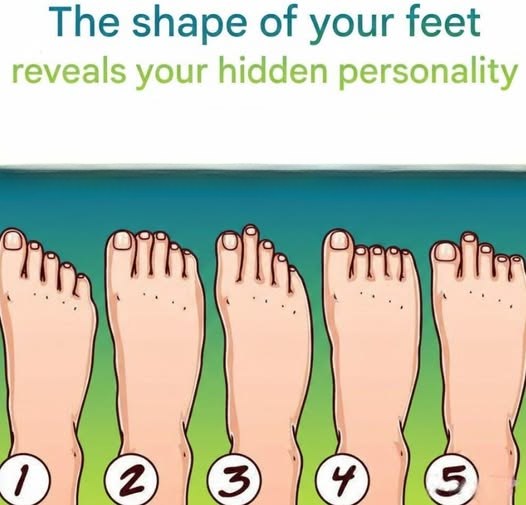
One of the most commonly discussed foot types is the Egyptian foot. This shape is recognized by a long big toe followed by the remaining toes descending gradually in size. Symbolically, people with this foot shape are often described as calm, thoughtful, and diplomatic individuals who value harmony in relationships and avoid unnecessary conflict whenever possible. They are believed to be emotionally intuitive, compassionate, and capable of understanding the feelings of others deeply. However, because they tend to prioritize peace and emotional balance, they may sometimes struggle to establish healthy boundaries. Their desire to help and support others can occasionally lead to emotional exhaustion or feelings of being overwhelmed.
Another well-known shape is the Greek foot, sometimes called Morton’s toe, where the second toe is slightly longer than the big toe. This foot type is frequently associated with creativity, energy, passion, and natural leadership abilities. People linked symbolically to this shape are often described as expressive, enthusiastic, and highly motivated individuals who enjoy pursuing ideas and inspiring others around them. They are usually energetic personalities who dislike routine and prefer excitement, movement, and personal freedom. At the same time, their emotional intensity and impulsive nature may sometimes create stress for both themselves and others if their energy becomes difficult to manage.
The Roman foot features the first three toes appearing nearly equal in length, creating a balanced and symmetrical appearance. Symbolically, this foot shape represents practicality, reliability, and emotional stability. Individuals connected to this type are often viewed as rational thinkers who prefer structure, organization, and logical decision-making. They are usually dependable friends and responsible people who value consistency and clear communication. However, because they often prefer order and predictability, they may occasionally struggle with sudden changes, emotional unpredictability, or situations requiring major adaptation.
The Celtic foot combines characteristics from several different foot types, often displaying an irregular or mixed toe arrangement. Because of this complexity, it is symbolically associated with depth, versatility, and emotional richness. People connected to the Celtic foot are often described as imaginative individuals capable of balancing logic with creativity. They may possess strong intuition while also thinking carefully and analytically about life. However, this combination of emotional sensitivity and intellectual complexity can sometimes create internal conflict or feelings of uncertainty when facing difficult choices.
Another commonly discussed category is the Germanic foot, recognized by a strong prominent big toe alongside smaller, relatively uniform remaining toes. Symbolically, this shape reflects focus, perseverance, and reliability. Individuals linked to this type are often seen as disciplined, practical, and highly dependable people who value loyalty and consistency in both relationships and responsibilities. They tend to work steadily toward goals and are often trusted by others because of their stable personalities. However, their strong preference for routine and predictability may sometimes make adaptation to sudden change more difficult.
Despite the popularity of these interpretations, it is important to remember that these foot categories are symbolic rather than scientific. They are not medical evaluations or proven personality assessments. Instead, they reflect humanity’s long-standing fascination with self-discovery and the desire to understand personality through physical symbolism. Much like astrology, palm reading, or body-language interpretation, the appeal comes less from scientific accuracy and more from curiosity, reflection, and entertainment.
What makes these ideas so enduring is the way they encourage people to think about themselves and others in creative ways. Even something as ordinary as the shape of a foot becomes part of a larger conversation about identity, individuality, and human nature. Whether taken seriously or simply enjoyed for fun, these symbolic interpretations continue to capture attention because people naturally seek meaning in the small details of everyday life.