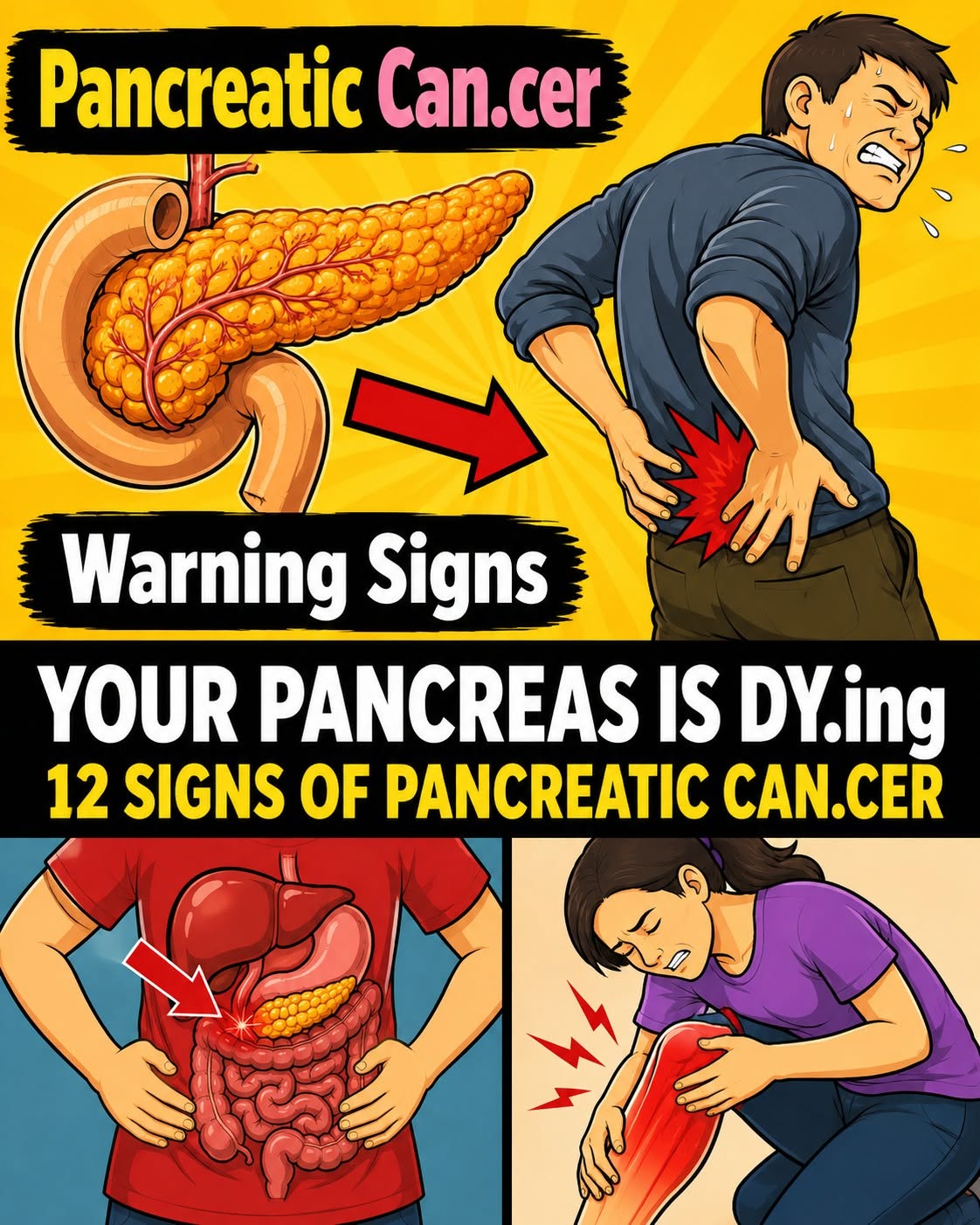
12 Signs of Pancreatic Cancer You Should Never Ignore — Early Warning Symptoms Everyone Should Know
Pancreatic cancer is often described as one of the most difficult cancers to detect early. One reason is that it may not cause noticeable symptoms in its initial stages. When symptoms do appear, they can resemble common digestive problems, fatigue, or other less serious conditions.
That is why understanding the possible warning signs is important.
The pancreas is a small organ located behind the stomach. It helps the body digest food and regulate blood sugar by producing digestive enzymes and hormones such as insulin. When cancer develops in this organ, it can interfere with several important bodily functions.
Having one or more of the symptoms below does not mean you have pancreatic cancer. Many have much more common causes. However, persistent, unexplained, or worsening symptoms deserve medical attention.
Here are 12 possible warning signs to know.
1. Yellowing of the Skin or Eyes
One of the most recognizable signs of pancreatic cancer is jaundice, which causes the skin and the whites of the eyes to appear yellow.
This can happen when a tumor blocks the bile duct, allowing bilirubin, a yellow substance produced during the breakdown of red blood cells, to accumulate in the body.
Jaundice may also cause dark urine, pale or clay-colored stools, and itchy skin.
What to do: New, unexplained jaundice requires urgent medical assessment, even if you do not have pain.
2. Persistent Pain in the Upper Abdomen
Some people experience a dull ache or discomfort in the upper abdomen.
The pain may come and go initially, but it can become more persistent as the condition progresses. It may be felt near the stomach or beneath the ribs.
Digestive disorders, gallstones, ulcers, and many other conditions can also cause abdominal pain.
If the pain persists without a clear explanation, arrange a medical evaluation.
3. Pain That Spreads to the Back
Pancreatic cancer can sometimes cause pain that extends from the upper abdomen into the back.
This may occur because of the pancreas’s location and the involvement of nearby nerves or tissues.
The discomfort may become more noticeable after eating or when lying down, although symptoms vary considerably.
Back pain alone is very common and is rarely enough to identify pancreatic cancer. However, unexplained back pain accompanied by abdominal discomfort, weight loss, or jaundice deserves particular attention.
4. Unexplained Weight Loss
Losing weight without deliberately changing your diet or activity level can be an important warning sign.
Pancreatic cancer may affect appetite, digestion, and the body’s ability to use nutrients effectively.
A person may notice that clothing becomes looser or that their weight continues to fall despite eating normally.
Unintentional weight loss can have many causes, including thyroid disorders, diabetes, digestive conditions, and other illnesses.
If you are losing weight without trying, consult a healthcare professional rather than assuming it is simply a change in metabolism.
5. Loss of Appetite
Some people with pancreatic cancer begin feeling full sooner than usual or lose interest in food.
They may experience nausea, abdominal discomfort, or a general feeling of being unwell after meals.
Reduced appetite is common during many illnesses and does not automatically indicate cancer. However, when it persists alongside unexplained weight loss or abdominal pain, it should be investigated.
6. Digestive Problems and Changes in Stool
Because the pancreas produces enzymes that help digest fats and other nutrients, pancreatic disease can interfere with digestion.
Possible symptoms include:
Pale or unusually light-colored stools.
Greasy stools that float or are difficult to flush.
Stools with an unusually strong odor.
Persistent diarrhea or changes in bowel habits.
These changes can occur when the body is not properly absorbing dietary fat.
Other pancreatic disorders, bile duct problems, and intestinal conditions can produce similar symptoms.
Persistent changes in stool, particularly when accompanied by weight loss or jaundice, warrant medical evaluation.
7. Nausea and Vomiting
Pancreatic cancer can sometimes contribute to nausea or vomiting.
In certain cases, a tumor may interfere with the passage of food from the stomach into the small intestine. The disease may also affect digestion and appetite.
However, nausea is far more commonly caused by infections, medications, pregnancy, food-related illness, or other digestive problems.
Seek medical care if nausea or vomiting continues, especially if you cannot keep fluids down, are losing weight, or have significant abdominal pain.
8. New-Onset Diabetes or Unexpected Changes in Blood Sugar
The pancreas produces insulin, which helps regulate blood glucose.
Pancreatic cancer can sometimes affect insulin production or how the body regulates blood sugar. In some people, diabetes develops shortly before the cancer is diagnosed.
A sudden diagnosis of diabetes in an older adult, particularly when accompanied by unexplained weight loss, may warrant further clinical assessment.
Nevertheless, diabetes is common, and the overwhelming majority of people diagnosed with diabetes do not have pancreatic cancer.
Do not assume that changes in blood sugar indicate cancer. Discuss unusual glucose readings or symptoms with your healthcare professional.
9. Persistent Fatigue and Weakness
Feeling unusually tired can accompany many illnesses, including pancreatic cancer.
Fatigue may result from reduced food intake, disrupted sleep, changes in metabolism, anemia, or the body’s response to disease.
Ordinary tiredness after a busy week is not usually concerning. Fatigue that persists, worsens, or interferes with daily activities deserves attention, especially when combined with other unexplained symptoms.
10. Itchy Skin Without an Obvious Cause
Persistent itching can sometimes occur when pancreatic cancer blocks the bile duct.
As bilirubin and other substances accumulate, they can contribute to itching that may affect much of the body.
Some people develop itching before they notice yellowing of their skin or eyes.
Dry skin, allergies, eczema, liver disorders, and many other conditions can also cause itching. However, unexplained itching accompanied by dark urine, pale stools, or jaundice should be assessed promptly.
11. Blood Clots Without an Obvious Explanation
Pancreatic cancer is associated with an increased risk of blood clots.
A clot in a deep vein may cause swelling, warmth, redness, or pain in one leg. A clot that travels to the lungs can cause sudden shortness of breath, chest pain, coughing up blood, or fainting.
Blood clots have many possible causes, and most are not evidence of pancreatic cancer. However, an unexplained clot, particularly when accompanied by other concerning symptoms, may prompt doctors to investigate further.
Emergency warning: Sudden breathing difficulty, chest pain, or fainting requires emergency medical attention.
12. New or Persistent Bloating and Abdominal Swelling
Some people experience abdominal fullness, bloating, or discomfort.
These symptoms may result from changes in digestion or other abdominal conditions. In more advanced disease, fluid can sometimes accumulate inside the abdomen, causing visible swelling.
Bloating after a meal is common and usually has a benign explanation. Persistent or progressively worsening abdominal swelling, especially with weight loss or pain, should not be ignored.
Why Pancreatic Cancer Can Be Difficult to Detect Early
The pancreas lies deep inside the abdomen, and early tumors may not produce distinctive symptoms.
There is also no routine screening test recommended for everyone at average risk of pancreatic cancer.
Doctors may investigate concerning symptoms using a combination of medical history, physical examination, blood tests, and imaging such as CT or MRI scans. In selected cases, endoscopic ultrasound or a tissue biopsy may be needed.
A blood test called CA 19-9 can be useful in certain circumstances, but it is not reliable enough to diagnose or rule out pancreatic cancer on its own.
People with a strong family history or certain inherited genetic conditions may benefit from specialist advice about surveillance.
Who May Have a Higher Risk?
Factors associated with an increased risk of pancreatic cancer include:
Older age.
Smoking.
A family history of pancreatic cancer.
Certain inherited genetic mutations or hereditary cancer syndromes.
Chronic pancreatitis.
Diabetes, particularly in certain clinical circumstances.
Excess body weight.
Having a risk factor does not mean that someone will develop pancreatic cancer. People without known risk factors can also develop the disease.
When Should You See a Doctor?
Make an appointment with a healthcare professional if you experience persistent, unexplained abdominal or back pain, unexplained weight loss, changes in digestion, or new symptoms involving appetite or blood sugar.
Seek urgent medical assessment for new jaundice. Get emergency help for severe abdominal pain, repeated vomiting with dehydration, sudden difficulty breathing, or symptoms suggesting a serious blood clot.
Do not wait until several symptoms appear before seeking help. At the same time, remember that these symptoms are common and often have causes other than cancer.
The Bottom Line
Pancreatic cancer can be difficult to recognize early because its symptoms are often subtle and nonspecific. Paying attention to persistent changes in your body can help you seek appropriate care sooner.
The most important warning signs include jaundice, unexplained weight loss, persistent abdominal or back pain, changes in stool, and new-onset diabetes accompanied by other concerning symptoms.
Awareness is valuable, but panic is not. These symptoms do not establish a cancer diagnosis, and only an appropriate medical evaluation can help determine their cause.
If something about your health has changed and the reason is unclear, trust that concern enough to speak with a healthcare professional.
Medical disclaimer: This article is for educational purposes only and does not replace professional medical advice, diagnosis, or treatment.