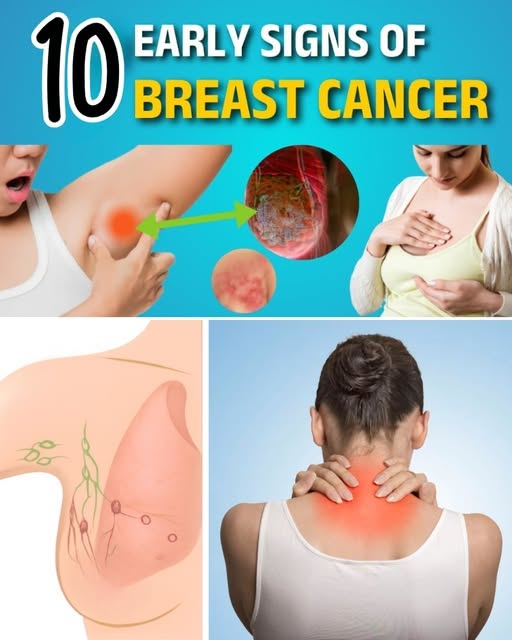
10 Warning Signs of Breast Cancer You MUST Know – Early Detection Saves Lives
Breast cancer is one of the most common cancers affecting women worldwide, and recognizing possible warning signs can help people seek medical attention sooner. Although many breast changes are caused by harmless conditions, some symptoms may indicate breast cancer and should never be ignored.
One important fact to remember is that breast cancer does not always cause pain or produce an obvious lump in its early stages. Some people notice changes in the shape of a breast, the appearance of the skin or the nipple, while others have no noticeable symptoms at all.
Knowing what is normal for your body and recognizing changes that persist can help you decide when to contact a healthcare professional.
1. A New Lump in the Breast
A new lump or thickened area in the breast is one of the best-known warning signs of breast cancer.
Some cancerous lumps feel hard, have irregular edges or seem fixed in place, but breast cancers can also feel soft, rounded or tender. It is not possible to determine whether a lump is cancerous simply by touching it.
Many breast lumps are benign, including cysts and fibroadenomas. Nevertheless, any new or unusual lump should be evaluated by a healthcare professional.
2. A Lump or Swelling Under the Arm
Breast cancer can sometimes spread to nearby lymph nodes, including those located in the armpit or around the collarbone.
You might notice a lump, swelling or unusual fullness in these areas, even if you cannot feel a lump in the breast itself.
Swollen lymph nodes commonly occur because of infections and other non-cancerous conditions, so swelling alone does not establish a diagnosis. A persistent or unexplained lump should be checked by a doctor.
3. Changes in Breast Size or Shape
A breast that suddenly looks different from its usual appearance deserves attention.
Possible changes include new swelling, an unusual difference in size or a change in contour that cannot be explained by normal hormonal fluctuations.
Breasts naturally vary in size, and some asymmetry is completely normal. The important concern is a new, unexplained change, particularly if it affects only one breast.
4. Skin Dimpling or a Change in Texture
Changes in the skin covering the breast can sometimes indicate an underlying problem.
Look for new dimpling, puckering, pulling or areas where the skin appears indented. These changes may occur when an underlying growth affects the tissues that support the skin.
A condition called inflammatory breast cancer can also cause redness, swelling and skin thickening. It may develop without a distinct lump.
Any persistent or rapidly developing skin change should be assessed promptly.
5. Redness, Warmth or Swelling
Redness and warmth can occur with infections, inflammation and other breast conditions. In some cases, however, these symptoms may be associated with inflammatory breast cancer.
This uncommon but potentially aggressive form of breast cancer can cause one breast to become swollen, red or unusually warm. The skin may look similar to an orange peel.
Because these symptoms can resemble an infection, it is important to seek medical advice, especially if they develop quickly, worsen or do not improve with treatment.
6. Nipple Discharge That Is Unusual
Unexpected fluid coming from the nipple can sometimes be a warning sign, particularly when it occurs without squeezing the nipple.
Discharge that is bloody, comes from only one breast or appears spontaneously should be evaluated by a healthcare professional.
Most nipple discharge is not caused by cancer. Hormonal changes, medications, infections and other benign conditions can also cause it. However, unexplained discharge should not be ignored.
7. A Newly Inverted or Retracted Nipple
Some people naturally have inverted nipples, and this is usually not a concern if the appearance has always been the same.
A nipple that suddenly turns inward, changes direction or becomes pulled into the breast tissue may require further investigation.
This can happen when changes beneath the skin affect the structures surrounding the nipple. If the change is new, particularly on one side, arrange a medical examination.
8. Persistent Breast or Nipple Pain
Breast pain is common and is often associated with menstrual cycles, hormonal changes, cysts or other non-cancerous conditions.
Breast cancer does not usually begin with pain alone, but persistent discomfort in a particular area should be assessed, especially when accompanied by a lump, skin changes or nipple abnormalities.
Do not assume that pain means cancer, but do not dismiss persistent or unexplained symptoms simply because they are uncomfortable rather than visibly unusual.
9. Scaly, Crusted or Irritated Skin Around the Nipple
Dryness, itching and irritation around the nipple can result from eczema, allergies or skin conditions.
However, persistent scaling, crusting, redness or sores involving the nipple may occasionally be associated with Paget disease of the breast, a rare form of breast cancer that affects the nipple and surrounding skin.
If nipple changes do not resolve, keep returning or occur alongside other breast symptoms, seek medical advice rather than repeatedly treating them as ordinary skin irritation.
10. Skin That Resembles an Orange Peel
One particularly important change is skin that develops small pits or dimples, creating a texture similar to the surface of an orange.
This appearance, known medically as peau d’orange, can occur when fluid accumulates in breast tissue and affects the skin. It may be associated with inflammatory breast cancer or other conditions that cause swelling.
The affected breast may also become enlarged, red, warm or heavy.
New orange-peel-like skin changes require prompt medical assessment, particularly if they appear suddenly or progress rapidly.
When Should You See a Doctor?
Do not wait for several symptoms to appear before seeking help. A single unexplained change can be enough to justify an examination.
Arrange a medical appointment for a new breast lump, persistent skin changes, unusual nipple discharge or a newly inverted nipple.
Seek prompt medical advice for rapidly developing redness, swelling, warmth or skin dimpling.
Remember that symptoms alone cannot confirm or rule out cancer. A clinician may recommend an examination, diagnostic imaging and, when necessary, a biopsy.
If you notice a change that is new or unusual for you, it is better to have it checked than to assume it is harmless.
Can Breast Cancer Be Detected Before Symptoms Appear?
Yes. Screening mammograms can detect some breast cancers before a lump or other noticeable symptom develops. The appropriate screening schedule depends on factors such as age, personal medical history and family history.
People with a strong family history of breast or ovarian cancer, or certain inherited genetic variants, may need an individualized screening plan.
Even if you receive regular mammograms, new symptoms should still be evaluated rather than waiting for your next routine screening appointment.
The Bottom Line
Breast cancer does not always cause pain, and not every breast change indicates cancer. Nevertheless, recognizing unusual changes and seeking medical advice promptly can help identify problems that require treatment.
Knowing your body, attending recommended screening appointments and taking persistent symptoms seriously are practical steps toward protecting your health.
Important: This article is for general awareness and does not replace medical advice or an individual assessment. If you notice a new or worsening breast change, contact a qualified healthcare professional.